

- Ethereum surged above $3,200 after Blue Origin announced support for ETH payments
- The move reinforces Ethereum’s role in high-value, real-world settlement use cases
- Adoption headlines boost confidence, but liquidity and macro factors still drive price
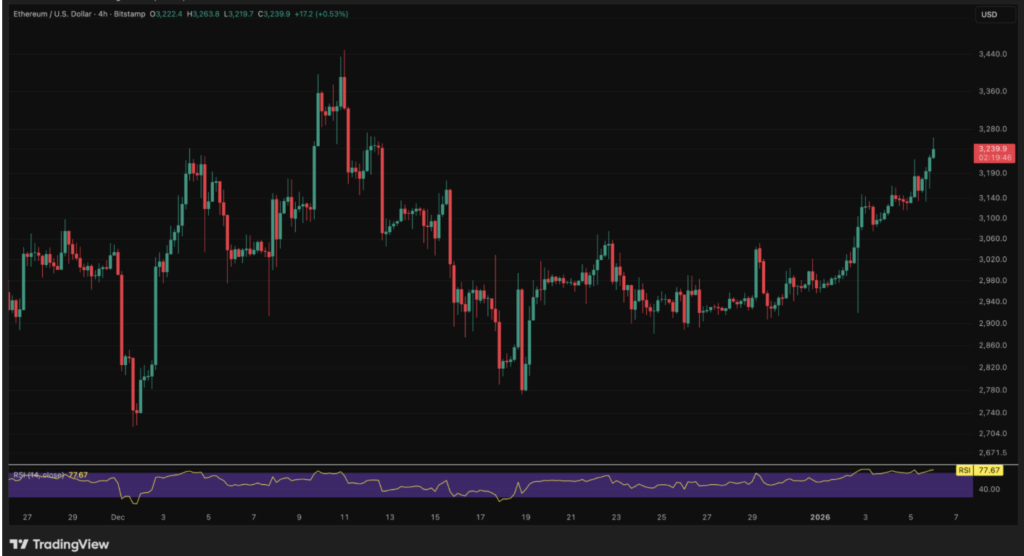
Ethereum opened 2026 with a fresh narrative after ETH pushed above the $3,200 level. The move followed news that Blue Origin, the space company founded by Jeff Bezos, will begin accepting Ethereum and other cryptocurrencies for space tourism payments. In a market that had been drifting sideways, the announcement gave traders something concrete to react to.
For many, the rally wasn’t just about price. It was about validation. Ethereum once again found itself tied to a real-world use case, this time one that involves some of the most expensive consumer services imaginable.
What Blue Origin Actually Announced
Blue Origin confirmed it will accept Ethereum, Bitcoin, Solana, and the stablecoins USDT and USDC for its New Shepard suborbital flights. The integration runs through Shift4, a publicly listed payments processor that already works with large global merchants.
In practice, this means customers can pay directly from wallets like MetaMask or through Coinbase, bypassing traditional wire transfers. It also marks the first time any Bezos-owned company has accepted crypto payments outright, a detail that hasn’t gone unnoticed by institutions still watching from the sidelines.
Ethereum already handles massive stablecoin settlement volumes, and this move fits neatly into that trend. High-value, cross-border payments settling on-chain instead of through legacy banking rails is exactly the lane ETH has been building toward.
Why This Matters Beyond Space Tourism
Most investors won’t be booking a six-figure space flight anytime soon. That’s not really the point. When a high-profile company accepts ETH for something this expensive, it sends a signal to other luxury, travel, and global service providers that crypto payments are viable, even preferable.
Blue Origin didn’t just hold crypto on its balance sheet. It chose to accept it from customers. That distinction matters because it creates organic demand from people who want to spend crypto, not just trade it. Over time, that kind of demand adds a different layer to Ethereum’s value story.
Does This Change Ethereum’s Long-Term Outlook?
On its own, no single integration rewrites Ethereum’s future. Space payments won’t magically double ETH’s price. But this development stacks on top of other adoption signals, growing stablecoin usage, active DeFi markets, and institutional exposure through futures and spot products.
Blue Origin also plans to expand into larger programs like New Glenn and potential lunar missions. If crypto payments remain part of those initiatives, Ethereum could become embedded in an entirely new industry. That optionality matters, even if it takes years to play out.
Still, short-term price action will continue to be driven by liquidity, macro conditions, and derivatives positioning. Headlines help sentiment, but charts still respond first to money flows.
Risks and a Grounded Takeaway
This isn’t a reason to chase ETH on hype alone. Crypto remains volatile, and Ethereum can swing hundreds of dollars in a short window. Anyone entering should treat ETH as a high-risk, long-term asset and size positions accordingly.
The more balanced takeaway is simple. Adoption stories like this are confirmations, not triggers. They show Ethereum steadily finding real-world niches, even if price doesn’t react immediately or sustainably.
As crypto payments stretch beyond Earth’s atmosphere, Ethereum’s real test stays grounded. Can it keep earning trust from merchants, developers, and users through the next market cycle? That’s the question that matters most.