

- Ethereum dropped below $1,980, pushing major whale cohorts into unrealized losses, including mega-holders above the $2,075 cost basis.
- Founder-linked ETH sales continue in a staggered pattern, signaling cautious treasury adjustments rather than panic liquidation.
- Kalshi markets assign high probabilities to further downside, with 85% odds of ETH falling below $1,750.
Ethereum’s decline didn’t happen all at once. It unfolded gradually, almost methodically, as macro pressure tightened, leverage unwound, and liquidity thinned out across the market. By February 21, ETH had slipped below the $1,980 mark, a level that once felt stable, and profitability across major holder groups started compressing fast.
This wasn’t some isolated dip. It followed weeks of quiet distribution, derivatives deleveraging, and a noticeable pullback in risk appetite from larger balance sheets. As price weakened, unrealized losses spread across whale cohorts, from wallets holding 1,000–10,000 ETH all the way up to those controlling over 100,000 ETH. Spot price now trades below the $2,075 cost basis of mega-holders, meaning even the biggest addresses are technically underwater.
Long-term holders are hovering near breakeven. Short-term holders, though, are deep in the red, with profitability ratios sitting near 0.5. And yet, despite this pressure, whales aren’t rushing for the exits. Realized cap data shows limited aggressive selling. Historically, this kind of cohort-wide stress tends to test conviction. Pain builds first. Accumulation sometimes follows.
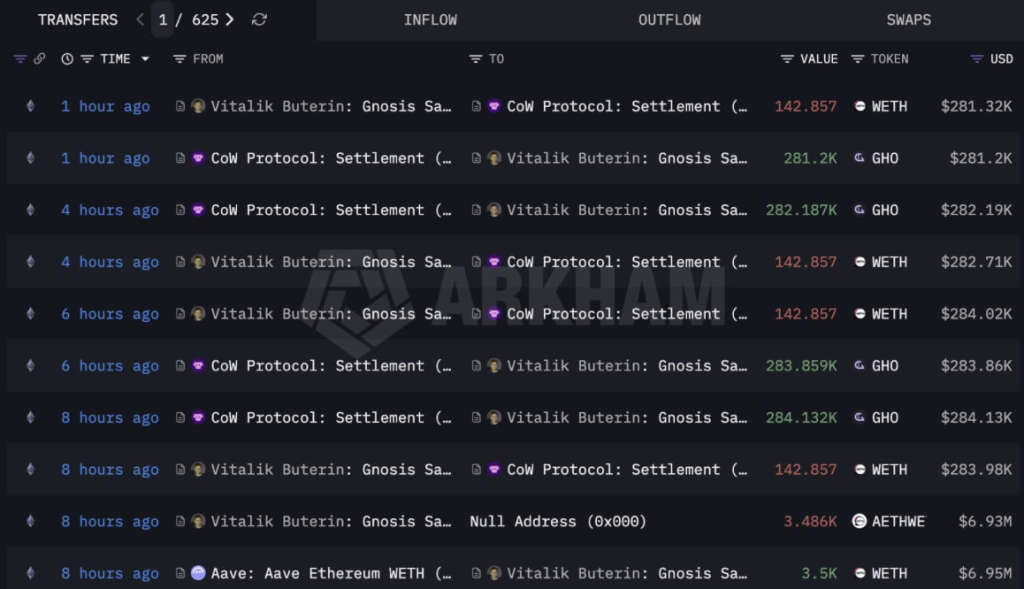
Founder Sales Resurface, But Not in Panic Mode
Against this backdrop, founder-linked activity has returned to the spotlight. Vitalik Buterin had already conducted smaller ETH sales roughly two weeks prior, forming what looks like a staggered disposal pattern. It wasn’t one dramatic liquidation. More like paced trimming.
The latest move involved withdrawing 3,500 ETH, worth about $6.95 million, from Aave. That transaction continues the pattern rather than signaling sudden capitulation. The distinction matters. Distress selling usually hits exchanges in waves. This, instead, looks more like collateral repositioning or treasury management.
These flows coincide with growing unrealized losses among whale cohorts, but on-chain data still doesn’t show aggressive distribution. It feels measured. Cautious. Founder sales can influence sentiment, no doubt, especially in fragile conditions. But the scale here suggests portfolio adjustment, not panic dumping.
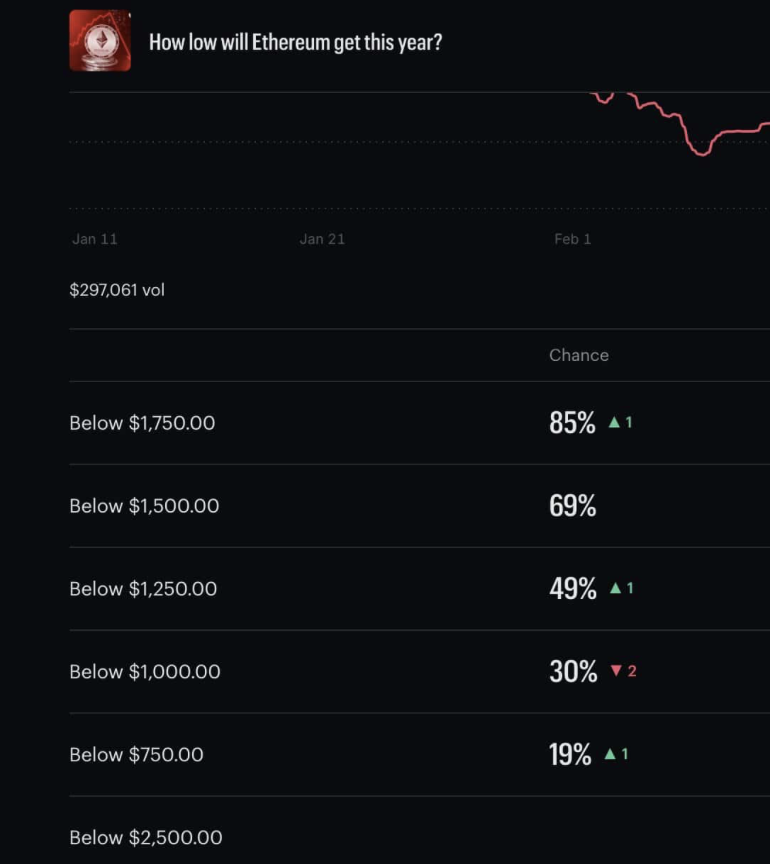
Kalshi Markets Lean Bearish
Prediction markets are reflecting the caution. On Kalshi, as Ethereum trades near $1,975, odds have shifted noticeably toward further downside. There’s now an 85% probability assigned to ETH breaching $1,750. Nearly half of participants, around 49%, anticipate a move below $1,250. Even sub-$1,000 scenarios are being priced with roughly 30% odds.
That’s heavy. It signals a market bracing for more weakness, especially as founder-linked flows and whale repositioning remain visible. As unrealized losses widen, sentiment softens. Treasury rebalancing adds to the cautious tone.
And yet, historically, when fear becomes this concentrated, markets often sit closer to capitulation than continuation. Deeply skewed probabilities have a way of clustering near bottoms, not tops. Whether this moment becomes another conviction test before recovery, or something more structural, will likely depend on how whales respond in the days ahead.ETH Mega-Holder Cost Basis Breaks – Here Is Why Downside Risks Are Growing in Crypto