
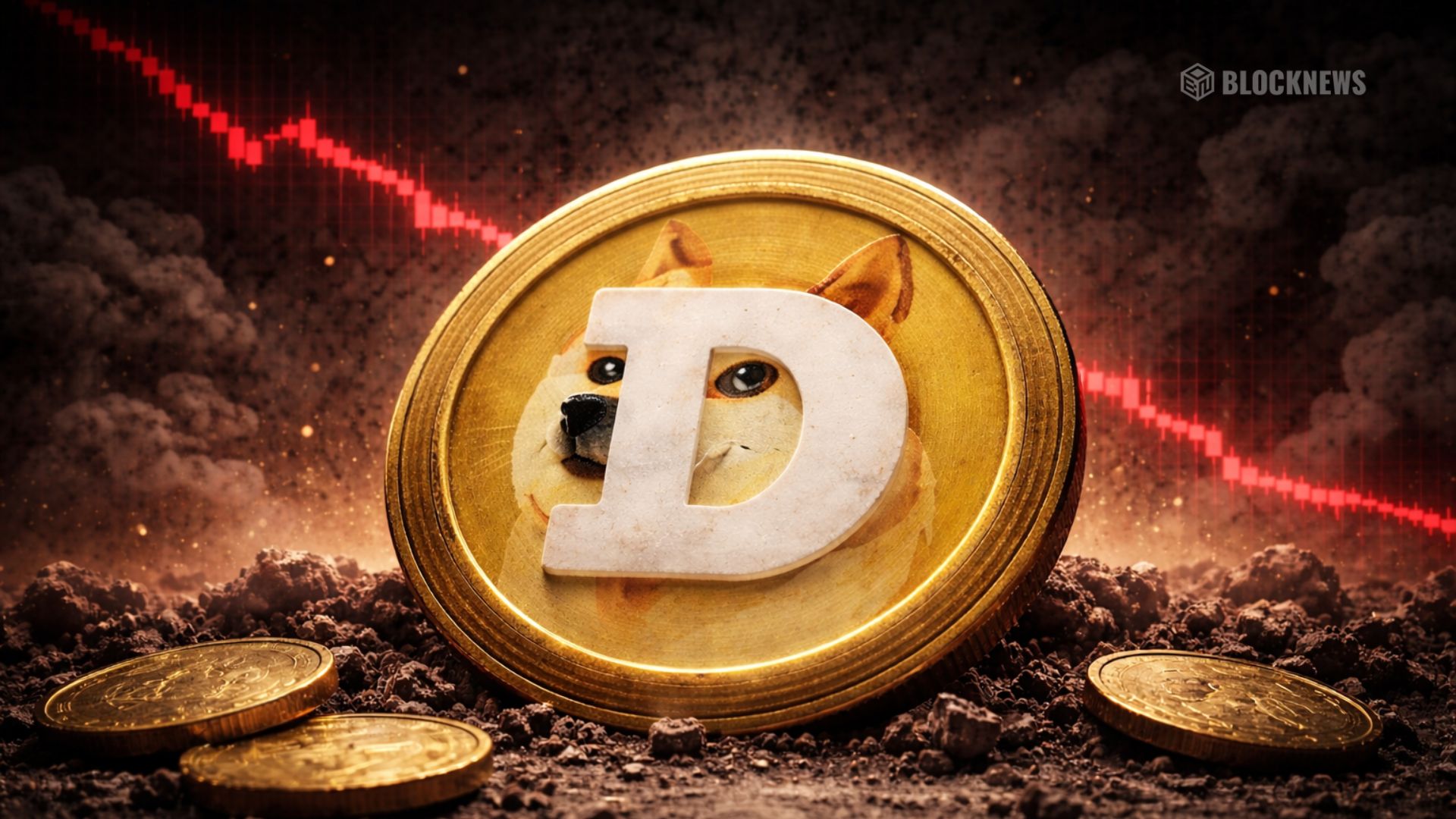
- Dogecoin remains heavily dependent on speculation, with little underlying utility to support long-term price strength.
- DOGE’s unlimited supply creates constant dilution, quietly pressuring value over time.
- A return toward the $0.05–$0.06 range in 2026 remains possible if sentiment continues to fade.
Dogecoin started as a joke, and for a while, it was a very profitable one. Back in 2013, two friends created DOGE to poke fun at a crypto industry they felt was taking itself way too seriously. The Shiba Inu meme did the rest. Fast forward to 2021, and Dogecoin briefly carried a market cap north of $90 billion, turning early believers into unexpected winners.
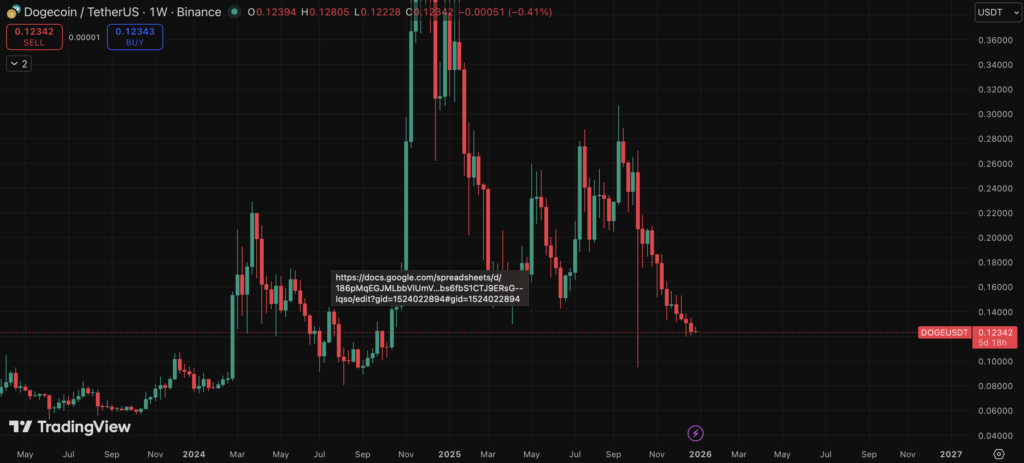
That moment didn’t last. By mid-2022, DOGE had already lost more than 90% of its peak value. Most of that explosive upside was driven by hype and speculation rather than fundamentals, and once the excitement faded, there wasn’t much left underneath. Even after a solid rally toward the end of 2024, Dogecoin still hasn’t printed a new all-time high in four years, and in 2025 alone, it’s sitting on a drawdown of roughly 62%. Looking ahead, the setup suggests the pain may not be over.
Speculation Can Only Carry Price So Far
In crypto, real use cases tend to matter more than people want to admit. Bitcoin has carved out a role as a store of value. Ethereum powers a massive ecosystem of decentralized applications. XRP functions as a bridge currency inside Ripple’s payments network. All three managed to reach new highs in 2025, largely because demand for them exists beyond trading screens.
Dogecoin doesn’t really fit into that category. It’s not viewed as a reliable store of value, which keeps institutional investors at arm’s length. It’s also not widely used for payments, with only a little over 2,000 businesses globally accepting it, according to Cryptwerk. That’s a tiny footprint compared to more functional networks.
Most of DOGE’s rallies have instead been sparked by waves of speculation, often amplified by high-profile voices like Elon Musk. The problem is timing. These surges are impossible to predict and even harder to sustain. Once sentiment shifts, there’s no structural demand stepping in to support price, and that’s when the air tends to come out fast.
Unlimited Supply Is a Quiet Headwind
Another issue hangs over Dogecoin that rarely goes away. Unlike Bitcoin or XRP, which have capped supplies, DOGE has no hard limit. Up to 5 billion new coins can be mined every year, indefinitely. There’s no final issuance date, no terminal supply number. Over time, that creates constant dilution.
Right now, Dogecoin has a circulating supply of about 152.3 billion coins. At a price near $0.12, that puts its market cap around $18 to $19 billion. If supply continues expanding at the current pace, it would take roughly 30 years for circulation to double. If price stayed flat, market cap would rise mechanically, but markets rarely work that cleanly.
A more realistic outcome is price adjustment. If DOGE were to fall to $0.06, its market cap would remain roughly the same despite the growing supply. That’s the slow erosion effect of an asset with unlimited issuance, value gets spread thinner unless demand grows meaningfully. So far, there’s little evidence that kind of demand is forming.
Why a Deeper Drop in 2026 Isn’t Far-Fetched
Dogecoin is already deep in the red, down more than 60% this year. But history suggests that alone doesn’t guarantee a bottom. During the 2022 crash, DOGE ultimately slid to around $0.05 before stabilizing. With no clear fundamental catalyst on the horizon, that level doesn’t feel out of reach again.
A move back toward $0.05 would imply another 50% to 60% downside from current prices. That kind of decline wouldn’t require any dramatic shock, just continued apathy and fading speculative interest. Timing it precisely is almost impossible, just like calling the top was, but the broader trend still points lower.
Unless Dogecoin finds a genuine use case that creates sustained demand, not just attention, the odds favor continued pressure. Speculation can ignite rallies, sure, but without something real underneath, those rallies tend to fade. And in 2026, that reality may finally catch up again.