

- The Federal Reserve is being pulled directly into political power struggles
- Fed credibility matters for the dollar, risk assets, and crypto pricing
- Markets may cheer short term, but long-term trust is at stake
Donald Trump’s decision to tap Kevin Warsh to replace Jerome Powell is being sold as a conventional move, but the context tells a different story. Trump has spent months publicly attacking Powell, and this nomination feels less like orderly succession and more like an assertion of influence. When central banks lose perceived independence, every asset tied to the dollar, including crypto, feels the ripple effects.
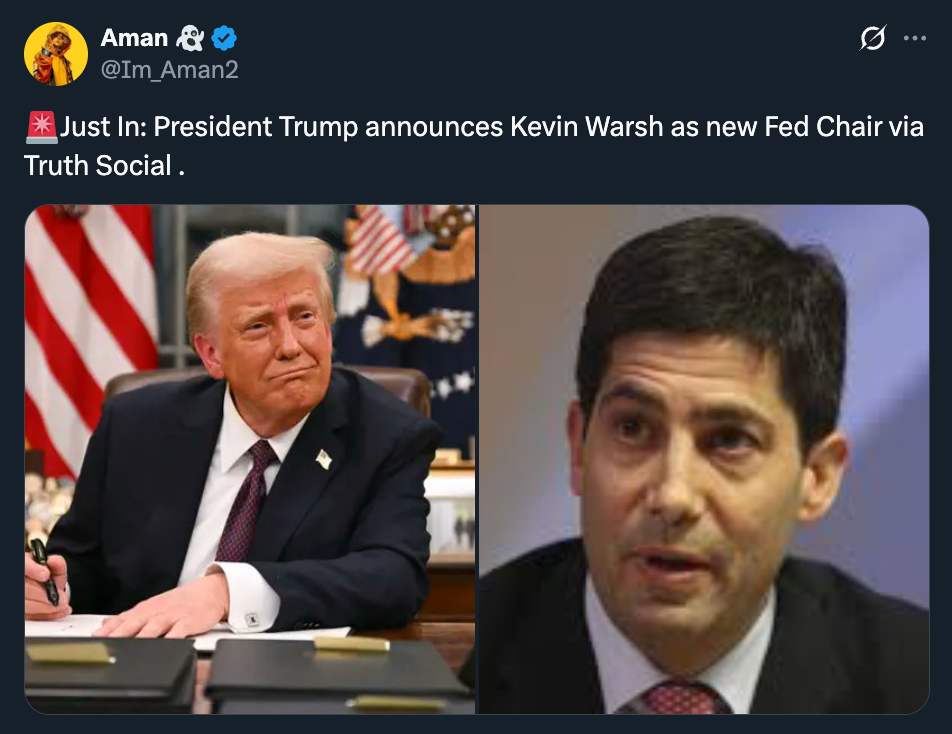
Warsh’s Pivot Raises Credibility Questions
Warsh spent years warning about inflation risks, even during periods when growth was fragile. Now he appears more open to rate cuts, aligning neatly with Trump’s public demands. That shift may be defensible on economic grounds, but the timing matters. Markets price credibility as much as policy, and a Fed chair who appears to adjust views under political pressure invites skepticism across currencies, bonds, and digital assets.
Why Crypto Cares About Fed Independence
For crypto markets, this isn’t abstract politics. A politicized Fed weakens confidence in monetary neutrality, which directly affects dollar stability, liquidity cycles, and risk appetite. Bitcoin and other crypto assets often react not to rate moves themselves, but to trust erosion in the institutions setting those rates. If every Fed decision becomes a partisan battle, volatility becomes structural, not cyclical.

Markets May Rally, But the Cost Lingers
Equities could respond positively in the short term as traders price in easier policy. Crypto may even benefit initially from looser financial conditions. But over time, a Fed seen as politically pliable complicates inflation control, pressures the dollar, and injects uncertainty into global capital flows. That environment rewards speculation but punishes long-term stability.
Conclusion
Trump isn’t just nominating a Fed chair. He’s testing whether markets and lawmakers will tolerate a central bank that appears answerable to political power. For crypto investors, this matters deeply. When trust in monetary institutions erodes, digital assets don’t just trade on narratives, they become part of the fallout.