- The CFTC joined Gemini in asking a court to vacate parts of a major 2022 enforcement case
- Regulators admitted the complaint “should not have been filed” under current standards
- The reversal is fueling criticism of the Biden-era “regulation by enforcement” approach toward crypto
In one of the more extraordinary reversals Washington has produced in recent years, the Commodity Futures Trading Commission is now effectively admitting it probably should never have sued Gemini in the first place.
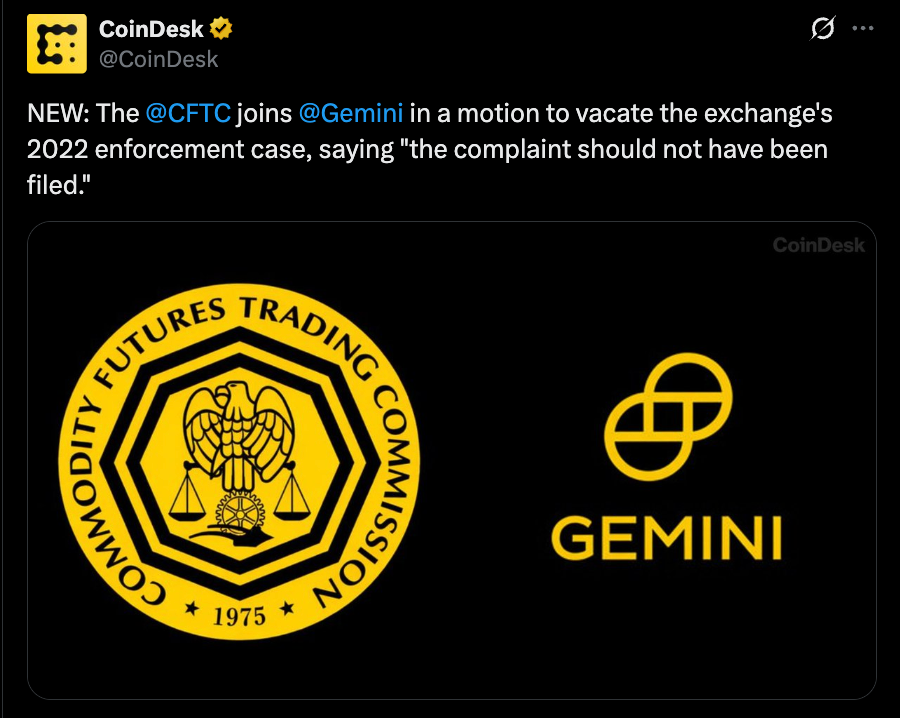
The agency joined Gemini in requesting that parts of its long-running enforcement case be vacated, marking a stunning shift in tone from the aggressive crypto crackdowns that dominated much of the Biden administration’s regulatory approach.
And honestly, regulators publicly saying a major enforcement complaint “should not have been filed” is not something that happens often. Somewhere, a room full of compliance lawyers probably needed a minute after reading that filing.
The Gemini Case Is Suddenly Being Rewritten
The original case centered around allegations that Gemini made misleading statements tied to a Bitcoin futures product. Back in January 2025, Gemini agreed to settle the matter for $5 million without admitting wrongdoing, which at the time looked like another standard example of regulators tightening pressure on crypto firms through enforcement actions rather than clear legislation.
Now the CFTC itself is questioning how the case was built.
According to the latest filings, the agency’s internal review reportedly uncovered serious concerns involving weak evidence, questionable investigative methods, and heavy reliance on a whistleblower the CFTC no longer considers reliable.
That alone would already be embarrassing enough for regulators. But the filing apparently goes even further.
Regulators Are Criticizing Their Own Tactics
The court documents reportedly accuse enforcement staff of using inappropriate litigation and settlement tactics during the case. More notably, the filing references concerns that Gemini’s separate regulatory approvals may have been used as leverage to pressure the company into settling.

That’s the kind of language that tends to make crypto executives feel vindicated very quickly while simultaneously making former regulators suddenly much less interested in speaking publicly.
For years, many crypto firms argued regulators blurred the line between legitimate enforcement and political pressure campaigns designed to force settlements regardless of whether clear rules actually existed. The Gemini reversal now adds serious fuel to those arguments.
Washington’s Crypto Strategy Is Clearly Shifting
The bigger takeaway here extends far beyond Gemini itself. Federal agencies increasingly appear to be reassessing how crypto enforcement was handled during the previous administration.
Under Biden, regulators frequently relied on aggressive enforcement actions against exchanges, token issuers, and crypto service providers even while Congress struggled to establish comprehensive digital asset legislation. Critics labeled the strategy “regulation by enforcement,” arguing agencies punished firms without first providing workable legal frameworks for compliance.
Now, under the Trump administration, regulators seem increasingly willing to separate outright fraud from companies attempting to operate within evolving legal gray areas.
That does not mean crypto suddenly became fully embraced in Washington obviously. But the tone is changing fairly noticeably.
Crypto Firms Are No Longer Fighting The Same Battle
What’s especially ironic is that parts of the crypto industry once accused of operating entirely outside the law are now watching regulators openly question whether previous enforcement actions themselves went too far.
That’s a remarkable political shift in a relatively short period of time.
The Gemini case now symbolizes something larger happening beneath the surface. Crypto’s biggest battles are no longer simply about survival or legitimacy. Increasingly, they revolve around defining where the boundary exists between responsible regulation and regulatory overreach.
And Washington itself seems increasingly divided on where that line actually belongs.
The Political Hangover From Crypto Crackdowns Is Still Unfolding
The reversal also leaves lingering questions about how many other crypto enforcement actions from the past several years may eventually face similar scrutiny. If regulators are willing to publicly walk back a case this significant, pressure will likely grow around broader reviews of how aggressively agencies pursued crypto firms during the previous administration.
For the crypto industry, the Gemini situation feels less like one isolated legal victory and more like evidence that the political climate surrounding digital assets is shifting underneath the surface.
Crypto remains controversial. Regulators still want oversight. Fraud cases will absolutely continue. But the era of reflexively treating every crypto company like a potential criminal enterprise appears to be softening, at least somewhat.
And for an industry that spent years fighting regulators on nearly every front, that change in tone alone is pretty significant.