

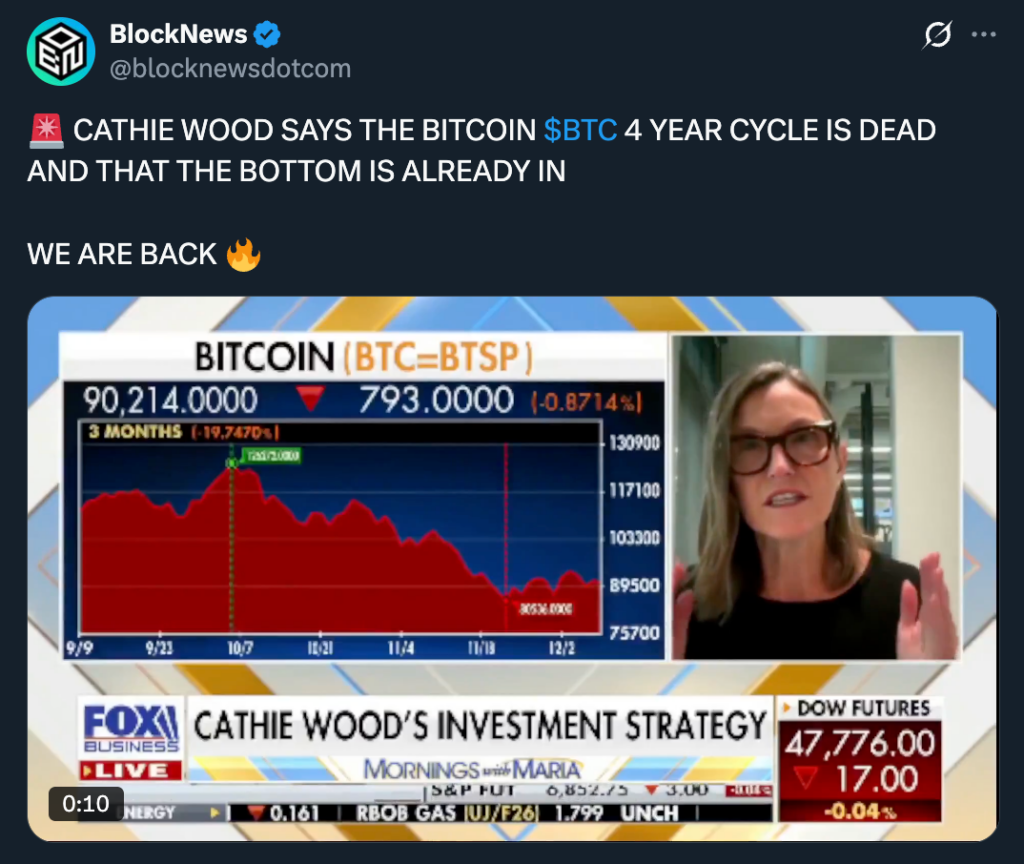
- Cathie Wood argues the traditional Bitcoin four-year halving cycle may no longer apply, and suggests Bitcoin’s bottom could already be in.
- She remains optimistic about Bitcoin’s long-term potential due to growing institutional adoption, ETFs, and macroeconomic tailwinds.
- According to Wood, reduced volatility and stronger demand could mean Bitcoin won’t see the steep 70-90% crashes typical in earlier cycles.
Cathie Wood believes Bitcoin is entering a new phase where the classic four-year halving cycle may no longer define its behavior. She explained that the conditions that once fueled boom-and-bust patterns — extreme volatility, speculative retail waves, and hype-driven swings — have changed. Instead of treating the latest dip as part of a predictable cycle, Wood says it may actually be the market bottom itself.
Fundamentals Now Matter More Than Halving Hype
Wood isn’t bearish. In fact, she sees this moment as a signal of BTC‘s growing maturity. The asset is becoming less dependent on cycle timing and more influenced by things like ETF inflows, institutional accumulation, and macro forces that favor scarce digital assets. With deeper pools of capital entering the market, she argues that the brutal 75%–90% crashes of the past may become far less common.
Steadier Growth Could Define the Next Phase
If Bitcoin truly breaks free from the halving pattern, its next rally might look very different. Instead of the typical roller coaster, BTC could rise more steadily as long-term buyers and institutions accumulate. As volatility cools and infrastructure expands, Bitcoin begins acting less like a speculative trade and more like an emerging global asset class. That shift could help it reach major price milestones without the dramatic crashes of earlier cycles.

A Foundation for a Longer, Smoother Bull Market
Wood’s view suggests the current market environment may be laying the groundwork for a more durable rally. With volatility falling and institutional interest climbing, this moment could represent the start of a broader phase of sustained upside rather than the beginning of another harsh cycle. For traders and long-term believers, the dip may not be a warning — it might be an opportunity.