

- Bitcoin trades well below ATH but shows resilience during recent global tensions
- Institutional players continue accumulating BTC through balance sheets and ETFs
- Growing adoption signals a shift toward long-term, portfolio-driven demand
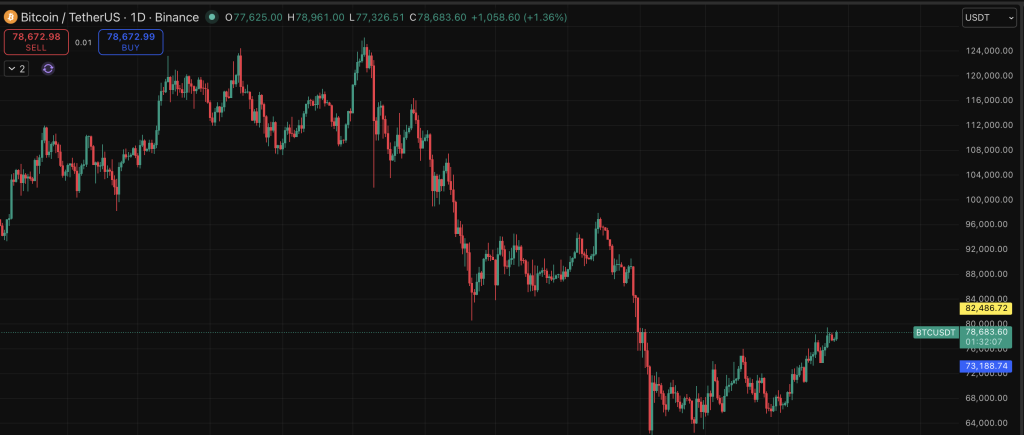
It hasn’t exactly been smooth sailing for Bitcoin since it hit that massive peak of $126,198 back in October 2025. Fast forward to now, and the price is sitting nearly 40% below that level, which, yeah, doesn’t look great at first glance. But zoom in a bit, and the story gets a little more interesting, maybe even a bit stronger than people expected.
Over the past couple of months, Bitcoin has actually held up pretty well, especially considering everything going on globally. Since late February, around the time tensions in Iran escalated, BTC has climbed about 19%, quietly outperforming both the S&P 500 and gold. It’s not a huge sample size, sure, but it does hint at something, Bitcoin acting less like a speculative asset and more like a hedge, at least in certain moments.
Institutional Demand Keeps Building in the Background
What’s really driving this narrative isn’t retail hype, not this time. It’s institutions, and they’re not exactly being subtle about it either. Companies are increasingly adding Bitcoin to their balance sheets, treating it more like a strategic asset than a gamble.
Michael Saylor’s company, Strategy, stands out the most here. It’s not even close, actually. The firm holds over 815,000 BTC, worth nearly $64 billion, which is… kind of staggering when you think about it. Saylor has been consistent in his stance, arguing that Bitcoin is the best defense against fiat currency debasement, mainly because of its fixed supply and long-term track record.
And it’s not just Strategy. Other big names like Coinbase, Tesla, and Block have also allocated Bitcoin to their reserves. The idea seems to be spreading, slowly but steadily, and if prices start climbing again, you can probably expect more companies to follow that path.
ETFs Make Bitcoin More Accessible Than Ever
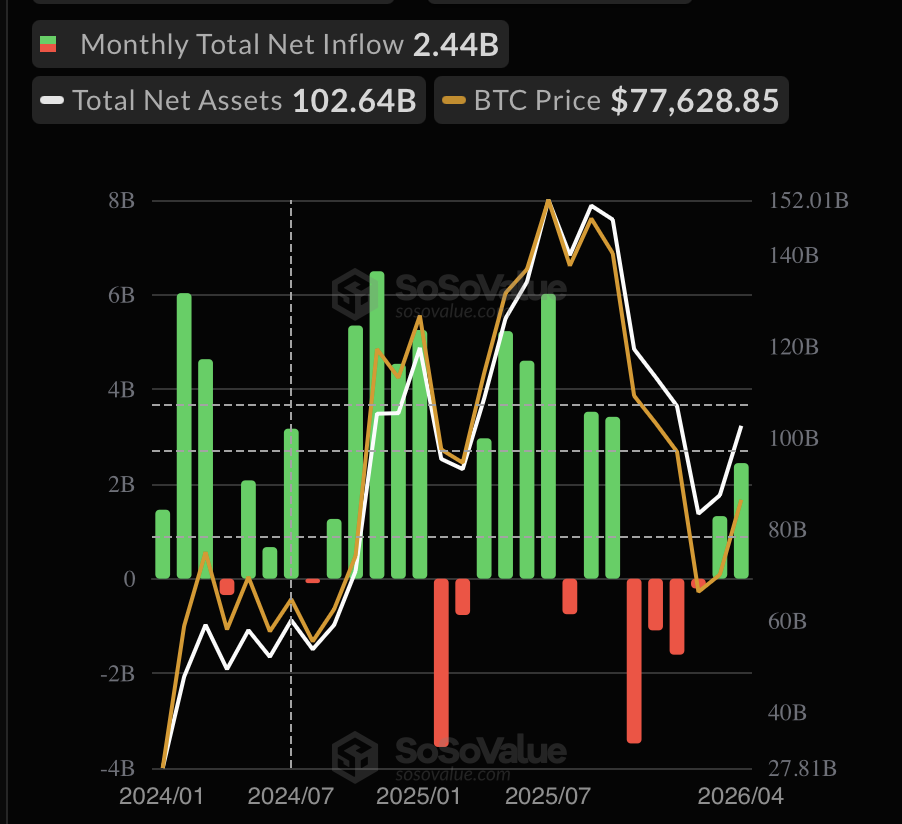
Another big piece of the puzzle is the rise of Bitcoin ETFs. Since their launch back in early 2024, they’ve turned into one of the more successful financial products in recent memory. BlackRock’s iShares Bitcoin Trust alone has gathered close to $64 billion in assets, which says a lot about demand.
Even now, the momentum hasn’t really slowed. Morgan Stanley recently entered the space with its own Bitcoin Trust, and within just a couple of weeks, it pulled in over $160 million. That’s not small, especially for a new entrant.
For these financial firms, the incentive is pretty straightforward, there’s money to be made. Clients want exposure to Bitcoin, and ETFs provide a relatively simple, regulated way to get it. So naturally, firms are building products around that demand, collecting fees along the way.
A Shift Toward Institutional-Led Adoption
The bigger takeaway here is that Bitcoin adoption is starting to look different than it did in earlier cycles. It’s less about retail traders chasing quick gains, and more about institutions quietly building positions over time.
Investment firms, hedge funds, even university endowments, like Harvard’s, are now holding Bitcoin through these ETFs. And they’re not just chasing returns, though that’s part of it, they’re also looking at diversification, adding something that behaves differently from traditional assets.
It’s a subtle shift, but an important one. Bitcoin isn’t just a fringe asset anymore, it’s becoming part of broader portfolio strategies. And while price volatility hasn’t gone anywhere, the foundation underneath it feels a bit more… stable than before.
The Bigger Picture Still Unfolding
So yes, Bitcoin is still well below its all-time high, and that can’t be ignored. But at the same time, it’s showing resilience in places where it didn’t always before, especially during uncertain macro conditions.
Institutional demand is growing, access is easier than ever through ETFs, and the narrative around Bitcoin is slowly evolving. It’s not just about price anymore, it’s about positioning, adoption, and long-term relevance.
Where it goes next is still up for debate, of course. But one thing’s becoming clearer, this cycle might be shaped less by hype, and more by who’s quietly accumulating in the background.