

- Bitcoin briefly dropped under $73,000 amid heavy ETF outflows and geopolitical fears
- BlackRock’s IBIT recorded its second-largest daily outflow since launch
- Some investors still view the selloff as a temporary macro-driven reset rather than a collapse
Bitcoin slipped below the $73,000 level Thursday, triggering another wave of panic across crypto markets as traders reacted to rising geopolitical tensions, ETF outflows, and broader macroeconomic pressure hitting risk assets globally.
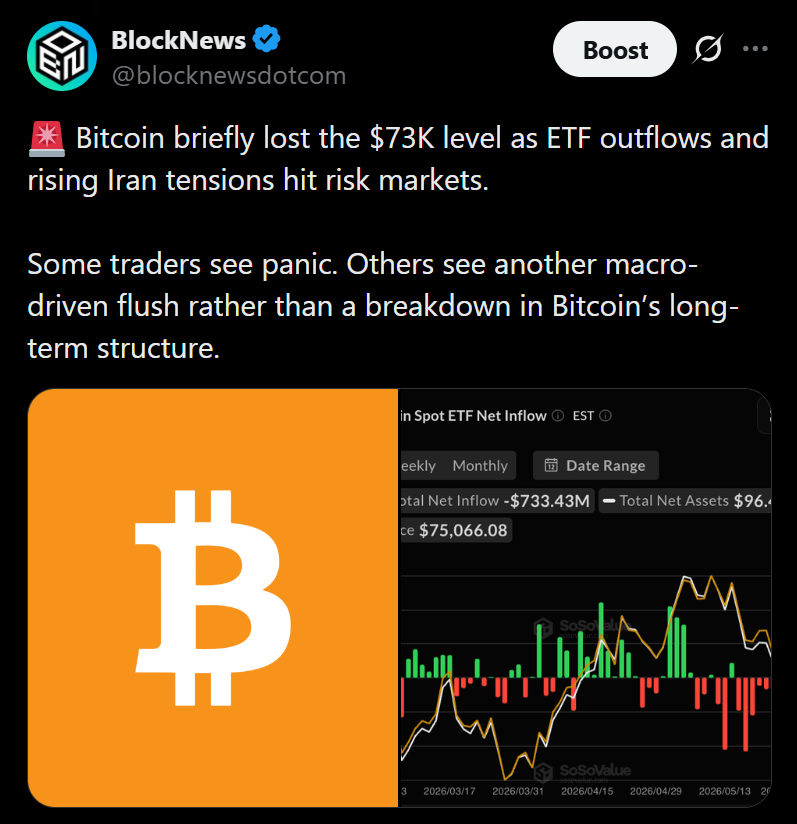
Crypto Twitter responded exactly how you’d expect, somewhere between “buy the dip” and “financial civilization is ending.” In reality, though, the move looked far more like a classic macro-driven risk-off flush than some fundamental breakdown in Bitcoin itself.
ETF Outflows Suddenly Turned Aggressive
According to data reported by The Block, U.S. spot Bitcoin ETFs recorded roughly $733 million in net outflows Wednesday, marking their worst single day since January.
BlackRock’s IBIT alone reportedly saw more than $527 million exit the fund, its second-largest daily outflow since launch. That matters because BlackRock had previously become one of the strongest symbols of institutional Bitcoin accumulation throughout the year.
When the same institutions aggressively buying weeks ago suddenly start reducing exposure, even temporarily, markets tend to react pretty fast. Especially in crypto, where sentiment shifts violently once key support levels start breaking underneath leveraged traders.
Geopolitical Fears Are Hitting Global Markets
Part of the pressure clearly stems from escalating geopolitical tensions surrounding Iran and broader instability across global energy markets. Rising concerns around military activity, oil supply disruptions, and the Strait of Hormuz pushed investors toward safer assets while increasing overall market anxiety.
Treasury yields climbed as traders rotated capital away from higher-risk positions, adding more downside pressure to both equities and cryptocurrencies.

And honestly, markets right now feel hypersensitive to almost every geopolitical headline involving oil routes, military escalation, or major world powers. Crypto is no longer trading in isolation from those dynamics the way some early Bitcoin maximalists once imagined.
Bitcoin Is Still Acting Like A Global Risk Asset
The recent selloff reinforces something many traders already know but occasionally forget during bull runs, Bitcoin remains deeply connected to global liquidity conditions. ETF flows matter. Interest rates matter. Oil prices matter. War headlines definitely matter.
As fear spread through markets, liquidations accelerated once Bitcoin lost key support zones, amplifying the decline through forced selling from overleveraged traders. That kind of cascade is extremely common during sharp crypto corrections, especially after strong rallies where positioning becomes crowded.
Still, perspective matters here too. Bitcoin trading near $72,000 would have sounded absurdly bullish not very long ago, even if today’s market participants suddenly act like the sky is collapsing every time BTC drops a few percentage points.
Some Investors See A Reset, Not A Breakdown
Despite the panic, several investors continue viewing the pullback as more of a healthy macro-driven reset than a structural reversal for Bitcoin itself. Institutional adoption trends remain broadly intact, even if short-term positioning becomes more defensive during periods of geopolitical stress.
Markets rarely move in straight lines, and Bitcoin historically punishes traders who become too euphoric or too fearful at extremes. The current environment feels less like abandonment and more like investors temporarily de-risking while global uncertainty remains elevated.
That doesn’t mean volatility is over, obviously. If geopolitical tensions worsen further or ETF outflows continue accelerating, crypto markets could easily remain under pressure near term.
But for now, many long-term investors still appear focused on the broader adoption story rather than treating one macro-driven selloff as the end of the cycle entirely.