

- Bitcoin Fear & Greed Index plunges to 8, signaling extreme fear
- BTC struggles near $63,000 amid tariff hikes and liquidations
- Analysts remain split between $30K downside and long-term six-figure targets
Bitcoin is enduring one of its longest low-price stretches in recent cycles, with sentiment collapsing into extreme fear territory. The Fear & Greed Index has dropped to 8, a level that historically reflects capitulation rather than confidence. BTC is trading near $63,000, repeatedly testing the $60,000 support as macro pressure intensifies.
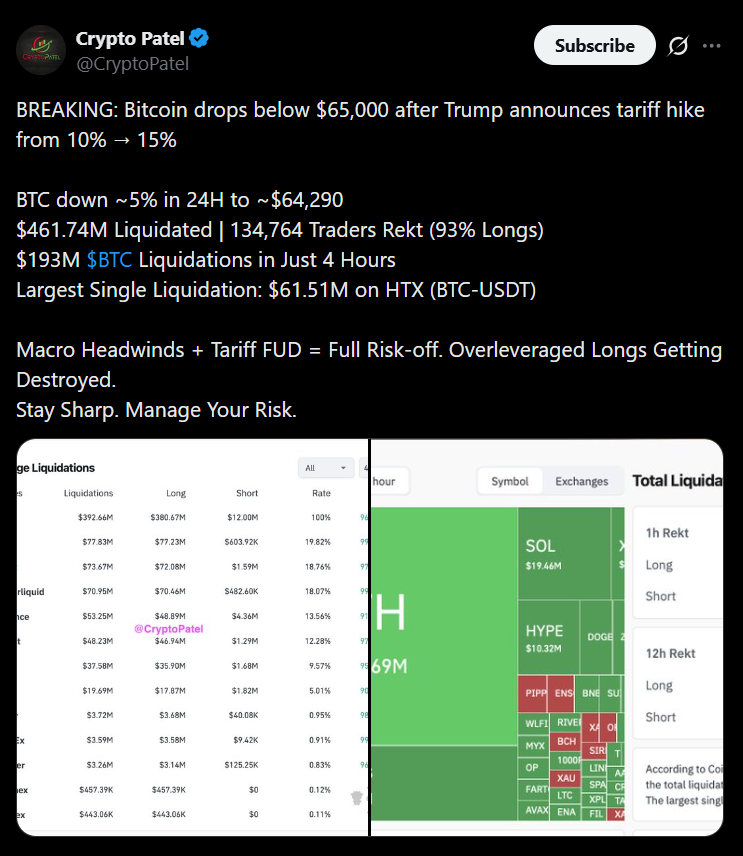
The latest drop followed President Trump’s announcement of a tariff hike from 10% to 15%, which triggered a wave of liquidations. In 24 hours, roughly $461 million in positions were wiped out, with heavily leveraged longs taking the brunt of the damage. Risk appetite has clearly cooled, and Bitcoin is reacting like a macro asset, not a detached hedge.
Gold Rallies While Crypto Stalls
As Bitcoin stalls, capital appears to be rotating toward traditional safe havens. Gold has surged past the $5,200 level, reinforcing its role as the preferred geopolitical hedge. In contrast, Bitcoin’s “digital gold” narrative is being tested as investors prioritize stability over volatility.

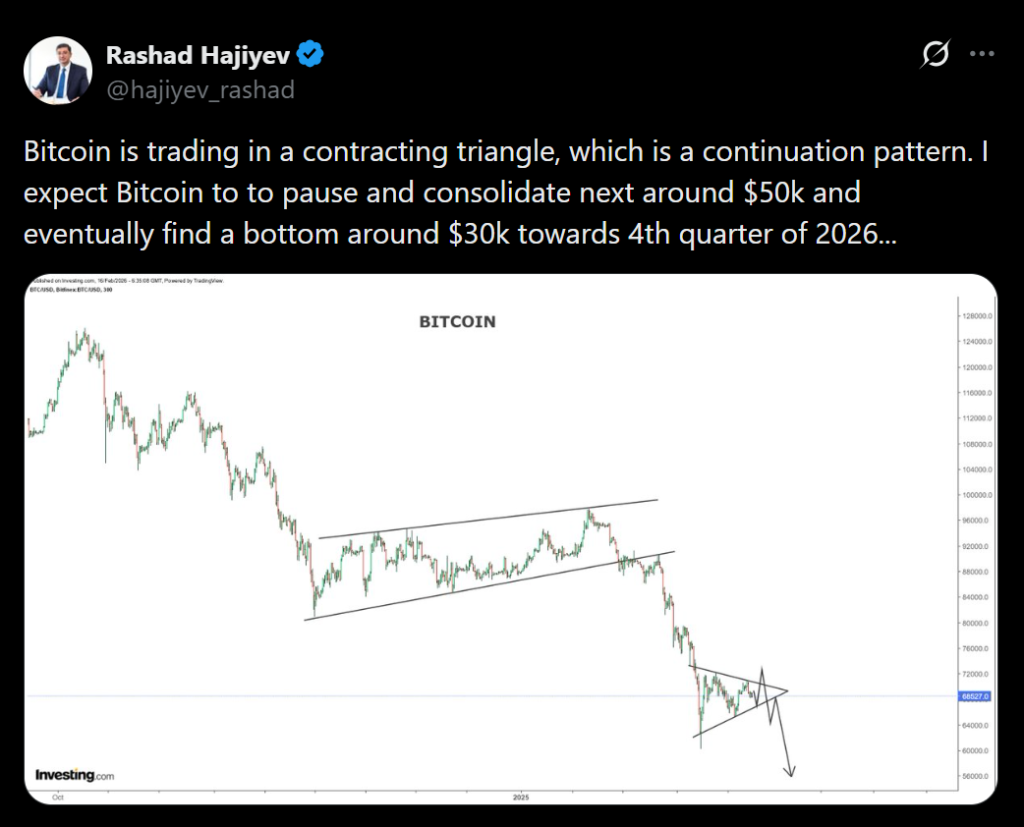
Some analysts argue BTC is forming a contracting triangle, typically viewed as a continuation pattern. Financial expert Rashad Hajiyev suggests Bitcoin could consolidate near $50,000 before potentially finding a deeper bottom around $30,000 into late 2026. That outlook reflects how cautious sentiment has become.
Liquidations and Macro Headwinds Dominate
The market is operating in full risk-off mode. Overleveraged positions have been flushed, and macro uncertainty continues to dictate price action. Liquidity remains tight, and Bitcoin’s attempts to reclaim $80,000 have repeatedly failed under geopolitical and tariff-driven stress.
At the same time, Bitcoin faces an identity debate. Stablecoins are gaining traction, prediction markets are expanding, and gold continues climbing. Some commentators argue BTC is competing for relevance in a shifting financial landscape.
Long-Term Conviction Still Exists
Despite the short-term weakness, institutional voices remain constructive. U.S. Treasury Secretary Scott Bessent has suggested that regulatory clarity could unlock renewed upside momentum. Structural developments, including ETF access and legislative progress, continue to shape long-term expectations.
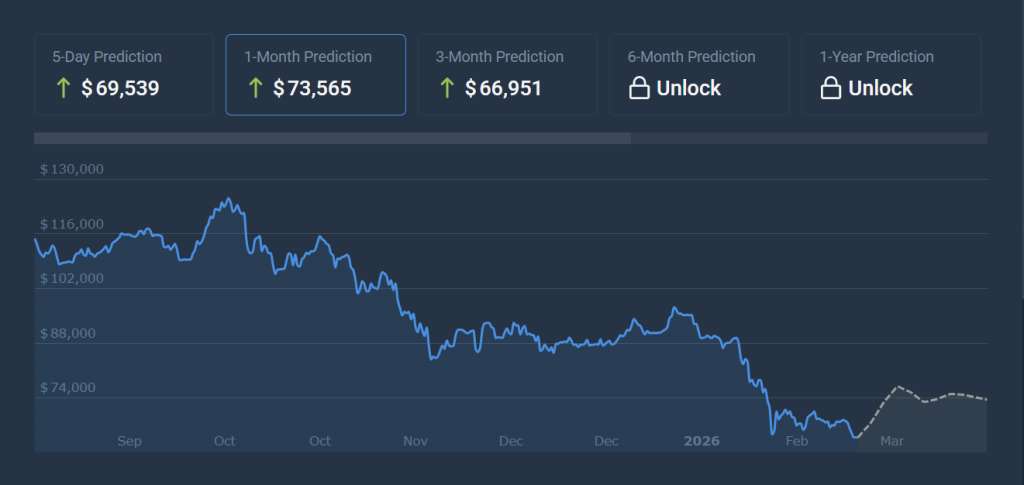
According to CoinCodex projections, Bitcoin could reach roughly $79,500 by the end of 2026 and around $166,000 by 2030. Longer-term models even forecast substantially higher levels into 2040 and beyond. While near-term volatility persists, the broader thesis around scarcity and adoption remains intact.
What Comes Next
Bitcoin is balancing between fear-driven selling and structural conviction. If liquidity improves and macro pressure eases, extreme fear readings could historically mark a reversal zone. However, continued geopolitical escalation or tightening conditions could push BTC toward deeper support levels.
For now, Bitcoin remains in a compression phase. The next decisive move will likely depend less on technical charts and more on macro clarity.