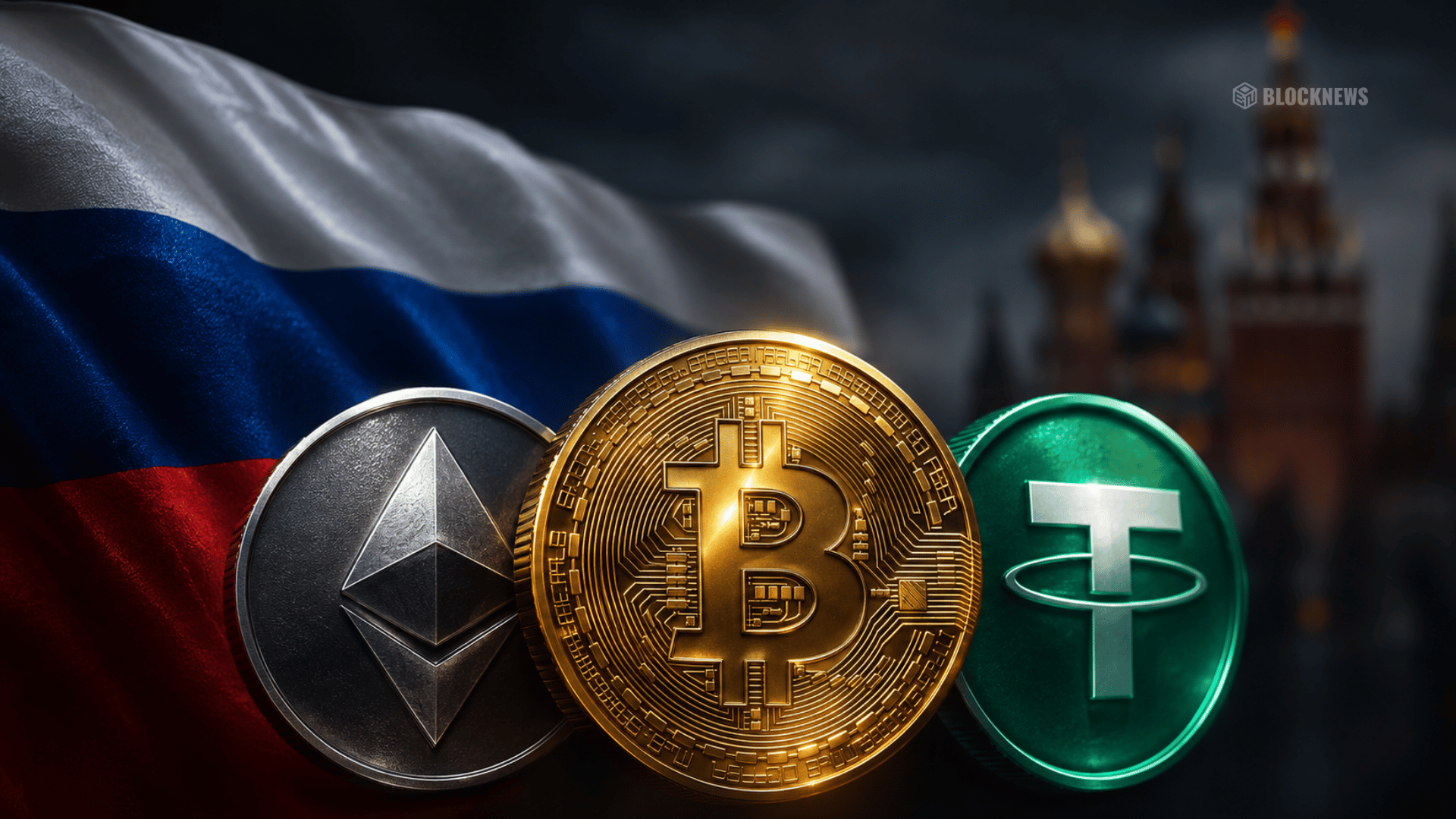
- Russia has officially introduced new cryptocurrency investment rules allowing retail investors to purchase Bitcoin, Ethereum and USDT through regulated financial intermediaries starting Nov. 17.
- Non-qualified investors face an annual purchase limit of 300,000 rubles, approximately $3,636, per intermediary, while qualified investors can trade without an equivalent cap.
- Russian exchanges can begin cryptocurrency trading on Nov. 22 with regulatory approval, while Moscow Exchange and Sberbank are preparing to launch crypto services on Dec. 1.
Russia has officially expanded access to cryptocurrency investments, allowing retail investors to purchase Bitcoin, Ethereum and Tether’s USDT through regulated financial institutions.
The new rules took effect on Nov. 17, following approval from the Bank of Russia earlier this month.
Under the framework, non-qualified investors can purchase approved cryptocurrencies through licensed brokers, trust managers and cryptocurrency exchange operators.
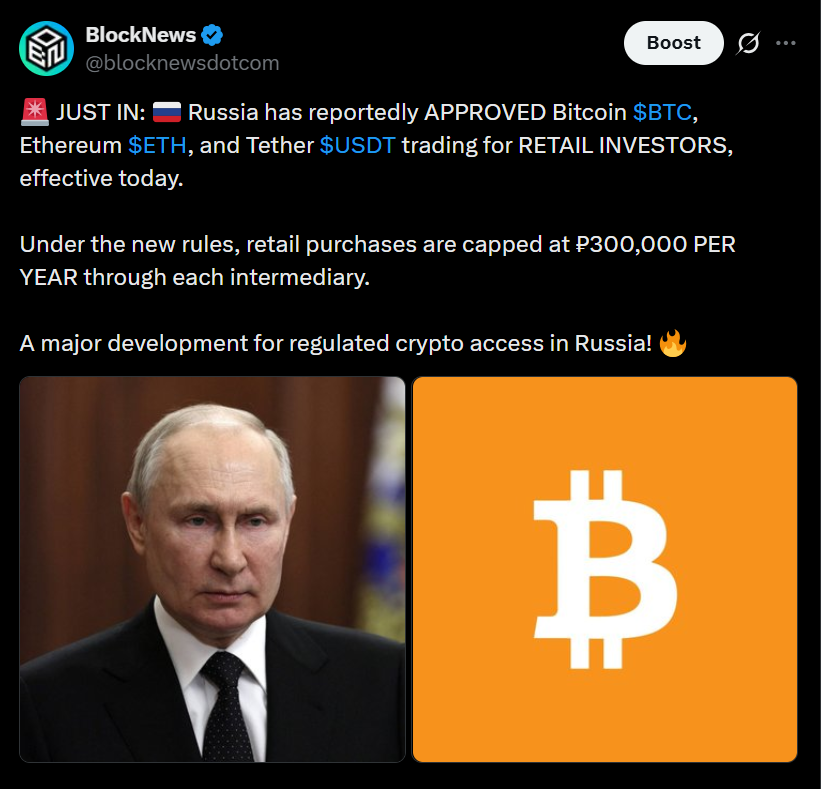
However, retail investors will face an annual purchase limit of 300,000 rubles, equivalent to approximately $3,636 based on the central bank’s referenced exchange rate.
The regulatory changes represent an important development for Russia’s cryptocurrency market as the country moves toward a more structured system for digital asset investment and trading.
Russia Introduces Cryptocurrency Investment Limits
According to the Bank of Russia, the new framework establishes specific requirements for individuals purchasing cryptocurrencies through regulated intermediaries.
Under Ordinance No. 7441-U, non-qualified investors are permitted to purchase Bitcoin, Ethereum and USDT within an annual limit of 300,000 rubles.
Importantly, the limit applies separately to each financial intermediary rather than representing a single combined cap across all providers.
Financial institutions must calculate the total ruble value of cryptocurrencies purchased on behalf of each investor during the calendar year.
The central bank selected the initial approved assets based on several factors, including market capitalization, trading activity and historical price data.
Bitcoin and Ethereum are classified as eligible digital currencies, while USDT falls under a separate category of foreign digital instruments.
Qualified investors will have access to a broader range of cryptocurrencies without the same annual purchase restriction.
However, both qualified and non-qualified investors must complete mandatory assessments and acknowledge the risks associated with cryptocurrency investments before trading.
The requirements are intended to establish investor protections while gradually expanding access to digital assets.

Moscow Exchange Prepares Bitcoin and Ethereum Trading
Russia’s new regulations also establish a framework for cryptocurrency trading on domestic exchanges.
According to the Bank of Russia, authorized exchanges can begin offering cryptocurrency trading services starting Nov. 22, provided their trading rules receive regulatory approval.
Moscow Exchange has already announced plans to introduce Bitcoin, Ethereum and USDT trading on Dec. 1.
The exchange expects to begin with pilot transactions before gradually expanding access to additional market participants.
Trading will follow its existing stock market schedule, operating from 6:50 a.m. to 11:50 p.m. Moscow time.
Investors will have access to same-day and next-day settlement options, along with swap transactions designed to support market liquidity.
Cryptocurrency transactions will also be integrated into the National Clearing Centre’s unified clearing infrastructure.
Under the new framework, exchanges must maintain records of transactions, monitor trading activity and report relevant information to the central bank.
These requirements are designed to bring cryptocurrency trading closer to the regulatory standards applied to traditional financial markets.
Russian Banks Expand Cryptocurrency Services
Russia’s banking sector is also preparing to participate in the country’s newly regulated cryptocurrency market.
In October, the Bank of Russia admitted five digital depositories and four cryptocurrency exchange operators under transitional regulatory provisions.
Digital depositories will be responsible for recording and transferring cryptocurrencies and digital rights.
Meanwhile, authorized exchange operators can facilitate cryptocurrency purchases and sales outside organized exchange trading using their own funds.
Sberbank, Russia’s largest lender, received approval to provide cryptocurrency exchange services in October.
The bank plans to introduce its first cryptocurrency products through existing customer platforms on Dec. 1.
Other financial institutions, including VTB and T-Invest Lab, have also appeared among registered cryptocurrency market participants.
Companies operating under transitional approvals must meet transaction monitoring and recordkeeping requirements, with a deadline of Sept. 1, 2027, to achieve full regulatory compliance.
Despite expanding cryptocurrency investment access, Russia continues restricting the use of digital assets for ordinary domestic payments.
Businesses and individuals generally cannot use cryptocurrencies to purchase goods and services within the country.
However, exporters and importers can use cryptocurrency for international trade payments without an equivalent transaction limit.
Russian residents can also conduct certain cryptocurrency transactions abroad and transfer digital assets internationally through regulated channels, subject to applicable reporting requirements.
For investors, the new framework represents a significant step toward formal cryptocurrency market participation in Russia.
The next major developments will come as domestic exchanges and banks begin launching their trading services, potentially expanding access to Bitcoin, Ethereum and stablecoins within the country’s regulated financial system.