

- Robinhood Chain’s TVL has climbed to nearly $1 billion since its July 1 launch, while daily DEX volume reached $1.88 billion on Sunday.
- StoneX analyst Mark Palmer attributed the network’s growth to Robinhood’s brand, permissionless token launches, subsidized gas fees and a flywheel between memecoins and tokenized stocks.
- Most activity is reportedly coming from crypto-native users rather than Robinhood’s existing app customers, while the chain’s stablecoin market cap has surpassed $1 billion.
Robinhood Chain has experienced rapid growth since launching on July 1, with trading activity and liquidity rising sharply across the network.
Total value locked has already approached $1 billion, while daily decentralized exchange volume reached $1.88 billion on Sunday.
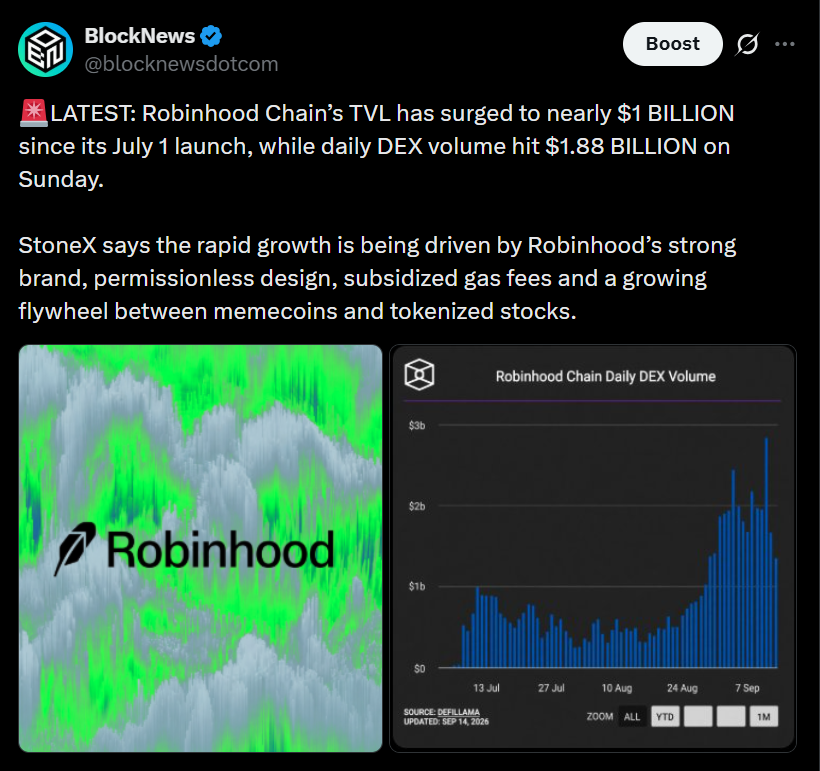
The network also accounts for more than half of all trading volume on Uniswap, according to StoneX analyst Mark Palmer.
Palmer, who recently initiated a “buy” rating and $170 price target on Robinhood stock, described the chain’s early traction as “impressive by any measure.”
Memecoins and Low Fees Drive Activity
Palmer identified four major factors behind Robinhood Chain’s growth.
The first is Robinhood’s established brand, including attention generated around the CASHCAT token after CEO Vlad Tenev followed its account.
The second is the network’s permissionless structure, which allows developers to freely launch tokens.
Pons has reportedly facilitated around 10,000 token launches per day, including approximately 25,000 launches on Sept. 2.
Robinhood is also subsidizing gas fees for wallet swaps above $5, reducing transaction costs for users and encouraging additional activity.
Tokenized Stocks Create a New Flywheel
Palmer also highlighted the relationship between memecoins and Robinhood’s tokenized stocks as another important growth driver.
Long.xyz, a token launchpad built on Robinhood Chain, allows community tokens to launch alongside pairs involving Robinhood tokenized equities.
According to Palmer, this can create a flywheel where memecoin activity generates demand for tokenized stocks, while those tokenized stocks provide a financial narrative that can reinforce interest in the associated community tokens.
The combination gives Robinhood Chain exposure to two fast-growing areas of onchain activity: speculative token trading and tokenized traditional assets.
Crypto-Native Users Lead Robinhood Chain Growth
Despite carrying Robinhood’s brand, most of the chain’s activity is not currently coming from users of the company’s main brokerage app.
CoinDesk Research estimates Robinhood app customers account for only around 1% to 2% of Robinhood Chain transactions.
Instead, most activity has reportedly come through crypto trading terminals, Uniswap and token launchpads.
Stablecoin liquidity is also expanding quickly.
Robinhood Chain’s stablecoin market capitalization surpassed $1 billion last week, increasing approximately 12% week over week and 72% over the past month.
USDG represents 67% of the total stablecoin supply on the network, while Ethena’s USDe accounts for another 30%.