
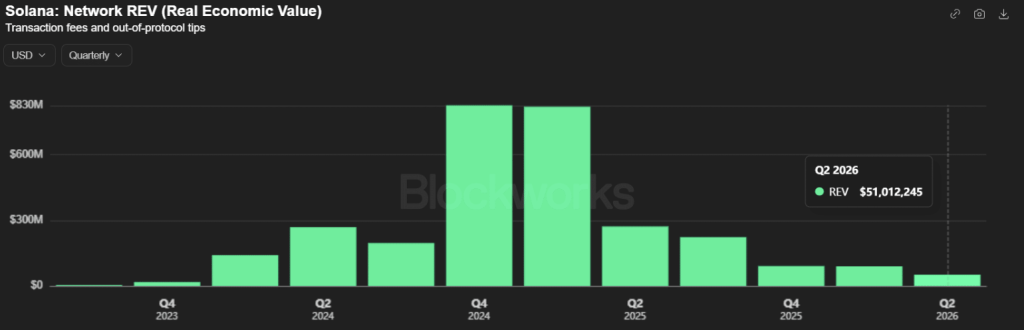
- Solana’s network fees dropped 43% in Q2, reflecting a sharp slowdown in on-chain activity.
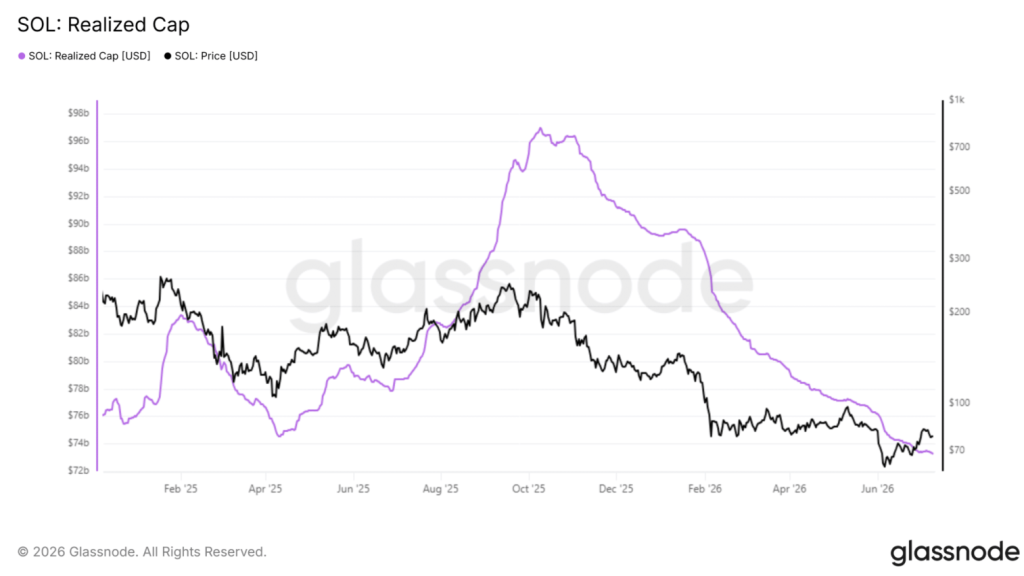
- Capital flowing into SOL remains near two-year lows despite the token’s recent price recovery.
- Analysts believe network activity may have bottomed, but stronger user demand is still needed to support a sustained rally.
Solana’s on-chain activity has slowed to its weakest level in years, creating another challenge for the blockchain’s price recovery. While SOL has rebounded from recent lows, underlying network data suggests user demand remains well below the levels seen during the previous bull market.
According to the latest DeFi Report, Solana generated just $51 million in network fees during Q2 2026. That’s a 43% decline from the previous quarter and a 78% drop year over year, making it the network’s weakest quarter for fee generation since late 2024. Since network fees reflect how much users are paying to transact on-chain, the decline points to significantly weaker activity across the ecosystem.
The slowdown follows months of softer crypto market sentiment, which reduced trading volumes and speculative demand across major blockchains. Even so, the report suggests Q2 may have marked the bottom, citing growth in stablecoins, tokenization, and perpetual futures trading as early signs that on-chain activity could gradually recover in the months ahead.
Capital Flows Show Recovery Is Still Limited
Despite those encouraging trends, capital flowing into Solana remains subdued.
Glassnode data shows Solana’s Realized Cap—a measure of the capital invested into the network—has fallen from roughly $97 billion last year to around $73 billion in 2026. That represents approximately $24 billion in net capital outflows and marks the metric’s lowest reading since late 2024.
SOL Price Eyes Key Resistance Levels
Even with weaker on-chain fundamentals, SOL has managed to recover about 28% from its recent lows. During the broader crypto rebound in early June, the token climbed from around $60 to $84, reclaiming the important $75 support level after briefly falling below it.
If buyers continue defending that support, SOL could target the middle of its long-standing trading range near $88, followed by the 200-day moving average around $92. That would represent roughly 13% to 20% upside, although a sustained rally will likely require stronger network activity and fresh capital inflows to support the move.