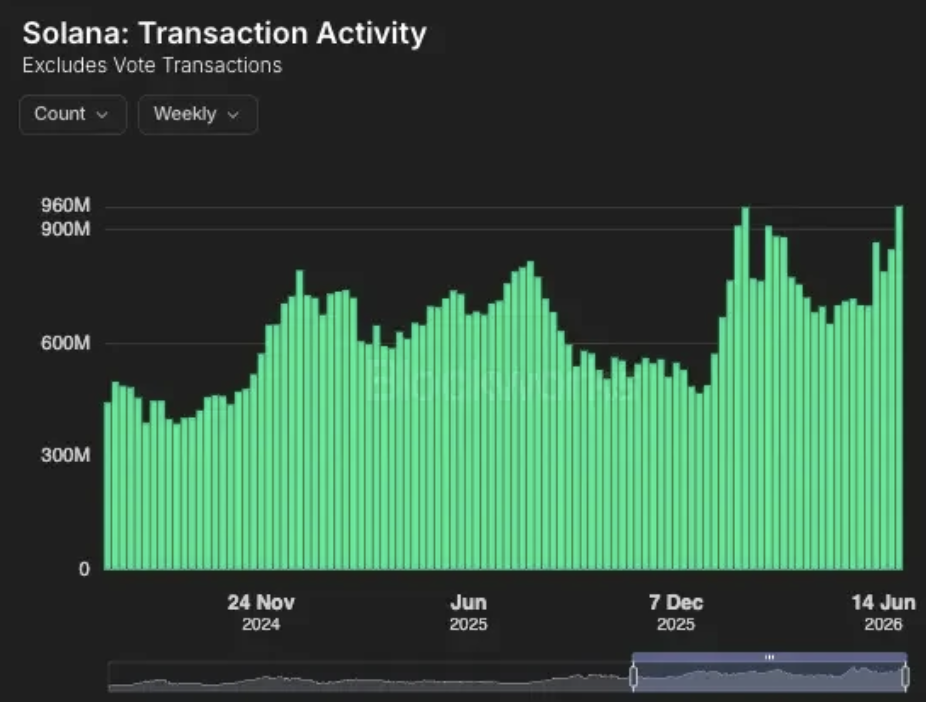
- Solana’s weekly non-vote transactions have climbed back above 900 million, nearing the blockchain’s all-time highs.
- The surge points to growing real-world usage across DeFi, NFTs, gaming, payments, and consumer applications rather than pure speculation.
- Developers and investors are now watching to see if this momentum fuels even broader ecosystem growth.
Solana is once again proving why it’s one of the busiest blockchain networks in the industry. Fresh on-chain data shows that weekly non-vote transactions have surged past 900 million, putting the network within striking distance of the record levels seen toward the end of 2025.
What’s perhaps more interesting is that this growth has continued even while SOL’s price has experienced its usual ups and downs. Instead of activity drying up during quieter market conditions, users appear to be… well, simply continuing to use the blockchain.
That paints a very different picture from a network fueled only by speculative trading.
Solana Returns to Nearly Record Transaction Levels
According to data shared by Solana Sensei, weekly non-vote transactions have climbed back above the 900 million mark, almost matching the highest figures ever recorded on the network.
Unlike total transaction counts, non-vote transactions remove validator consensus messages from the equation. That means the metric focuses on actual user activity, offering a much clearer snapshot of how people are interacting with decentralized applications.
Solana Sensei summed it up simply:
“Activity keeps racking up regardless of price action, just users doing things onchain.”
It’s a notable observation. Rather than traders chasing quick gains, much of the network’s traffic appears to be coming from users actively engaging with applications, transferring assets, and interacting with smart contracts every day.
For developers and long-term investors, that’s generally viewed as a healthier sign than price-driven spikes alone.
Real Applications Continue Fueling Network Growth
The increase in transactions isn’t happening in isolation.
Solana’s ecosystem continues expanding across decentralized finance (DeFi), NFT platforms, blockchain gaming, payment solutions, and a growing list of consumer-focused apps. Each new application adds another layer of activity, creating a steady stream of transactions that isn’t entirely dependent on market sentiment.
A major reason behind that adoption remains Solana’s speed and low transaction fees. Developers building apps that require frequent blockchain interactions often prioritize networks where users aren’t paying high fees every time they click a button.
As blockchain adoption matures, many analysts argue that real network usage has become just as important—if not more important—than token price itself.
Higher transaction volumes often signal that users are actively participating in the ecosystem instead of simply holding tokens.
Stronger Activity Could Improve Solana’s Long-Term Outlook
Consistent network usage benefits nearly every part of the ecosystem.
Validators process more activity, infrastructure providers see increased demand, developers gain larger user bases, and decentralized applications have more opportunities to grow. Together, those factors help reinforce the overall strength of the blockchain.
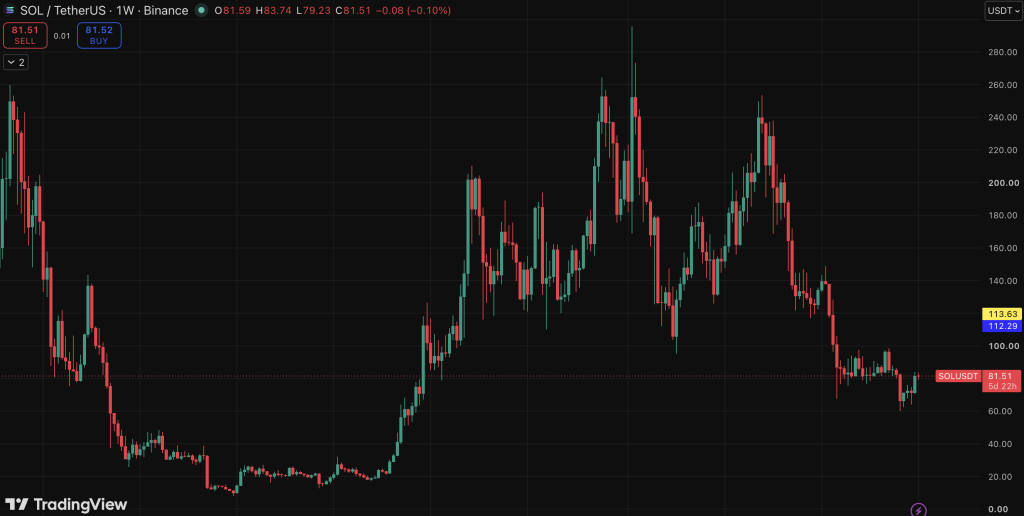
Of course, rising transaction numbers don’t guarantee that SOL’s price will immediately move higher. Crypto markets rarely work that neatly.
Still, sustained on-chain growth has historically helped strengthen investor confidence over longer time frames, particularly when the activity reflects genuine usage rather than temporary hype.
That’s why many market participants closely monitor blockchain metrics alongside price charts—they can sometimes reveal trends before they’re reflected in market valuations.
Developers and Investors Are Watching What Comes Next
Competition among Layer-1 blockchains isn’t slowing down anytime soon. Ethereum, Avalanche, Sui, and several other networks continue competing aggressively for developers, users, and capital.
That makes user engagement an increasingly valuable benchmark.
At the moment, Solana’s latest transaction milestone isn’t tied to any major ETF announcement or regulatory development. Instead, it reinforces a narrative the network has been building for quite some time: becoming a blockchain that people actually use, every single day.
If weekly transactions continue hovering near record highs, attention will likely shift toward whether this translates into even greater decentralized application adoption, stronger economic activity, and continued expansion across the broader Solana ecosystem.