

- Ethereum has fallen more than 22% over the past month, with seasonal trends and macroeconomic pressure weighing on sentiment.
- Rising security concerns and billions in DeFi outflows have added to investor uncertainty across the Ethereum ecosystem.
- Analysts warn that while a rebound is still possible later this year, the next few months could remain challenging for ETH.
Ethereum has struggled to find its footing lately, dropping roughly 22% over the past 30 days as the broader crypto market remains under pressure. While many investors are hoping the worst is over, several warning signs suggest the road ahead may still be bumpy.
The combination of seasonal weakness, tighter monetary policy, ongoing security issues, and a stubborn crypto bear market has created a difficult environment for the world’s second-largest cryptocurrency. None of those factors are disappearing overnight.
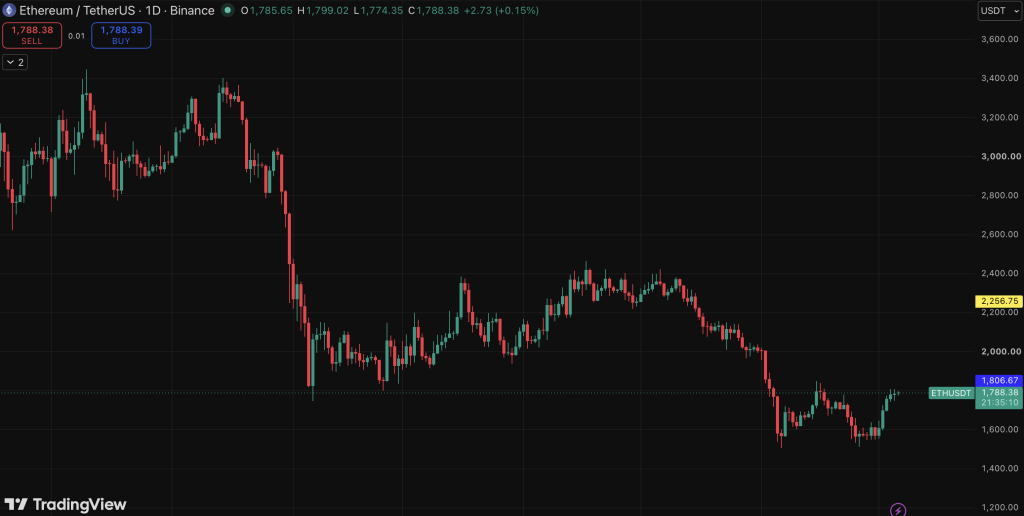
Summer Hasn’t Been Ethereum’s Strongest Season
Crypto investors often look back fondly on Ethereum’s legendary “DeFi Summer” in 2020, when decentralized finance exploded in popularity and ETH became the backbone of an entirely new ecosystem.
But that period can sometimes create unrealistic expectations.
Looking at Ethereum’s historical performance from 2016 through 2025 tells a different story. July, August, and September each finished in positive territory only four times out of ten. Median returns paint an even weaker picture, with July averaging a 4.2% decline, August slipping 1.9%, and September posting the steepest median loss at 12.7%.
Of course, historical trends don’t guarantee future performance. Markets change. Still, when weak seasonality lines up with several other bearish factors, it’s difficult to ignore.
Higher Interest Rates Continue to Pressure Risk Assets
The broader macroeconomic picture isn’t doing Ethereum any favors either.
The Federal Reserve left interest rates unchanged during its June meeting, but policymakers have continued signaling that additional rate hikes remain possible if inflation stays above target.
That’s important because higher interest rates make traditional investments like U.S. Treasury bonds increasingly attractive. Investors can earn relatively safe returns without taking on the volatility that comes with cryptocurrencies.
During periods like these, capital often rotates away from speculative assets, and Ethereum has historically struggled to generate sustained momentum while monetary policy remains tight.
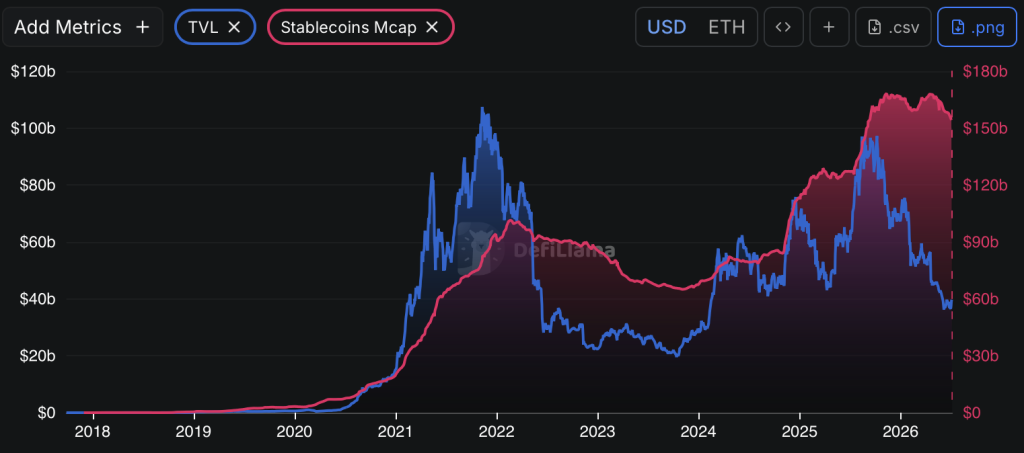
Security Concerns Are Hurting Investor Confidence
Beyond the macro backdrop, Ethereum’s decentralized finance ecosystem has faced another major challenge, security.
Over the last five months, more than 50 exploits across Ethereum-based DeFi protocols have resulted in losses exceeding $840 million. The largest incident involved Kelp DAO, where attackers drained nearly $293 million in April.
The fallout didn’t stop there.
Following the breach, investors reportedly pulled around $13 billion from DeFi platforms as confidence weakened across the ecosystem. That’s a significant amount of liquidity leaving in a relatively short period.
The Ethereum Foundation recently introduced its Clear Signing standard to improve wallet security and reduce certain user-side attacks. While it’s a positive step, the new standard isn’t designed to prevent large protocol exploits like the Kelp DAO incident, meaning broader security concerns still remain.
The Bear Market Hasn’t Fully Let Go
Even without the security setbacks, crypto sentiment has remained fragile.
The broader bear market continues to weigh on digital assets, making investors more cautious and less willing to take on additional risk. Ethereum itself remains well below previous cycle highs, and its long-term performance has left some market participants questioning how quickly the network can regain sustained momentum.
That doesn’t necessarily mean Ethereum’s long-term outlook has changed. Many investors still believe the blockchain will remain a dominant force in decentralized finance, tokenization, and Web3 development.
In the short term, though, patience may prove more valuable than trying to perfectly time the market.
Investors May Need to Wait a Little Longer
Ethereum still has strong fundamentals and one of the largest developer ecosystems in crypto. But markets rarely move on fundamentals alone.
Seasonal weakness, restrictive monetary policy, lingering security concerns, and cautious investor sentiment are all creating headwinds that could keep pressure on ETH throughout the summer.
While a recovery remains possible later in the year, investors hoping for an immediate rebound may have to wait a bit longer before the market begins shifting in Ethereum’s favor.