- Ethereum is trading far below its previous peak, making ETH look attractive to some long-term investors.
- Network activity is still strong, but that growth is not translating clearly into better returns for ETH holders.
- Upcoming upgrades may reduce fees further, which could help users but weaken Ethereum’s tokenomics in the short term.
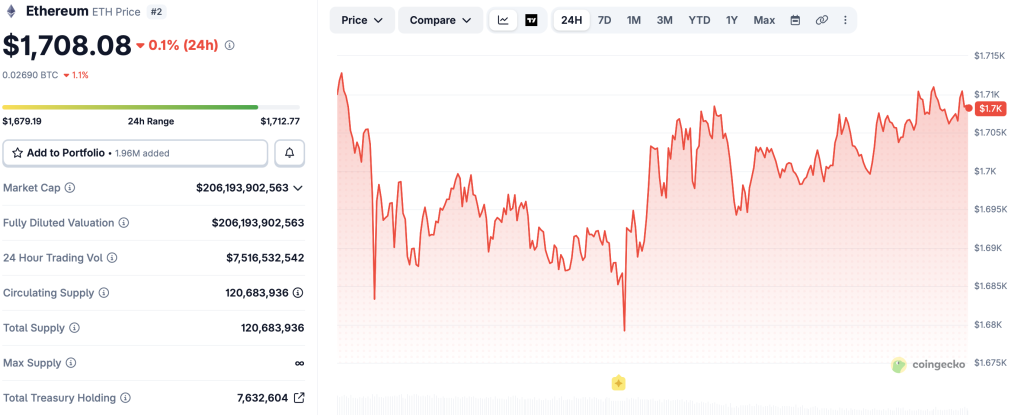
Ethereum looks cheap at first glance. ETH is now roughly 65% below its $5,000 high from last August, and for some investors, that kind of drop can feel like a rare chance to buy a major crypto asset at a deep discount. After all, Ethereum still dominates decentralized finance, remains one of the busiest smart contract networks, and plays a central role in tokenized real-world assets, one of crypto’s fastest-growing areas.
But there is a catch, and it’s not a small one. Buying ETH does not automatically give investors strong exposure to Ethereum’s network success in the way many people assume. The blockchain may be active, useful, and deeply embedded across crypto, but the value capture for ETH holders has become less convincing lately. That makes the investment case a bit more complicated than simply saying, “Ethereum is down, so it must be a bargain.”
ETH Holders Are Not Seeing the Full Benefit
In theory, holding Ether should reward investors in several ways. Transaction fees are supposed to be burned, which can reduce supply. Stakers can earn yield, usually around 3% to 4%. And holders should benefit as the Ethereum network grows and attracts more users, apps, and capital.
Right now, though, those pieces are not working as cleanly as many investors would like. Fee burns have not been strong enough to consistently make ETH deflationary. At the same time, new tokens are still being issued to reward stakers, leaving net supply inflation at about 0.8% annually. So yes, staking still produces yield, but the return is not especially exciting when compared with the risk investors take in holding a volatile crypto asset.
The bigger issue is that platform growth no longer flows through to ETH’s price as directly as it once seemed to. Ethereum can process more activity, support more applications, and host more capital, but if that activity does not generate enough fees to burn meaningful amounts of ETH, the token itself may not benefit much. That’s the uncomfortable part.
Upcoming Upgrades Could Cut Fees Even More
Ethereum’s next major upgrade, known as Glamsterdam, is expected to arrive in late August. The update is designed to improve the network by enabling parallel transaction execution and making activity cheaper for users. From a technology and usability standpoint, that sounds positive. Lower fees can make Ethereum more competitive and easier to use.
For ETH investors, however, the story is more mixed. If fees fall further, less ETH may be burned. That could widen the gap between Ethereum’s network growth and the token’s ability to capture value from that growth. In simple terms, Ethereum may become better for builders and users, while becoming less attractive for investors who rely on fee burns to support the token’s price.
That does not mean the upgrade is bad. Actually, it may be necessary for Ethereum’s long-term competitiveness. But investors need to understand the trade-off: cheaper transactions can help adoption, while also reducing one of the main mechanisms that supports ETH’s supply dynamics.
Is Ethereum Still Worth Buying?
For patient investors, Ethereum may still deserve a place on the watchlist. Slow accumulation near lower price levels could make sense for those with a multiyear outlook, especially if they believe Ethereum’s tokenomics can eventually be adjusted to better reward holders. Crypto protocols are not frozen forever, and future changes could improve the link between network usage and ETH value.
Still, the current setup is not perfect. If ETH supply keeps drifting higher and fee burns remain weak, the token may struggle to rise consistently, even if the Ethereum network itself continues growing. That is a frustrating disconnect, but it is one investors should take seriously.
The key period to watch may come after Glamsterdam goes live. If the network can produce enough activity to push net supply growth back toward zero, the bullish case for ETH becomes stronger again. But if supply keeps expanding and value capture stays weak, Ethereum may need a deeper tokenomics fix before the price can recover in a more durable way.