

- Binance is seeing large USDT inflows on Ethereum and major outflows through Tron.
- The pattern suggests whales and institutions may be using Binance as a cross-chain liquidity corridor.
- Stablecoin reserves have barely changed, showing that capital is moving across rails rather than leaving crypto entirely.
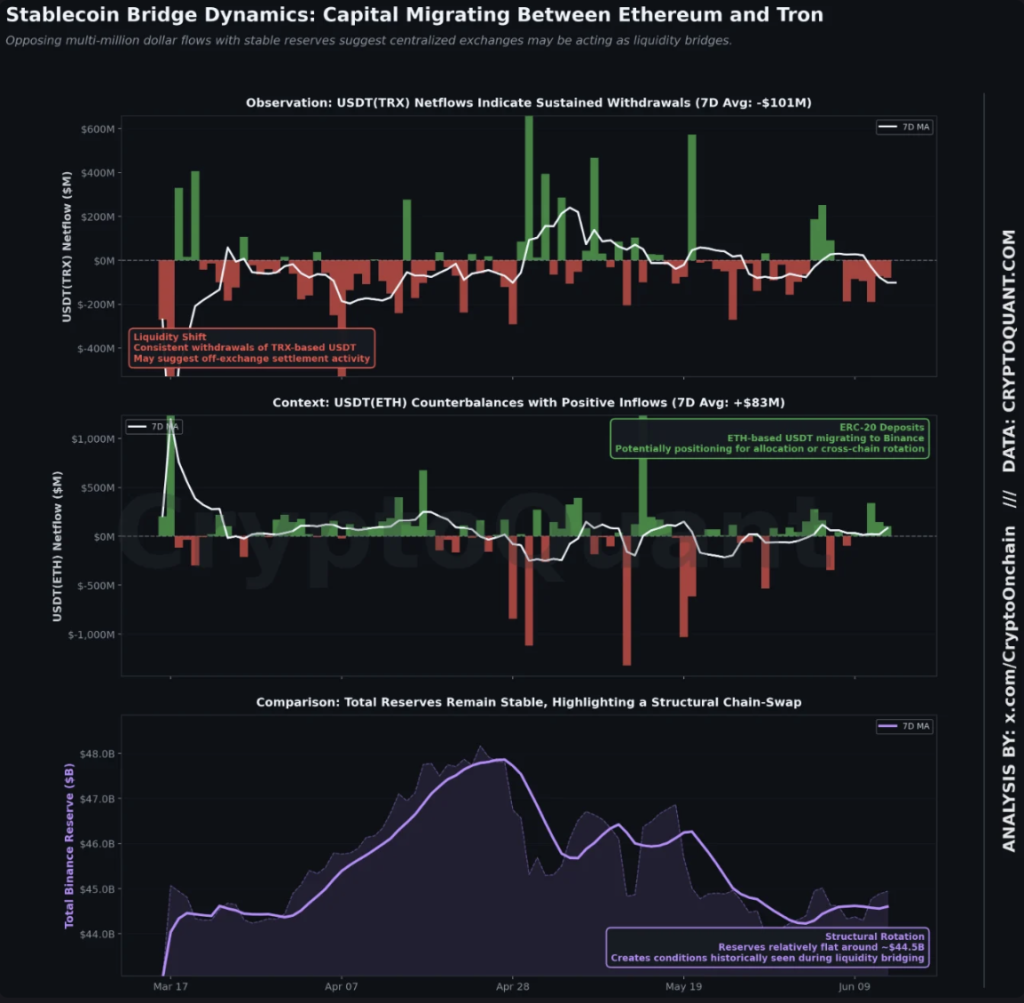
Stablecoin activity on Binance has started to attract serious attention, and for good reason. Over the past two weeks, large USDT flows have been moving in opposite directions across Ethereum and Tron, creating a pattern that looks less like normal trading noise and more like deliberate institutional routing.
Ethereum-based USDT inflows into Binance are averaging around $83 million per day over seven days. At the same time, Tron-based USDT outflows are averaging roughly $101 million daily. Those are not small numbers. Yet despite the size of these transfers, Binance’s total stablecoin reserves have slipped by only about 1.3%.
Binance Becomes a Liquidity Bridge
The flow pattern is fairly clear. Capital is entering Binance through Ethereum and leaving through Tron. In effect, Binance is being used as a bridge between two major stablecoin settlement networks.
That matters because retail traders usually do not move capital in this kind of size or consistency. The repeated nature of these flows suggests whale or institutional activity, not random one-off transfers.
CryptoOnchain recently flagged the trend, noting that Binance’s reserves have stayed relatively stable even with large inflows and outflows happening at the same time. That balance suggests the two sides are nearly canceling each other out.
In simple terms, the money is not disappearing. It is being rerouted.
Ethereum Deposits May Signal DeFi Pullback
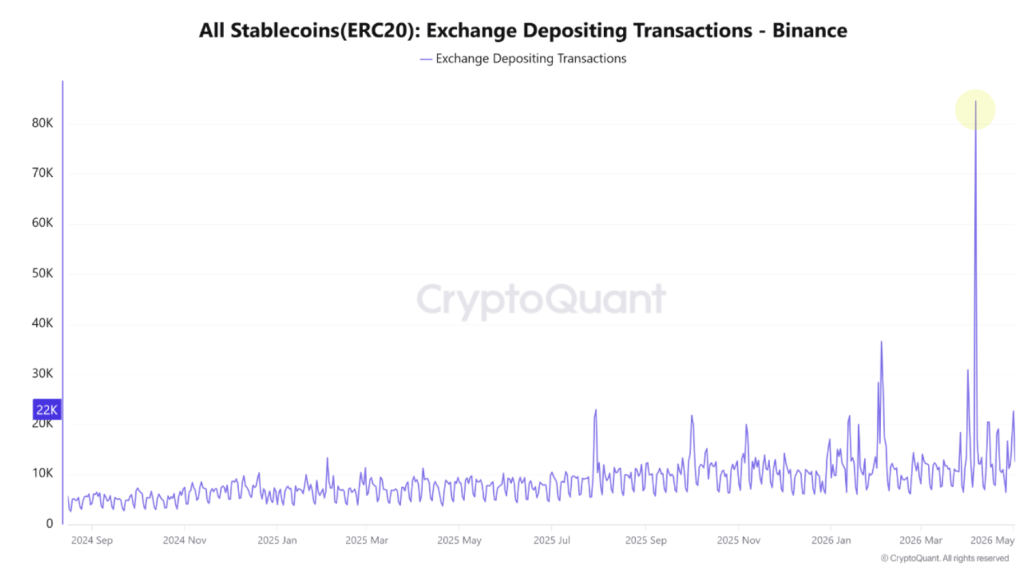
Heavy ERC-20 stablecoin deposits into centralized exchanges have historically been worth watching. In past cycles, large Ethereum-based USDT inflows often appeared when bigger players started reducing exposure to DeFi or preparing to reallocate capital.
That does not automatically mean a sell-off is coming. But it does suggest that some large holders may prefer centralized order books right now, either for flexibility, liquidity, or risk management.
When stablecoins move away from Ethereum’s native environment, it can also slow organic spot accumulation within Ethereum-based DeFi markets. Less purchasing power sitting directly on-chain means fewer immediate buyers across decentralized venues.
Tron Remains the Preferred Exit Rail
The outbound side of the flow tells another part of the story.
Capital leaving Binance through TRC-20 USDT does not appear to be staying on the exchange to buy crypto assets. Instead, it may be moving toward OTC desks, cold storage, or other settlement venues where large players can manage liquidity more efficiently.
Tron has long been favored for high-volume stablecoin transfers because it is fast and cheap. Compared with Ethereum gas fees, Tron’s lower transaction costs make it practical for moving large amounts of USDT without paying heavy network expenses.
That is exactly why institutions, OTC desks, and large traders often use Tron as a settlement rail.
Liquidity Is Moving, Not Vanishing
The important point is that overall stablecoin liquidity has not collapsed. Binance’s reserves are only slightly lower, which means the supply is still present. It has simply shifted from one network path to another.
This makes the current setup more nuanced. It is not a clear bearish signal, but it does show that capital is moving defensively and efficiently. Large players may be stepping away from Ethereum-based DeFi activity while keeping liquidity ready elsewhere.
For crypto markets, the next signal will come from whether these opposing flows begin to calm down. If Ethereum inflows slow and Tron outflows normalize, it may suggest that repositioning is ending. Until then, Binance remains a key corridor for cross-chain stablecoin movement.