
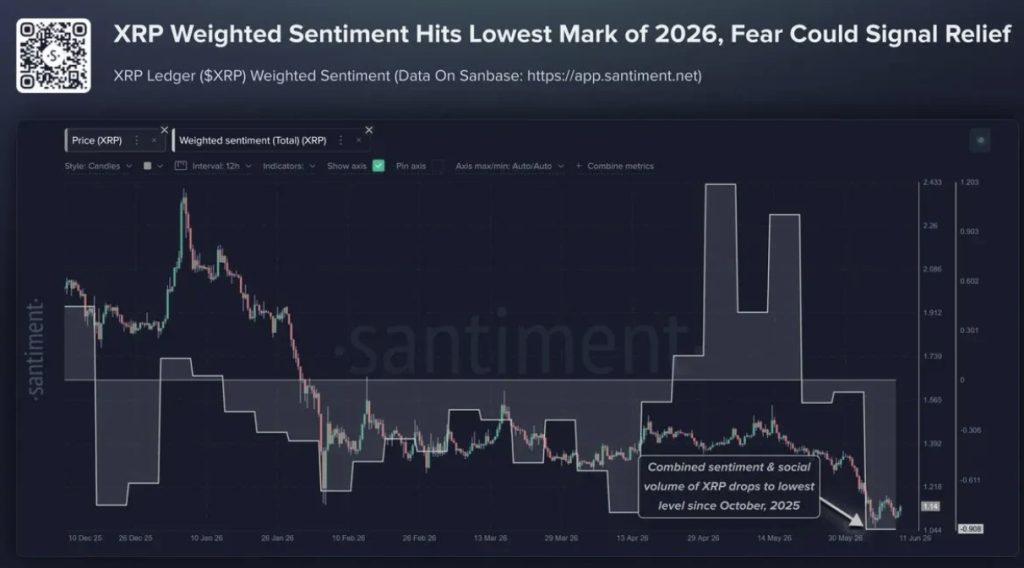
- XRP sentiment has fallen to its lowest level in eight months as social engagement and optimism continue to decline.
- Despite weak investor confidence, XRP Ledger activity and Ripple’s development efforts remain active.
- Some analysts believe extreme fear could eventually set the stage for a market recovery.
Investor sentiment surrounding XRP has deteriorated significantly, reaching its weakest point in roughly eight months. The decline comes as enthusiasm across social media platforms continues to fade, leaving the cryptocurrency struggling to gain momentum despite ongoing development behind the scenes.
According to blockchain analytics platform Santiment, XRP’s weighted sentiment has been trending downward for months. The metric combines social volume with positive and negative mentions across various platforms to gauge how investors feel about a particular asset. Right now, the picture isn’t exactly encouraging. Fewer people are discussing XRP, and among those who are, bearish opinions appear to dominate the conversation.
The lack of excitement largely stems from XRP’s inability to generate major headlines or catalysts recently. Investors often look for strong network growth, ecosystem expansion, or breakthrough developments to drive future price appreciation. So far, none of those factors have created enough buzz to reignite widespread interest, leaving sentiment stuck near yearly lows.
XRP Network Activity Continues Despite Weak Market Mood
While public attention may be fading, activity on the XRP Ledger tells a somewhat different story. Transactions continue to be processed steadily, and development surrounding tokenization initiatives and digital asset infrastructure remains ongoing.
Ripple itself is also continuing to build, even if its projects are no longer attracting the same level of attention they once did. Historically, periods of deep pessimism around XRP have occasionally preceded sharp recoveries. Markets have a funny way of moving against the crowd when expectations become too one-sided.
When negative sentiment reaches extreme levels, selling pressure can begin to dry up. At that point, even a relatively small piece of positive news can have an outsized impact on price action. It’s not a guarantee of a turnaround, of course, but it’s one reason some traders are keeping a close eye on current conditions.
XRP Holds Steady as Recovery Narrative Gains Attention
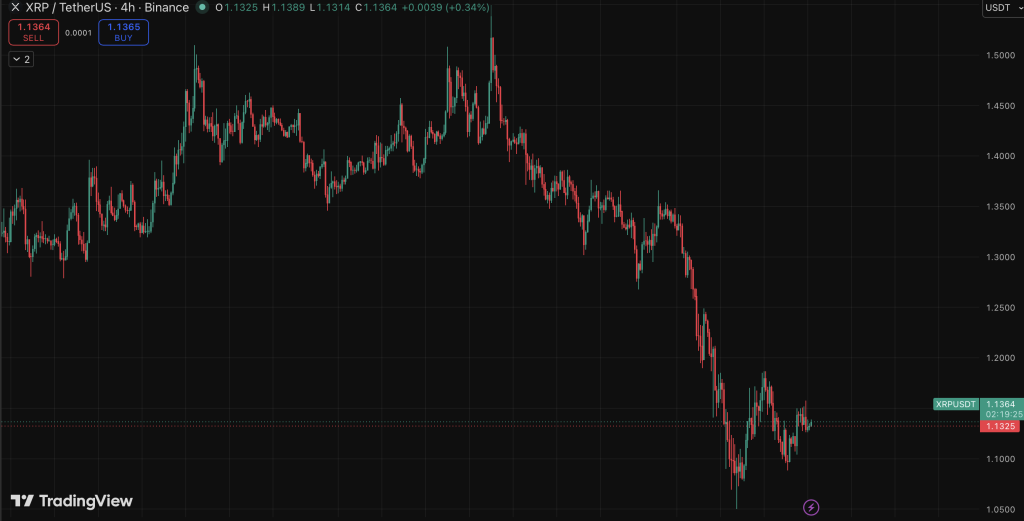
At the time of writing, XRP is trading around $1.14 with a 24-hour trading volume of approximately $2.46 billion. The cryptocurrency currently carries a market capitalization of roughly $70.68 billion and has posted a modest 1.93% gain over the past day, showing some resilience despite the broader decline in sentiment.
Long-term believers remain optimistic about XRP’s future prospects. Some market participants view the current environment as an accumulation phase rather than a period for speculation. Their argument is simple: network development continues, adoption efforts remain active, and sentiment has already become heavily skewed toward pessimism.
More aggressive forecasts even suggest XRP could eventually trade in the $10 to $20 range under favorable market conditions. While those projections remain speculative, they continue to fuel discussion among long-term holders who see the asset as a potential beneficiary of future financial infrastructure upgrades.
Institutional Use Case Remains a Key Bullish Argument
One of the strongest narratives supporting XRP remains its potential role in facilitating international payments and settlements for major financial institutions. Supporters argue that XRP was designed to solve real-world inefficiencies in cross-border transactions, making it more than just another speculative cryptocurrency.
That thesis hasn’t disappeared, even as public enthusiasm cools. Many investors still view XRP as a long-term infrastructure play tied to the future of digital finance rather than short-term market trends.
For now, XRP finds itself in an interesting position. Public sentiment continues to weaken, yet development activity hasn’t stopped. Whether today’s pessimism becomes tomorrow’s buying opportunity remains uncertain, but history suggests that markets often begin recovering when confidence is at its lowest.