
- Cardano founder Charles Hoskinson believes the blockchain can become a global trust infrastructure.
- He argues that Cardano’s unique architecture gives it advantages over competing networks.
- Hoskinson says the project’s mission goes far beyond token prices and focuses on solving global trust issues.
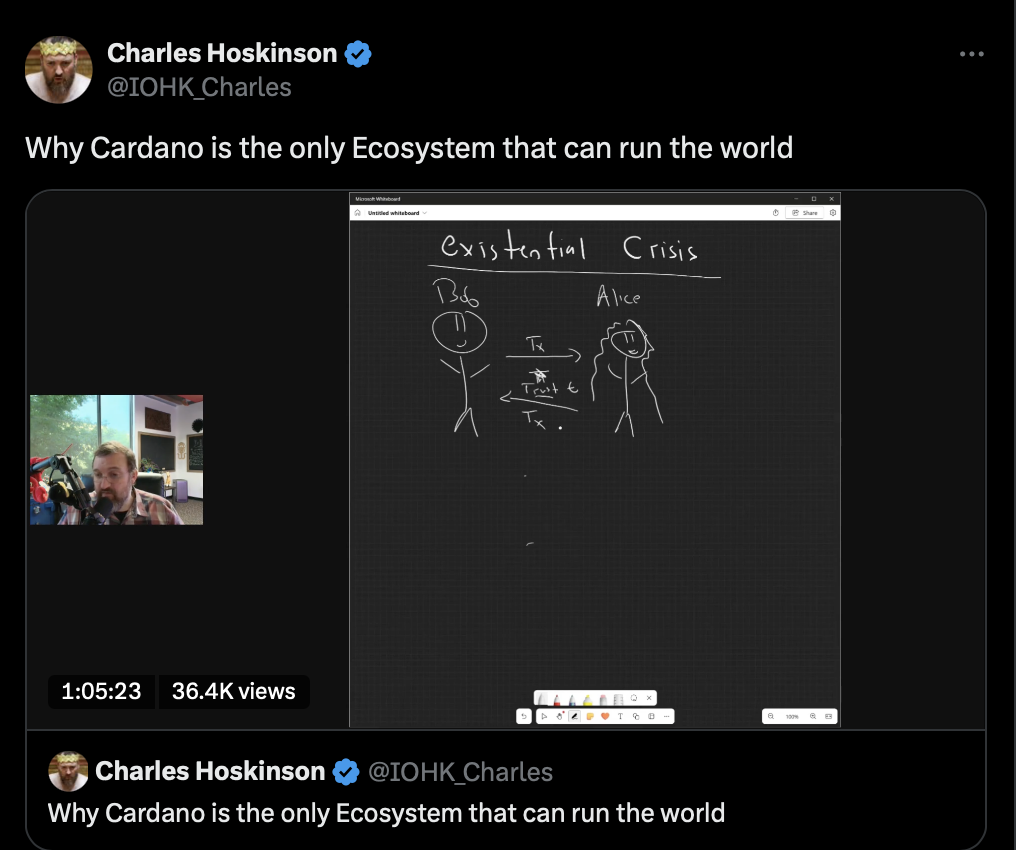
Cardano founder Charles Hoskinson has never been shy about sharing ambitious visions, but his latest comments may be among his boldest yet. Speaking during a recent video broadcast, Hoskinson argued that Cardano has the potential to become the operating system for the entire world, serving as a foundation for rebuilding trust across governments, businesses, and individuals.
While that may sound like a lofty goal, Hoskinson framed the issue as something much larger than cryptocurrency. In his view, modern society suffers from a multi-trillion-dollar trust problem, one that forces people and institutions to rely on layers of intermediaries, regulators, and centralized organizations simply to verify information and conduct transactions. According to him, blockchain technology was created to address exactly that challenge.
Solving a Global Trust Crisis
Hoskinson explained that establishing trust across global financial markets alone costs hundreds of billions of dollars each year. Banks, clearing houses, auditors, legal systems, and compliance networks all exist to help participants trust one another. While these systems play an important role, they also create friction, expense, and inefficiencies.
The broader goal of blockchain technology, he argued, is to reduce the need for those third parties wherever possible. By creating decentralized systems that can verify information automatically, blockchain networks could dramatically lower the cost of trust while making interactions more transparent.
For Hoskinson, this isn’t simply about improving payments or creating another financial product. He sees blockchain as infrastructure capable of reshaping how societies coordinate and cooperate on a global scale.
Why Hoskinson Believes Cardano Stands Apart
According to Hoskinson, Cardano possesses a combination of features that other blockchain networks have yet to replicate. He pointed to four pillars that he believes give the ecosystem a unique advantage.
The first is Ouroboros, Cardano’s proof-of-stake consensus protocol, which was developed through academic research and peer review. The second is the network’s Extended UTXO model, a transaction framework designed to improve predictability and security for decentralized applications.
He also highlighted Cardano’s modular approach through partner chains such as Midnight, which allows developers to build specialized solutions while remaining connected to the broader ecosystem. Finally, he pointed to Cardano’s decentralized governance structure, which gives the community direct influence over the network’s future direction.
Taken together, Hoskinson argues that these components create an architecture unlike anything else currently available in the blockchain industry. Whether critics agree or not, it’s clear he views Cardano as operating on a different strategic path than many of its competitors.
A Different Vision Than Other Blockchains
Hoskinson did not hold back when discussing rival projects. He suggested that many blockchain networks have prioritized speed, marketing, or short-term popularity at the expense of decentralization and long-term sustainability.
In his view, much of the industry is focused on chasing trends, partnerships, and headline-grabbing announcements. Cardano, meanwhile, is attempting to solve deeper structural problems that extend beyond crypto markets.
That perspective has been a recurring theme throughout Cardano’s history. While some investors have criticized the network’s slower development pace, supporters often argue that the project’s emphasis on research, governance, and security could prove more valuable over the long run.
Looking Beyond Price and TVL
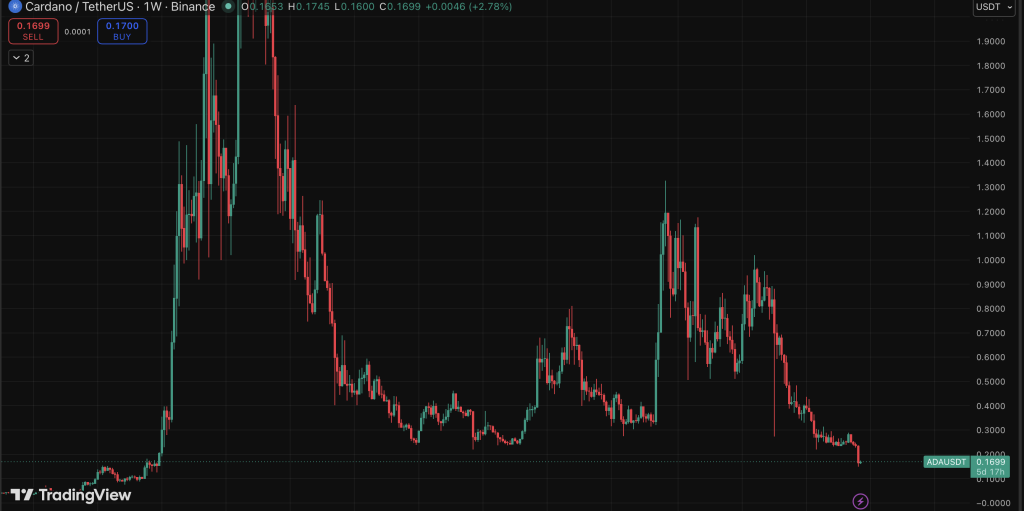
Hoskinson also encouraged the Cardano community to stop measuring success solely through short-term metrics such as token prices or Total Value Locked (TVL). While those figures remain important indicators of ecosystem activity, he believes they fail to capture the larger mission behind the project.
According to him, solving the trust problem could create enormous economic value while also delivering broader societal benefits. In fact, he went as far as suggesting that improving trust between individuals and institutions could contribute to greater cooperation and understanding across communities and nations.
It is an ambitious vision, perhaps even idealistic. Yet it reflects the philosophy that has guided Cardano since its inception. Rather than focusing exclusively on market cycles or speculative gains, Hoskinson continues to position the network as a long-term effort to build decentralized systems capable of supporting global-scale coordination.
Whether Cardano ultimately achieves that goal remains uncertain. What is clear, however, is that Hoskinson sees the project’s future extending far beyond cryptocurrency markets alone. For him, Cardano isn’t just another blockchain. It’s an attempt to rethink how trust itself operates in the digital age.