

- Hunter Biden described Bitcoin and blockchain technology as an “inevitable future” while warning that major banks would resist change.
- His comments contrast sharply with the Biden administration’s aggressive regulatory approach toward the crypto industry.
- The crypto sector is increasingly supporting pro-crypto Democrats as it seeks long-term bipartisan backing for digital asset legislation.
Hunter Biden, the son of former U.S. President Joe Biden, has unexpectedly voiced support for Bitcoin and blockchain technology, a position that stands in stark contrast to the approach taken by his father’s administration. In a recent exchange on X, Hunter was asked for his thoughts on the current fiat-based financial system. His answer was brief but notable. He described Bitcoin and blockchain networks as part of an “inevitable future,” while warning that established financial institutions would resist that transformation as long as possible.
That prediction already seems to be playing out. Large banking players have shown increasing resistance to crypto-related legislation, particularly measures that could expand the role of digital assets within the traditional financial system. JPMorgan, for example, has reportedly pushed back against aspects of the CLARITY Act tied to stablecoin yield provisions. Hunter’s comments suggest he sees this pushback as a natural reaction from incumbents trying to defend their position rather than embrace disruption.

A Sharp Contrast With the Biden Administration
What makes Hunter Biden’s remarks especially surprising is how different they are from the regulatory stance associated with the Biden era. During President Biden’s term, the Securities and Exchange Commission significantly increased scrutiny of the crypto industry. Enforcement actions became a defining feature of the administration’s relationship with digital assets, creating friction between regulators and some of the sector’s biggest names.
Major companies and protocols across nearly every corner of the crypto market found themselves under investigation or facing legal challenges. Centralized exchanges such as Binance and Coinbase, along with decentralized finance projects including Uniswap, Aave, and MetaMask, all encountered regulatory pressure. Ripple remained entangled in one of the industry’s most closely watched legal battles. Regulators argued that many of these firms facilitated unregistered securities offerings or failed to meet compliance standards, while critics claimed the government was regulating through enforcement rather than creating clear rules.
The pressure extended beyond exchanges and protocols. Several crypto-focused startups reported losing banking access, while financial institutions interested in offering crypto custody services faced heightened scrutiny. Efforts to roll back some of these restrictions even attracted bipartisan support at times, yet key proposals ultimately failed to gain presidential approval. For many in the industry, the period became a cautionary tale about the risks of operating without strong political allies in Washington.
Crypto’s Political Strategy Evolves
The industry’s response was swift. By the time the 2024 election cycle arrived, many crypto leaders had shifted from simply lobbying regulators to actively participating in the political process. Support increasingly flowed toward candidates viewed as favorable to digital assets, including Donald Trump, whose administration was widely seen as more receptive to the sector.
Yet many crypto advocates recognize that winning support from one party alone is not enough. Legislative efforts such as the CLARITY Act continue to face opposition from influential Democrats, including Senator Elizabeth Warren, who has repeatedly expressed concerns about deeper integration between cryptocurrencies and traditional financial products. Proposals involving retirement accounts, stablecoins, and broader adoption still face significant hurdles.
As a result, the industry’s strategy has become more nuanced. Rather than focusing solely on Republican support, many organizations are now backing pro-crypto Democrats as well. The goal is straightforward: create a bipartisan coalition capable of advancing digital asset legislation regardless of which party controls Congress or the White House. If enough lawmakers on both sides support crypto-friendly policies, the industry could gain the regulatory certainty it has been seeking for years.
An Unlikely Political Figure in Crypto
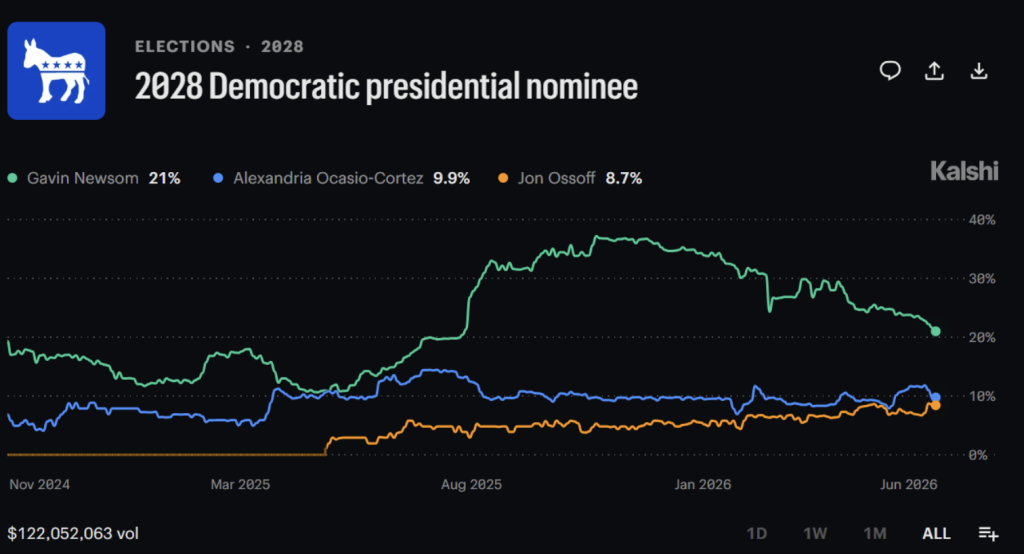
Despite the attention generated by his comments, Hunter Biden is not viewed as a serious contender for the Democratic presidential nomination in 2028. Prediction markets currently assign him only a small chance of securing the nomination, with California Governor Gavin Newsom remaining the early favorite among Democratic prospects.
Still, Hunter’s endorsement of Bitcoin stands out because it highlights a growing divide between some Democratic voices and the party’s recent regulatory history. Whether his comments signal a broader shift in thinking or simply reflect his personal views remains unclear. Either way, his support for blockchain technology adds another unexpected voice to an already complex debate over the future of finance.