
- Sui experienced three separate network halts in under 48 hours due to bugs introduced in protocol version v1.72.
- User funds remained secure because the outages were liveness failures, not security or balance-related failures.
- The biggest impact was felt by active traders and DeFi users who were unable to execute transactions during downtime.
The Sui blockchain experienced a rough stretch between Thursday and Friday, June 1, 2026. In less than 48 hours, the network stopped processing transactions three separate times after a software bug slipped into a recent protocol upgrade.
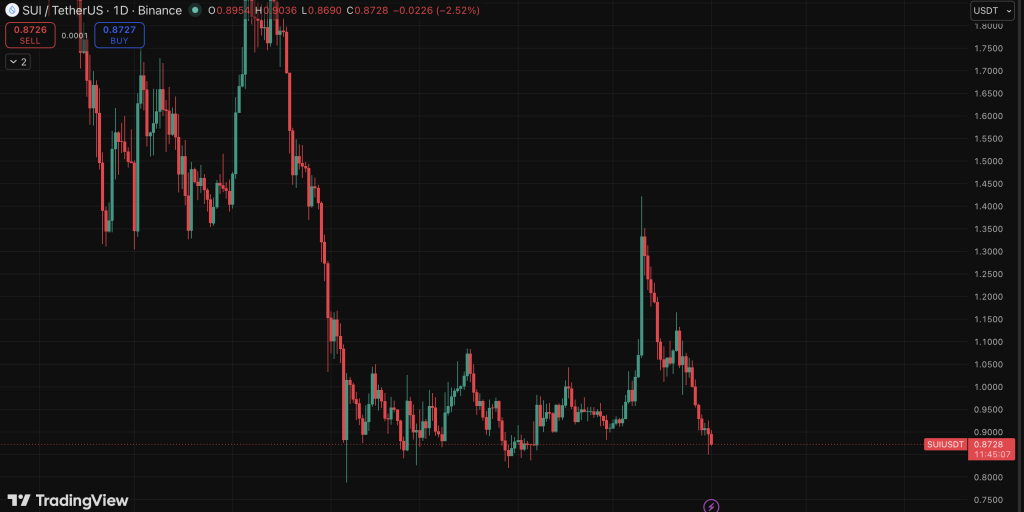
Not surprisingly, traders reacted fast. SUI dropped roughly 8% during the disruptions, falling from around $0.99 to nearly $0.87 as uncertainty spread across the market. At first glance, three network halts in two days sounds like the kind of headline no blockchain wants attached to its name, especially one that markets itself as a high-speed Layer 1 built for scale.
Still, the bigger question isn’t just why the outages happened. It’s whether users should be worried about their funds and what this incident reveals about Sui’s long-term reliability.
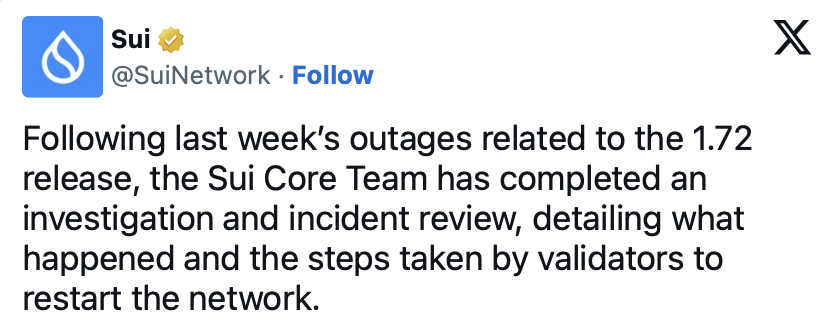
Inside the Sui Upgrade That Broke the Network
To understand what happened, it helps to think of validators as a room full of judges. Every transaction requires agreement before the blockchain can move forward. If something doesn’t add up, the system would rather stop entirely than approve conflicting information.
That’s essentially what unfolded, and unfortunately it happened more than once.
The chain of events began with protocol version v1.72. The upgrade introduced an address balance accounting system alongside new gasless stablecoin transfer functionality intended to make transactions easier and cheaper for users. On paper, both features seemed like useful improvements.
The trouble came from an unexpected interaction between those payment pathways and Sui’s gas-fee mechanism. Under certain conditions, a transaction could fail because of insufficient funds, yet the network would still record those same funds as already spent. That created negative balances validators couldn’t reconcile.
Instead of writing contradictory data to the ledger, the network froze.
Why the Fix Led to Even More Downtime
The first outage lasted from roughly 7:00 a.m. to 1:30 p.m. Pacific Time on Thursday. Developers moved quickly, deploying an emergency patch to bring the blockchain back online.
What stood out, however, was that the team openly acknowledged the patch wasn’t guaranteed to solve everything. There was a known chance another halt could occur.
That decision highlights a difficult tradeoff blockchain teams sometimes face. Wait longer for a fully tested fix, or restore service quickly and accept additional risk. Sui chose speed.
Unfortunately, the gamble didn’t fully pay off. A variation of the same gas-related bug surfaced again Friday morning, causing another network interruption.
Then came the third outage, which stemmed from an entirely different issue. During validator restarts, a randomness component used by some decentralized applications failed to properly record its shutdown status. The protocol became stuck while attempting to close the current epoch, creating a deadlock that froze the chain from around 1:30 p.m. until 7:20 p.m. PT on Friday.
In the end, three separate outages traced back to complications surrounding the same v1.72 upgrade. Not exactly the rollout developers were hoping for.
Are SUI Holders at Risk?
For most users, the answer is no.
The key distinction is understanding the difference between a safety failure and a liveness failure. A safety failure would involve lost funds, corrupted balances, or compromised ownership records. That’s not what happened here.
This was a liveness issue. The network stopped processing new transactions, but existing balances and wallet ownership remained unchanged.
Anyone holding SUI on centralized exchanges saw little more than temporary inconvenience. Deposits and withdrawals were paused during the outages, which is standard procedure whenever a blockchain experiences instability. Once service resumed, balances remained exactly where they were.
Self-custody users were also unaffected from a security perspective. The halt didn’t impact private keys, wallet ownership, or token balances. Assets stayed safely recorded on-chain throughout the downtime.
The Real Impact Was on Active Traders and DeFi Users
Where things became problematic was for users actively interacting with decentralized applications.
If you had pending transactions waiting to settle, they were either delayed or failed entirely. Traders managing leveraged positions couldn’t react to market movements. Arbitrage opportunities disappeared. Time-sensitive trades simply couldn’t be executed.
While the bug itself didn’t directly take anyone’s funds, it did leave many users unable to respond to rapidly changing market conditions. And in crypto, a few hours can feel like an eternity.
That’s why the incident matters. Not because SUI holders lost their assets, but because reliability is one of the most important metrics for any blockchain competing for long-term adoption. Speed means very little if users can’t consistently access the network when they need it most.
For now, Sui’s developers have addressed the immediate issues. Whether the market quickly regains confidence may depend less on this outage itself and more on whether similar failures stay firmly in the past.