

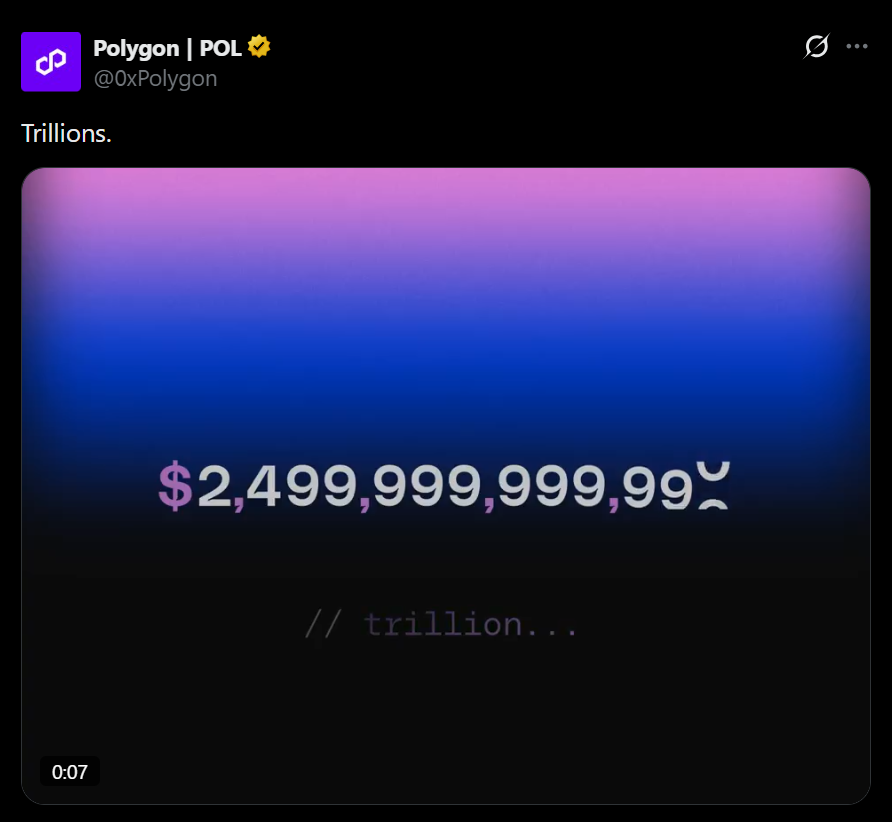
- Polygon has now processed more than $2.5 trillion in cumulative stablecoin transfer volume
- The network became the leading blockchain globally for USDC transaction activity
- Companies including Visa, Stripe, Revolut, Meta, and Flutterwave are actively using Polygon for real-world payments infrastructure
Not with speculation — with plumbing. Revolut moved $810 million through Polygon in 2025. Tazapay processed $687 million on the network in January 2026 alone across 173 countries. Stripe processed over $75 million in payments on Polygon, and Flutterwave extended stablecoin payments across 30 countries in Africa. These aren’t DeFi protocols chasing yield. These are regulated payment companies routing real cross-border money. The difference matters.

The POL Narrative May Finally Be Catching Up
In 2025, Polygon saw a 264% year-over-year increase in stablecoin activity, and April 2026 alone witnessed over 577 million transactions. The network now hosts over $3.6 billion in stablecoins and more than 30 local-currency denominations, with heavy Latin American usage and Japan’s yen-backed JPYC settling roughly $90 million of its cumulative volume on Polygon. Six network upgrades in 2025–2026 pushed maximum throughput to over 3,800 transactions per second at under half a cent per transaction.
Why POL Should Get More Attention
In mid-February 2026, Polygon flipped Ethereum in daily transaction fee revenue — $313,000 versus Ethereum’s $264,000 — driven entirely by real payment usage, not speculation. The $250 million acquisitions of Coinme and Sequence give Polygon 50,000 US retail cash access points and institutional wallet infrastructure to match. The $2.5 trillion number isn’t a vanity metric. It’s the argument.