- 62% of U.S. voters don’t trust Trump to oversee crypto regulation
- Majority oppose officials holding financial stakes in crypto industry
- Public still heavily favors banks over crypto for financial access
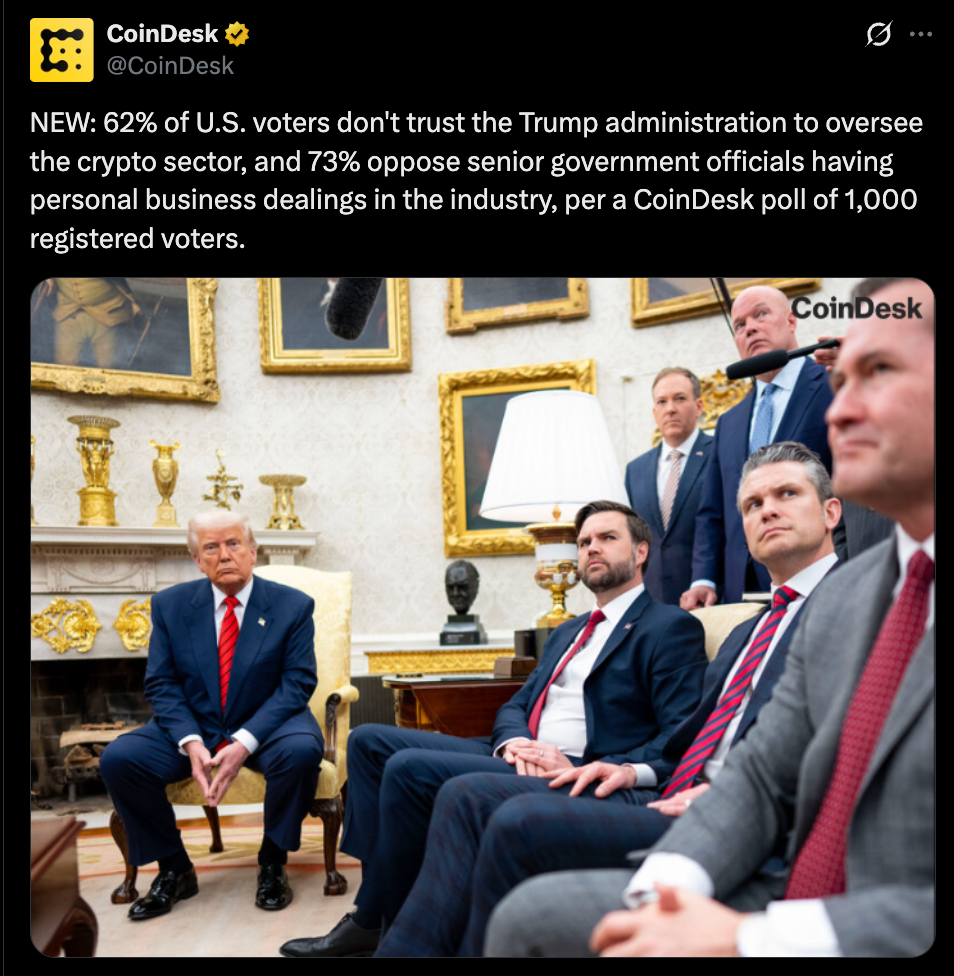
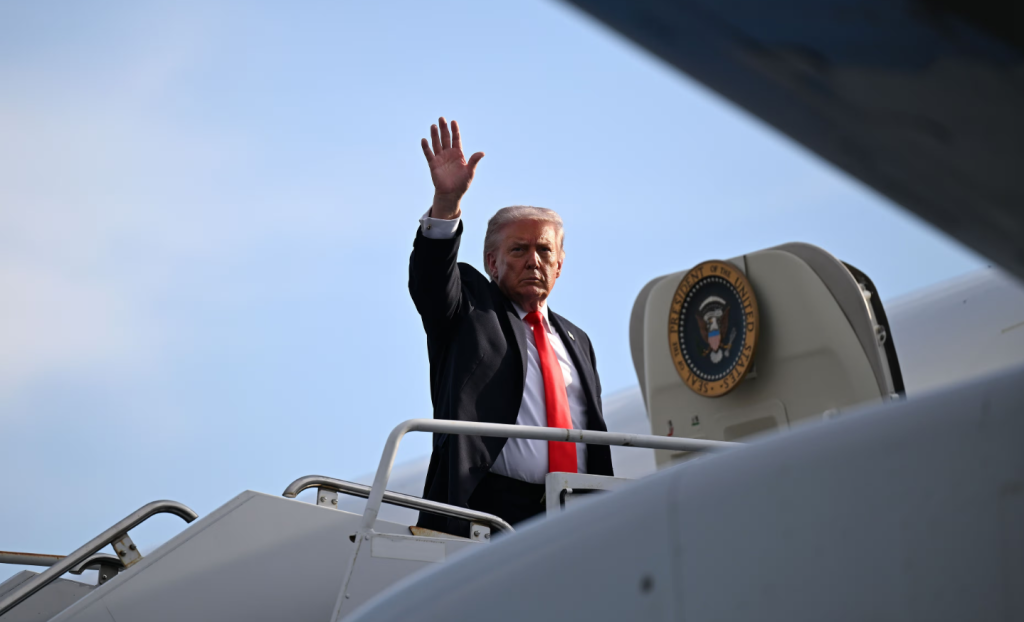
Public trust in crypto leadership is looking… shaky, at best. A recent poll shows 62% of U.S. voters don’t trust the Trump administration to oversee the crypto sector, which is a bit awkward given how strongly the administration has positioned itself as pro-crypto.
There’s a disconnect here, and it’s not a small one.
The Conflict of Interest Question Won’t Go Away
One of the biggest concerns voters flagged is the idea of government officials having financial stakes in the same industry they regulate. Around 73% of respondents said that shouldn’t be allowed, and that sentiment cuts across party lines more than you might expect.
Even among supporters, there’s visible discomfort, especially as awareness grows around Trump’s involvement in crypto-related ventures like World Liberty Financial.
Awareness Is Still Surprisingly Low
What’s interesting, maybe even more concerning, is how few people actually know the full extent of that involvement. Only 17% of respondents said they were fully aware of Trump’s crypto ties, which suggests the trust gap could widen if more details become widely understood.
In other words, the current numbers might not even reflect the full picture yet.
Crypto Still Trails Traditional Finance
Beyond politics, the poll highlights a broader issue for the industry itself. When asked about financial trust, 65% of voters still prefer banks, while only 5% chose crypto, which is… a pretty wide gap, even after all these years.
At the same time, 60% of respondents believe crypto could have a mostly negative impact on the economy, showing that skepticism isn’t just about regulation, it’s about the asset class as a whole.
A Complicated Road Ahead
This kind of sentiment could have real implications, especially with legislation like the CLARITY Act still working its way through Congress. Public trust doesn’t always dictate policy, but it definitely shapes the environment around it, and right now, that environment looks uncertain.
For an industry that expected smoother progress after the last election cycle, this feels like a reminder that political wins don’t always translate into public confidence, and that might be the harder problem to solve.