

- Ethereum gas limit set to triple with upcoming Glamsterdam upgrade
- Increased capacity could significantly reduce network fees
- Combined technical changes support safer and more efficient scaling
Ethereum is getting ready for a pretty significant shift, and it’s not a small tweak either. With the upcoming Glamsterdam upgrade, the network’s gas limit is set to jump from around 60 million to roughly 200 million, which is… a big leap. That kind of increase changes how much activity the network can handle at once, and naturally, it’s raising a few eyebrows. If everything works as expected, this could ease congestion in a way Ethereum hasn’t really seen before.
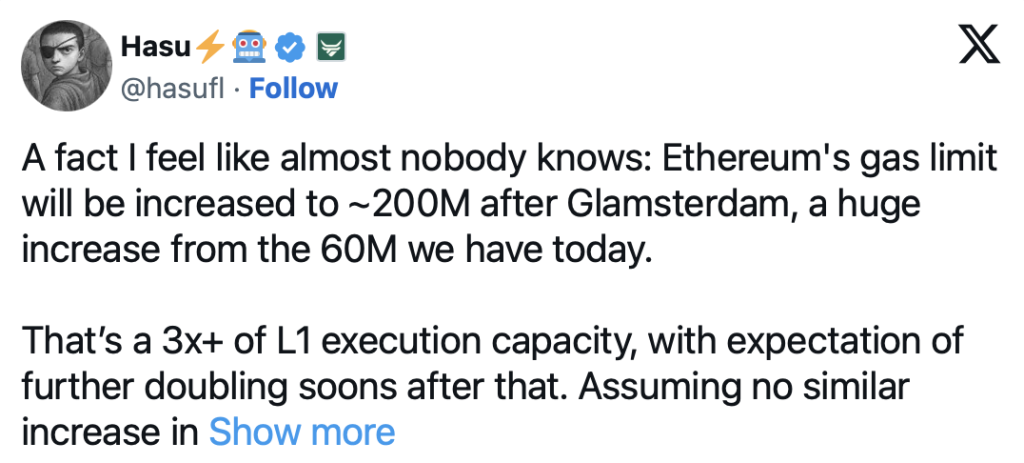
Massive Jump in Execution Capacity
Tripling the gas limit isn’t just a headline number, it directly impacts how much computation can happen on-chain per block. And interestingly, this might not even be the end of it. There’s already talk of another increase not long after, which suggests this is part of a broader scaling push, not just a one-off adjustment.
What’s making this possible is a combination of technical upgrades working together, rather than a single change doing all the heavy lifting. Enhanced Proposer-Builder Separation, or ePBS, gives more flexibility during block production, allowing transactions to be handled more efficiently. Then there are Block-level Access Lists, which help clients organize and process data in parallel, something that wasn’t as optimized before.
Gas Fees Could Stay Low for Longer
One of the more talked-about outcomes here is the potential impact on gas fees. If Ethereum suddenly has much more blockspace available, and demand doesn’t rise at the same pace, fees could drop significantly, maybe even staying near zero for extended periods. That’s not guaranteed, of course, but it’s a realistic scenario based on how supply and demand work on-chain.
There’s also something called gas repricing involved, which adjusts the cost of certain operations. It might sound minor, but it actually helps keep the network stable, especially when increasing capacity. Without those adjustments, a higher gas limit could introduce risks, but with them, the system becomes more balanced.
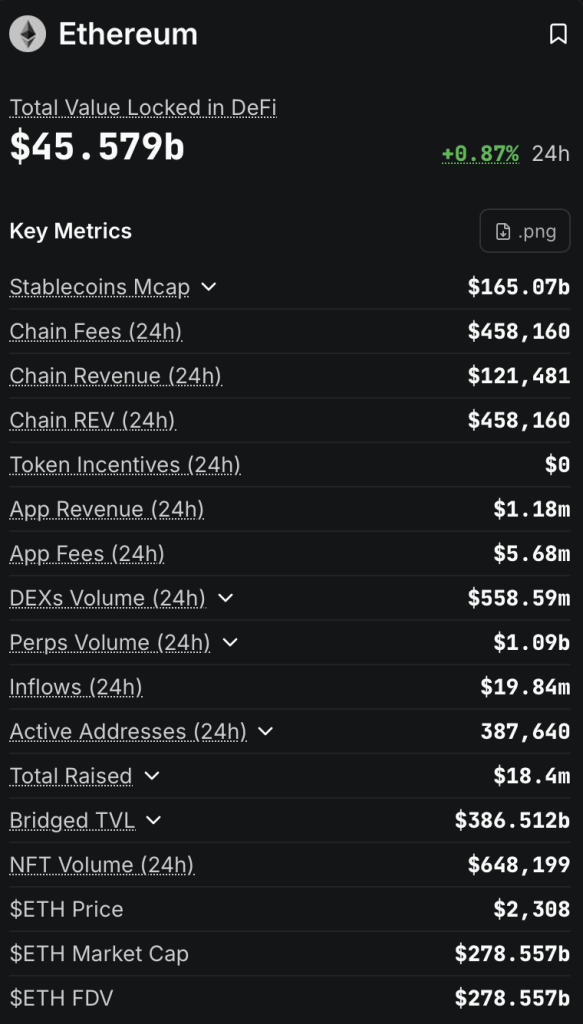
Coordinated Changes Strengthen Network Scaling
What makes this upgrade stand out is how coordinated everything feels. ePBS, access lists, and gas repricing aren’t being rolled out in isolation, they’re designed to support each other. That kind of alignment reduces the chances of instability and makes the scaling process smoother overall.
It doesn’t feel accidental either. The timing suggests Ethereum developers have been lining this up carefully, making sure each piece fits before pushing the gas limit higher. And if it all comes together the way it’s supposed to, the network could end up in a much stronger position, not just faster, but more efficient too.
Ethereum Moves Toward a More Scalable Future
For now, it’s still a forward-looking change, but the implications are hard to ignore. A higher gas limit, lower fees, and better execution efficiency all point toward a network that’s evolving, maybe a bit faster than people expected.
Whether demand catches up or not will ultimately shape how this plays out. But one thing seems clear, Ethereum is leaning heavily into scaling, and this upgrade is a big step in that direction, even if the full impact takes time to show.