

- Bitcoin inflows surge but demand still lags behind price recovery
- Buyer dominance and exchange outflows signal growing accumulation
- Low volatility suggests potential buildup before a major move
Bitcoin is starting to show signs of life again, at least on the surface. After months of relatively quiet movement, April finally delivered a strong monthly close, the first in about nine months, with inflows climbing to around $275 billion. That’s the highest level we’ve seen since August 2025, which, on paper, looks pretty bullish. But here’s the thing… not everyone is convinced this move has real staying power just yet.
Price Rises Faster Than Demand
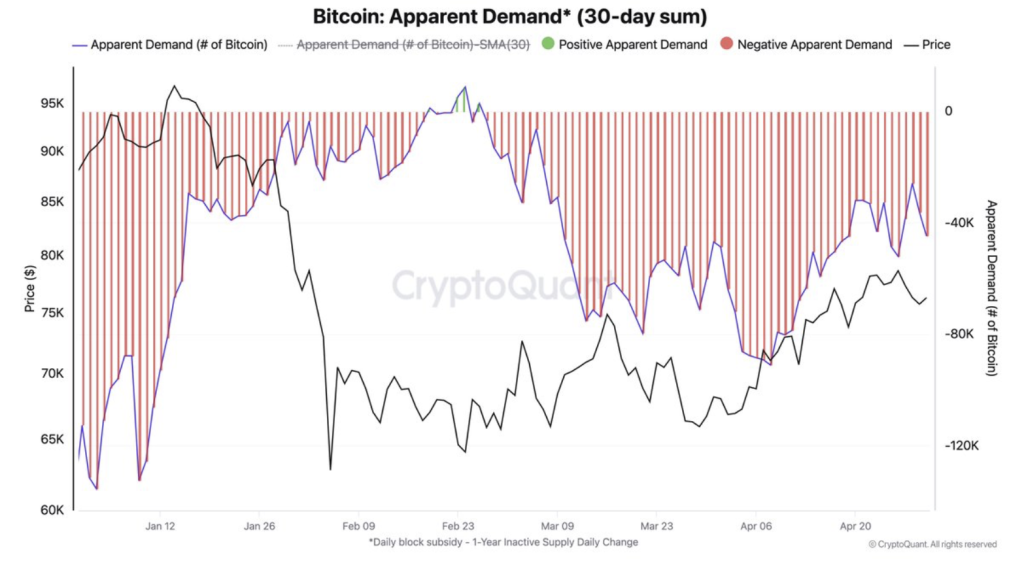
Since February, Bitcoin has climbed roughly 30%, which is a solid recovery by any standard. But when you look underneath, the demand side isn’t quite keeping up. One key metric, Bitcoin’s Apparent Demand Growth, still sits in negative territory, meaning new supply isn’t being fully absorbed by buyers.
Right now, that gap is around 44,700 BTC, which isn’t small. It does show improvement, though, considering it was closer to 89,000 BTC earlier in April. So yes, accumulation is happening, just not fast enough to fully confirm a new bull phase. Until that number flips positive, calling this a full-blown bull run might be a bit… premature.
Buyers Begin to Take Control
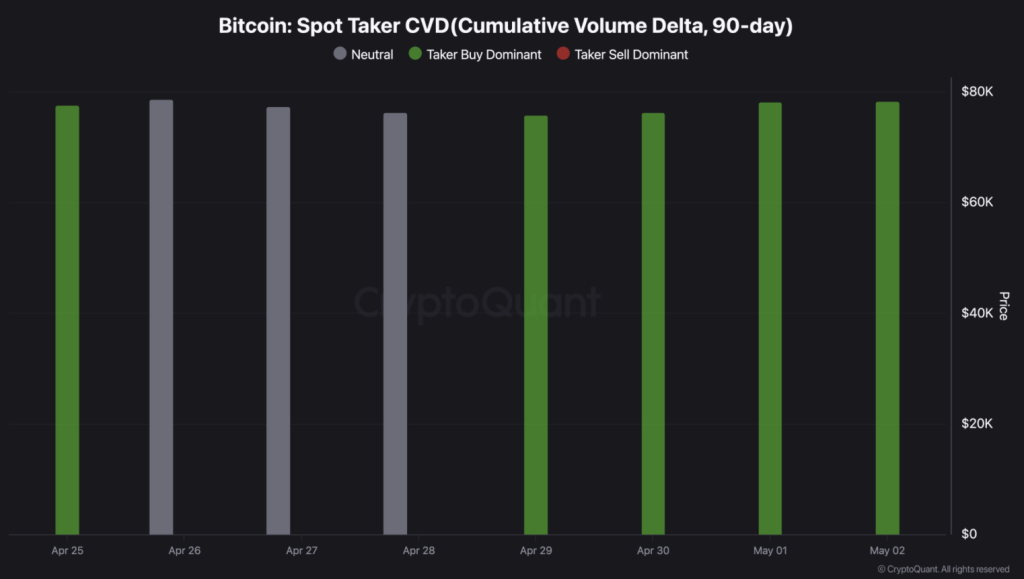
That said, short-term signals are starting to shift in a more encouraging direction. Spot market data shows buyers have been in control for several days in a row, with taker buy pressure dominating. This usually means traders are stepping in more aggressively, not waiting around for dips.
Exchange flows tell a similar story. Bitcoin has seen consistent outflows, with nearly 2,000 BTC pulled from exchanges in early May alone. That kind of movement often suggests accumulation, as coins are moved off platforms and into longer-term storage.
Volume is picking up too, now sitting above $30 billion, which adds another layer to the setup. When price holds steady while volume increases, it often signals something is building, even if it’s not obvious right away.
Volatility Drops as Institutions Position
Another piece of the puzzle is volatility, which has been quietly dropping. Bitcoin’s implied volatility is now hovering near the lower end of its historical range, around the 40th percentile. That might sound uneventful, but historically, these low-volatility periods tend to come before bigger moves.
Some analysts have pointed out that similar conditions in the past led to major market events, including rallies tied to ETF momentum. When volatility compresses like this, it often means larger players are positioning behind the scenes, even if price hasn’t broken out yet.
Market Builds Toward a Larger Move
So where does that leave Bitcoin? Somewhere in between, honestly. Demand hasn’t fully confirmed the rally, but accumulation is improving, buyers are stepping in, and volatility is tightening. It’s not a clear breakout, but it’s not weakness either.
Right now, it feels like a buildup phase. If demand continues to strengthen and aligns with price, things could accelerate fairly quickly. But until then, there’s still a bit of uncertainty hanging over the market, even if the early signs are starting to lean bullish.