

- Dogecoin is a digital asset you directly own, while a DOGE ETF is a regulated financial product
- ETFs fall under SEC rules, while DOGE itself is treated as a commodity under the CFTC
- The trade-off is simple: control and flexibility vs convenience and regulation
Dogecoin getting its own ETF is one of those moments that sounds bigger than it looks at first. A memecoin crossing into traditional finance territory is not something anyone expected a few years ago. But it also created confusion, because owning DOGE and buying a DOGE ETF are two very different experiences, even if they track the same price.
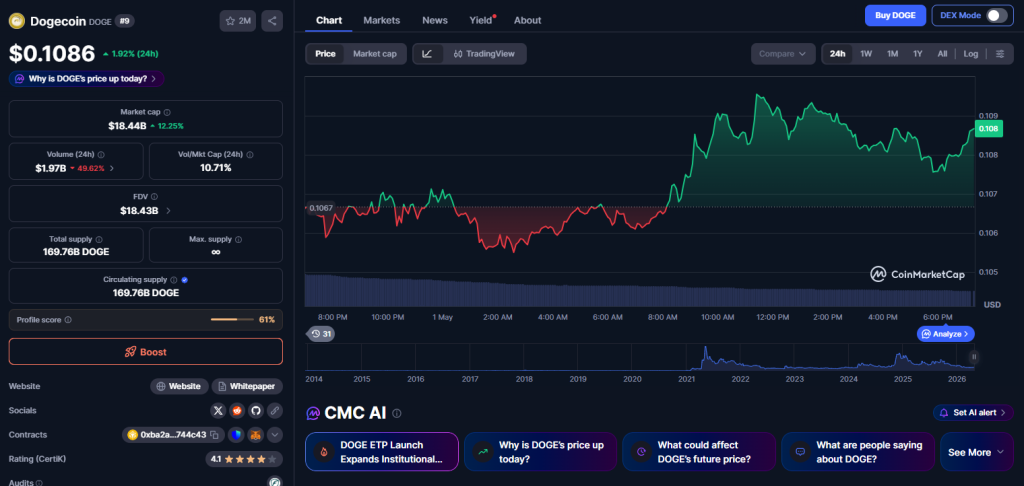
Understanding that difference matters more than most people think.
What You Actually Own
When you buy Dogecoin directly, you own the asset. It sits in your wallet, you can transfer it, use it, or hold it however you want. There’s no intermediary controlling access.
A DOGE ETF is different. You’re not holding Dogecoin itself, you’re holding shares of a fund that tracks its price. The asset sits with the fund manager, not with you.
Regulation Changes the Game
Dogecoin itself is treated as a digital commodity, which puts it under the oversight of the CFTC. That classification comes with fewer investor protections but also fewer restrictions.
An ETF, on the other hand, is a regulated security. That means it falls under the SEC’s rules, with stricter compliance, reporting, and oversight requirements.
Simplicity vs Control
Buying DOGE directly is usually straightforward if you’re familiar with crypto. There are no management fees, and you have full control over your holdings.
But that control comes with responsibility. Security, storage, and risk management are entirely on you.

With a DOGE ETF, the process is more familiar to traditional investors. You can buy it through a brokerage account, just like a stock, without worrying about wallets or private keys.
The Trade-Off on Safety
ETFs offer a level of structure and transparency that direct crypto ownership doesn’t always provide. They are managed, audited, and regulated, which can reduce certain risks.
At the same time, you’re trusting a third party. You don’t have direct access to the underlying asset, and you’re exposed to fund-related risks like fees or tracking differences.
Why Some Investors Prefer Each
Direct DOGE ownership appeals to people who want full control, flexibility, and the ability to use their crypto beyond just price exposure.
The ETF appeals to investors who want exposure without dealing with the technical side of crypto, especially institutions or traditional market participants.
Two Different Ways to Play the Same Asset
In the end, both options are tied to Dogecoin’s price, but they serve different purposes. One is about ownership and autonomy, the other is about accessibility and structure.
Neither is strictly better, it depends on what kind of investor you are and how much control you actually want over your assets.