

- Tokenized gold trading volumes surged 290% amid rising geopolitical tensions.
- Solana could benefit long term from tokenization growth and regulatory clarity.
- On-chain indicators show increasing sell pressure and profit-taking among SOL holders.
Tokenized gold markets recently saw an unexpected surge in activity, hitting record trading volumes as geopolitical tensions between the United States and Iran intensified. Reports suggest the spike pushed volumes roughly 290% above the previous record, a pretty dramatic jump in a relatively short window. Moments like this tend to remind investors why tokenized commodities are gaining traction in the first place — they combine the stability narrative of traditional assets with the speed and accessibility of blockchain infrastructure.
At the same time, regulatory momentum may quietly be strengthening the sector. The proposed CLARITY Act has been widely discussed as a potential catalyst for tokenization markets overall, and if that narrative plays out, some blockchains could end up capturing a sizable portion of that future activity.
Solana Positioned to Capture Tokenization Growth
Among the networks often mentioned in this conversation is Solana. Its high-speed architecture and relatively low transaction costs make it a natural candidate for handling large volumes of tokenized asset trading. Analysts have pointed out that if tokenization continues to expand across commodities, equities, and other real-world assets, networks like Solana could benefit significantly from the additional demand.
Institutional interest around the ecosystem has also been building slowly. ETF inflows tied to the broader Solana narrative have strengthened in recent months, and the blockchain has been gaining more traction in payment infrastructure as well. Combined with the potential regulatory clarity surrounding tokenized assets, these factors create what many investors see as a fairly strong long-term bullish thesis for SOL.
Still… long-term optimism doesn’t always translate to immediate price strength.
On-Chain Data Shows Rising Selling Pressure
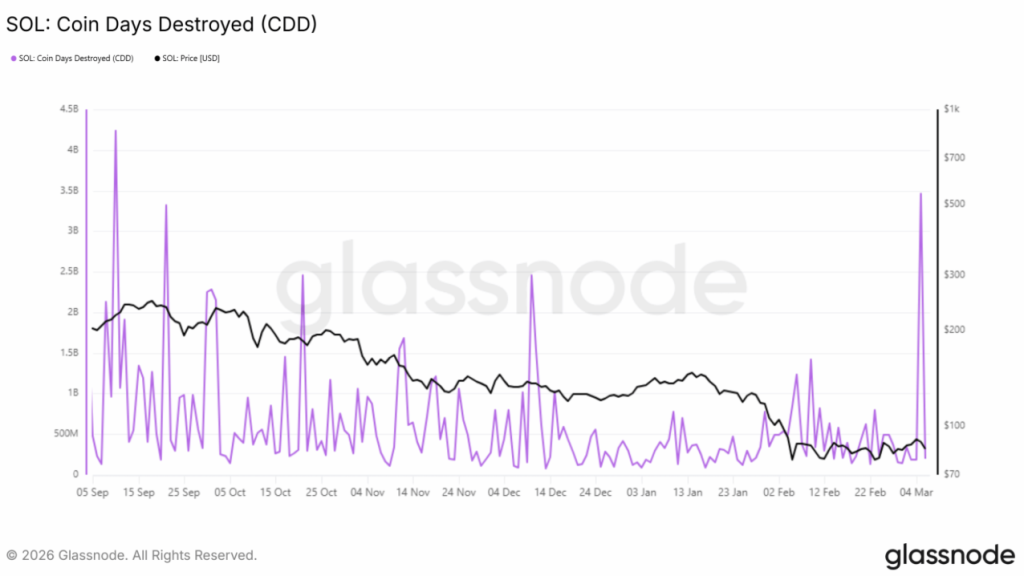
Despite the optimistic structural outlook, on-chain signals suggest that the market is currently facing increased selling pressure. One of the clearest indicators comes from the Coin Days Destroyed (CDD) metric, which measures whether older, long-dormant coins are suddenly moving across the network. A sharp spike in this metric often indicates that long-time holders are beginning to move — and potentially sell — their tokens.
That exact pattern appeared on March 5, when CDD surged just as SOL’s price tested resistance around the $90 level. When older coins begin moving during resistance tests, it often means early investors are taking advantage of the liquidity to exit positions. Not always, but often enough to make traders cautious.
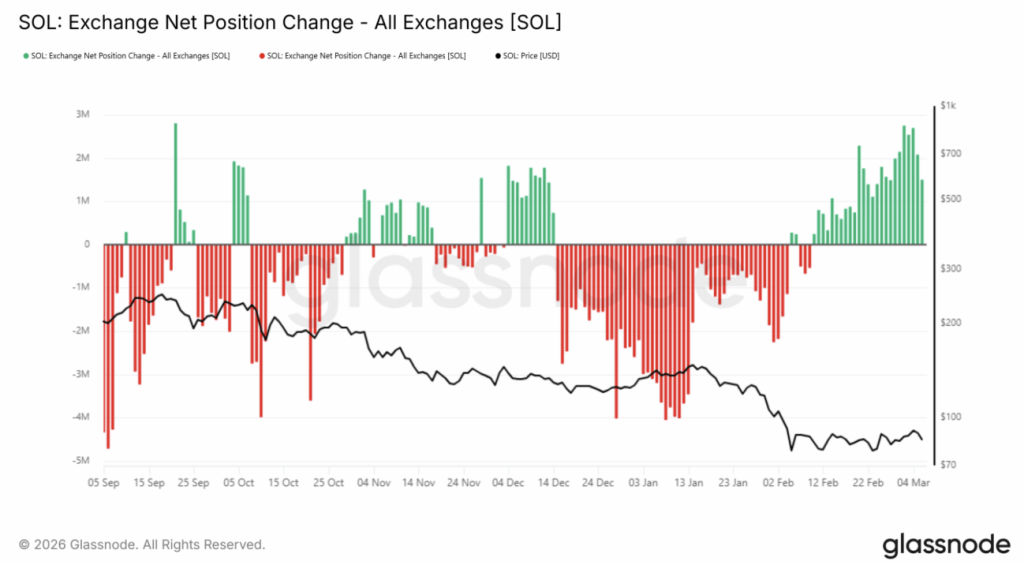
Exchange flow data tells a similar story. Over the past month, inflows of SOL into exchanges have been climbing steadily. Higher exchange balances typically signal that more holders are preparing to sell, and the trend appears to have accelerated after Solana dropped below the $100 mark near the end of January.
Long-Term Holders Begin Taking Profits
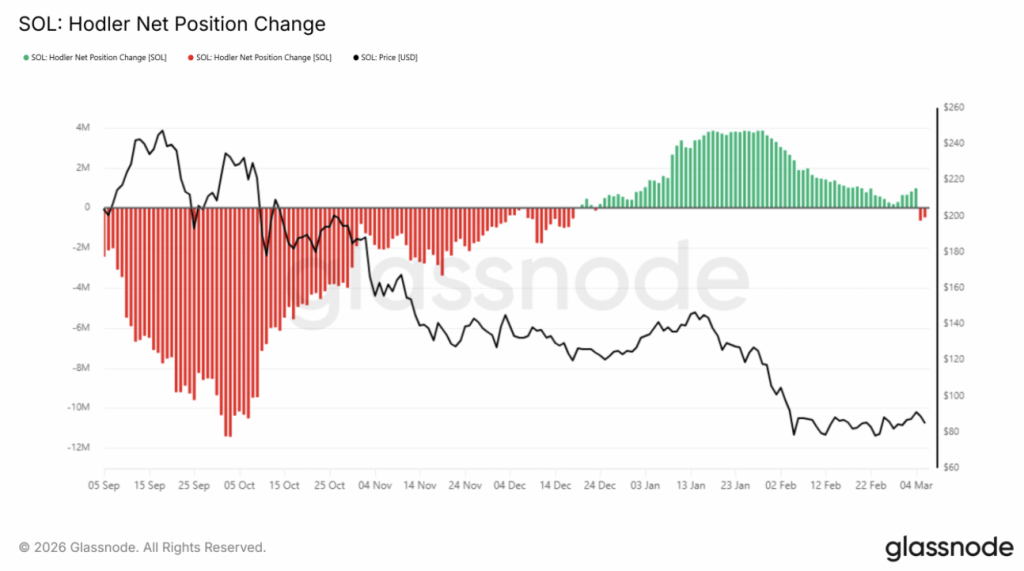
Another telling signal comes from the HODLer Net Position Change indicator, which tracks how long-term investors are adjusting their holdings. For most of the period between December and early February, this metric showed steady accumulation. Green bars across the histogram reflected long-term confidence, with holders quietly building positions while prices consolidated.
In the past few days, however, that trend has shifted. The metric recently flipped negative, suggesting that long-term holders have begun distributing part of their SOL positions rather than continuing to accumulate. When experienced investors start trimming holdings during weak market conditions, it often adds additional downward pressure.
Taken together, these signals suggest that Solana may struggle to push above the $100 level in the near term. Instead, rallies toward resistance could attract profit-taking from holders looking to exit positions after the recent volatility.