

- Solana ETFs have attracted about $1.5 billion in inflows since launching in July
- Institutional investors likely contributed roughly half of the capital entering the funds
- Strong ETF demand has persisted even as Solana’s token price fell more than 50%
Solana ETFs have been quietly pulling in serious capital, even while the underlying token struggled to hold momentum. Since launching in July, the funds have collected roughly $1.5 billion in inflows, according to Bloomberg ETF analyst Eric Balchunas. What makes this more interesting is that Solana itself dropped about 57% over that same stretch — not exactly the kind of environment where new investment products usually thrive.
Normally when an asset slides that sharply, funds tied to it start bleeding capital. Investors panic, allocations shrink, and enthusiasm fades pretty fast. But Solana ETFs seem to be doing the opposite… holding onto investor interest even as the market cools.
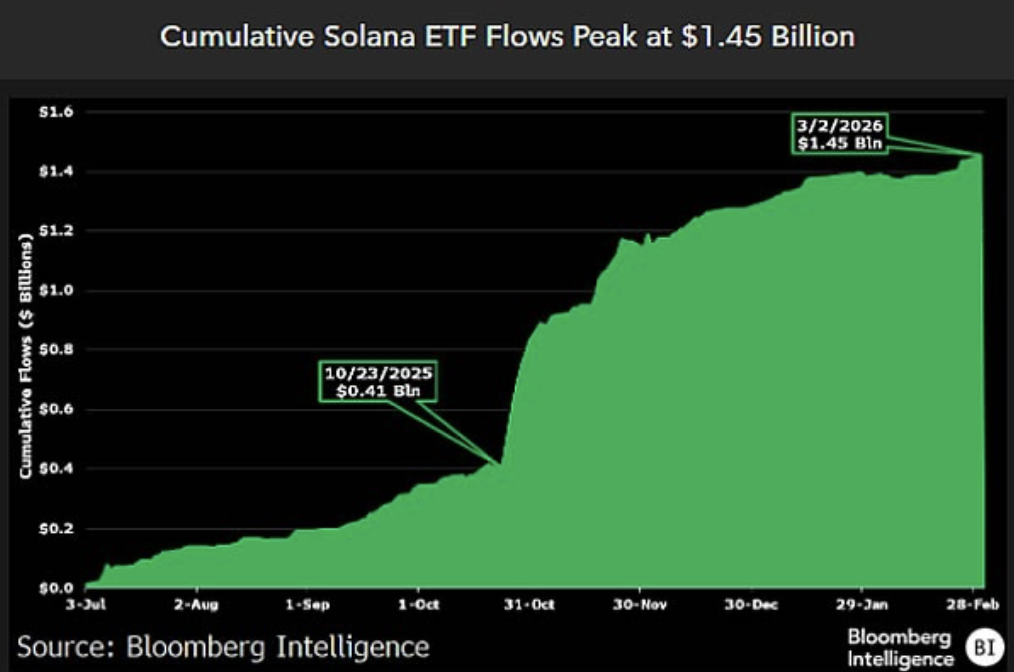
Solana ETFs Continue Drawing Institutional Capital
Balchunas noted that about half of the $1.5 billion flowing into Solana ETFs likely came from institutional investors. That detail matters, because institutional money tends to behave very differently from retail speculation.
Large funds often operate under longer investment horizons. They aren’t usually chasing short-term price swings the way smaller traders might. Instead, they allocate capital gradually and hold positions through volatility — sometimes for years.
That dynamic may explain why Solana ETF inflows stayed relatively steady despite weakening crypto sentiment. Institutional mandates, after all, don’t tend to change overnight just because the market hits a rough patch.
Comparing Solana ETFs With Bitcoin’s Market Scale
To better understand the size of the inflows, Balchunas compared Solana’s ETF demand with Bitcoin’s market scale. During the analysis period, Solana carried a market capitalization of roughly $50 billion.
Bitcoin, by contrast, sits in an entirely different league. Its total market value hovered around $1.4 trillion.
When the scale difference is adjusted, the capital absorbed by Solana ETFs becomes much more striking. In Bitcoin-equivalent terms, the inflows into Solana ETFs would resemble roughly $54 billion entering Bitcoin funds.
That’s an unusually strong pace for a new ETF category. In fact, it places Solana’s early ETF performance ahead of Bitcoin’s ETF flow speed during comparable early periods.
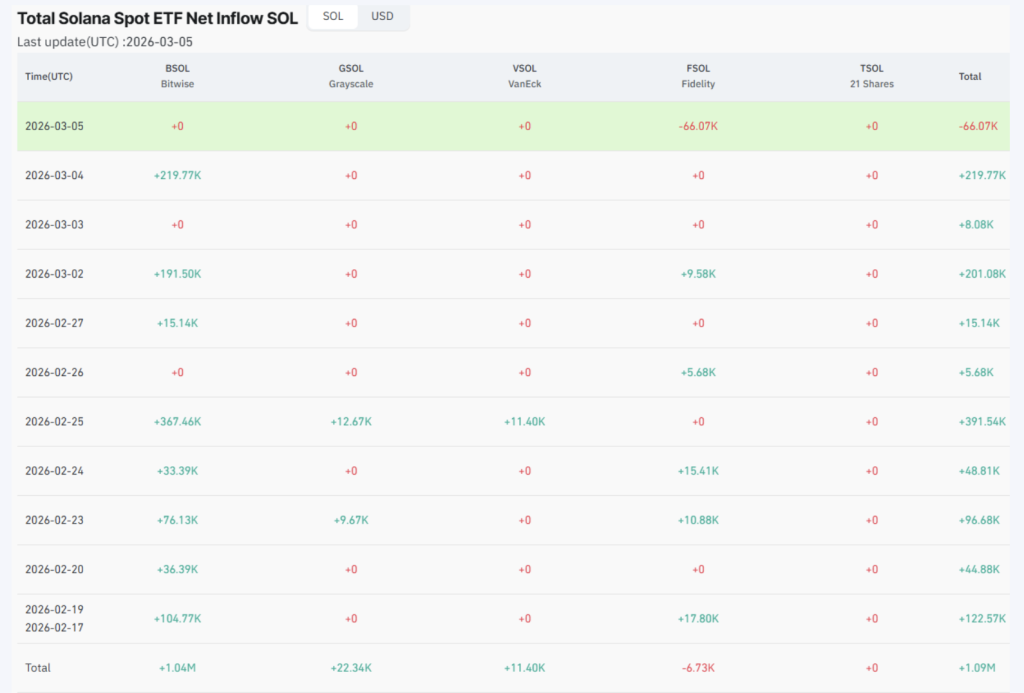
Crypto ETF Market Shows Mixed Capital Movement
While Solana ETFs have held up relatively well overall, the broader crypto ETF landscape hasn’t been quite as stable. Data from CoinGlass showed that March 5 brought notable outflows across several major products.
Bitcoin spot ETFs saw withdrawals totaling about $227.83 million that day. Ethereum spot ETFs also recorded outflows, losing around $90.9 million during the same trading session.
Solana ETFs experienced smaller exits by comparison. Around $5.23 million left the six U.S.-listed Solana funds during the period. XRP-related ETFs also recorded modest losses, with roughly $6.15 million flowing out.
Those movements suggest investors were reducing risk exposure across multiple crypto funds at the same time.
Solana ETFs Face Their First Outflow in Over a Month
According to CoinGlass records, the March 5 session marked the first net outflow day for Solana ETFs in more than a month. Interestingly, the shift came right after the funds pulled in about $19 million in fresh inflows the day before.
That back-and-forth pattern hints at a market still adjusting its positioning. When prices fall sharply, investors often rebalance portfolios gradually rather than making sudden exits.
In other words… some capital rotates out while other investors step in.
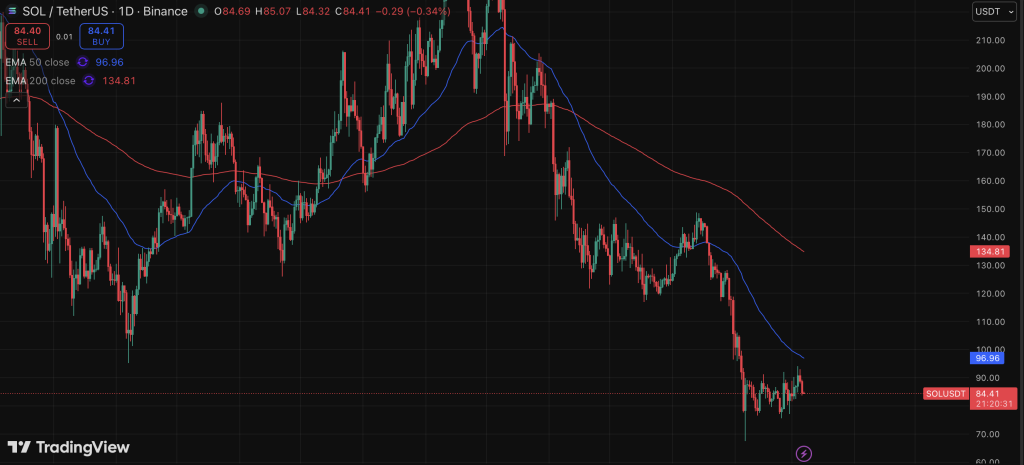
Solana Price Decline Puts ETF Demand to the Test
During the ETF flow analysis period, CoinGecko data showed Solana trading near $88. That price sits far below its January 2025 high of around $293, which was reached during a massive surge of network activity tied to memecoin launches.
Back then, Solana’s ecosystem was buzzing. Transaction volumes spiked, speculation exploded, and liquidity poured into the network. But as the memecoin frenzy cooled, activity slowed across several blockchain ecosystems.
The result was a broad pullback across altcoins, and Solana wasn’t spared.
Even so, the behavior of Solana ETFs has diverged from the token’s price trajectory. In most cases, funds tied to falling assets quickly lose investor interest. Allocations dry up. Sometimes the products even shut down.
That hasn’t happened here.
Institutional Investors Focus on Long-Term Exposure
Balchunas pointed out that ETF launches during market downturns rarely survive their first year. If inflows stall and investor interest fades, funds tied to volatile assets often struggle to stay viable.
Solana ETFs, however, appear to be resisting those historical trends.
One likely reason is institutional participation. Investors allocating through structured ETF products often view them as long-term exposure to an ecosystem rather than a short-term trade on token price.
From that perspective, volatility becomes less important than the broader growth of the underlying blockchain.
For now, Solana ETFs remain one of the clearest indicators of how institutional investors are approaching alternative blockchain networks beyond Bitcoin and Ethereum.
The next key moment will probably arrive during upcoming ETF flow reports. If inflows continue despite ongoing volatility, Solana could strengthen its position inside institutional crypto portfolios — and that would be a signal the market will be watching closely.