
- SHIB has lost nearly 60% of its value over the past year
- Meme coin momentum has cooled as investors seek utility-driven assets
- Bitcoin, Ethereum, and XRP are attracting more capital
Shiba Inu has struggled to maintain the explosive momentum that once defined its rise. Over the past year, the meme coin has lost close to 60% of its value, a sharp reversal from the extraordinary growth that first captured global attention. During the 2020–2021 cycle, SHIB surged by an astonishing 85,000,000%, turning early adopters into overnight success stories.
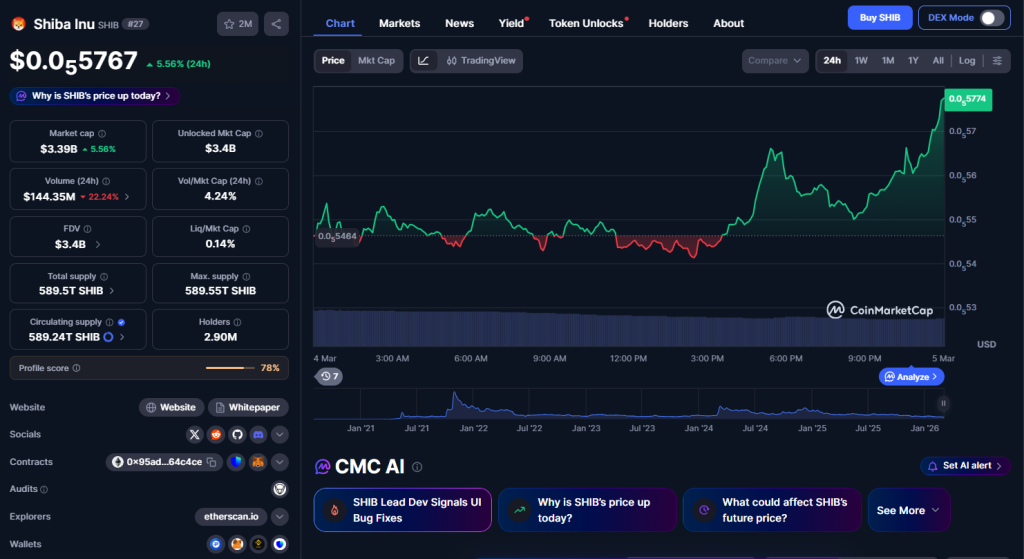
That meteoric rally fueled widespread expectations that the token could repeat similar gains in later cycles. However, since reaching its all-time high of $0.00008616 in October 2021, Shiba Inu has mostly trended downward. While brief rallies appeared in 2023 and 2024, each burst of momentum faded quickly, often reversing within days.
The Meme Coin Narrative Is Weakening
Part of the challenge facing SHIB is the fading excitement around meme coins as a category. During the previous cycle, hype and community-driven speculation played a huge role in pushing prices higher. In the current environment, many investors are shifting their attention toward projects that offer clearer utility.
Capital has increasingly flowed into assets such as Bitcoin, Ethereum, and XRP, which are associated with institutional adoption, infrastructure development, and broader financial integration. As market participants grow more selective, purely speculative tokens face stronger headwinds.
Reduced Inflows Add Pressure
Another factor weighing on SHIB is declining capital inflows into the meme coin sector. Compared with earlier cycles, traders appear less willing to allocate significant funds to tokens driven primarily by social momentum. Without consistent new demand, sustaining large price rallies becomes difficult.
This shift has made the meme coin market one of the hardest-hit segments of crypto over the past few years. As speculative interest fades, price movements tend to weaken or stagnate unless new narratives emerge.

Can Shiba Inu Regain Momentum?
Shiba Inu’s future may depend on whether it can evolve beyond its meme origins. Some within the ecosystem have attempted to introduce additional features, but market perception still plays a powerful role. If the broader crypto market enters another strong bull phase, speculative assets like SHIB could see renewed attention.
For now, however, the token remains under pressure. Without a surge of new demand or a convincing shift toward practical use cases, SHIB may continue struggling to reclaim the kind of explosive growth that once defined its early years.