

- LINK has posted a mild rebound but remains down sharply month over month
- Analysts see limited upside in March 2026, with projections near $9.65
- Broader crypto weakness and Bitcoin’s trend will likely dictate direction
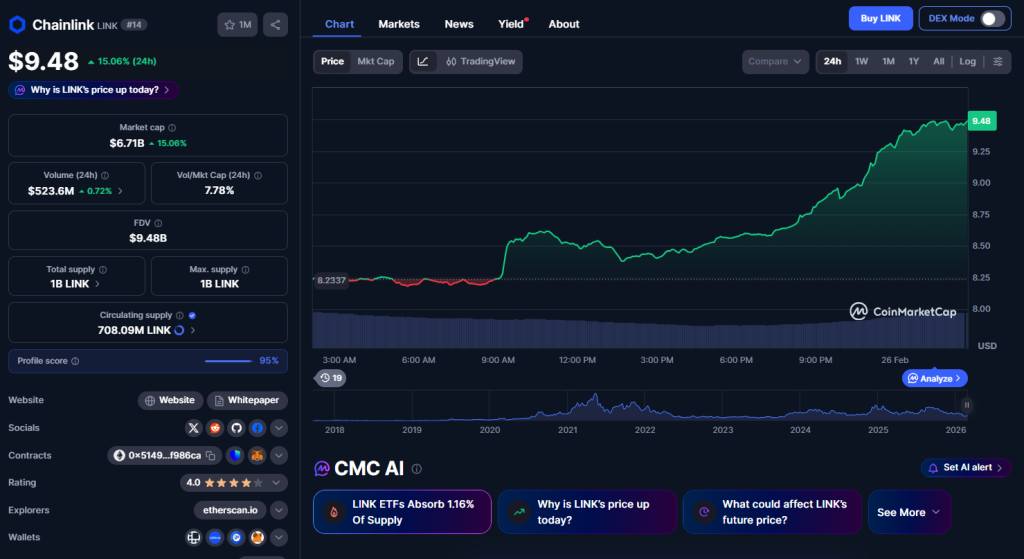
Chainlink has registered a modest recovery following Bitcoin’s recent upswing, gaining nearly 4% over the past 24 hours. While short-term momentum has improved slightly, the broader picture remains fragile, with LINK still down heavily over the past month and since early 2025.
The asset last traded near the $25 level in September of last year. Since August 2025, price action has trended lower, accelerated by the October market crash that triggered widespread outflows across crypto. The current bounce appears more like relief than reversal.
Can LINK Reclaim $25 in March 2026?
Reaching $25 in March 2026 would require a significant shift in market structure. At current levels, that would imply a sharp multi-fold rally in a relatively short time frame. Most analyst models do not currently support that scenario.
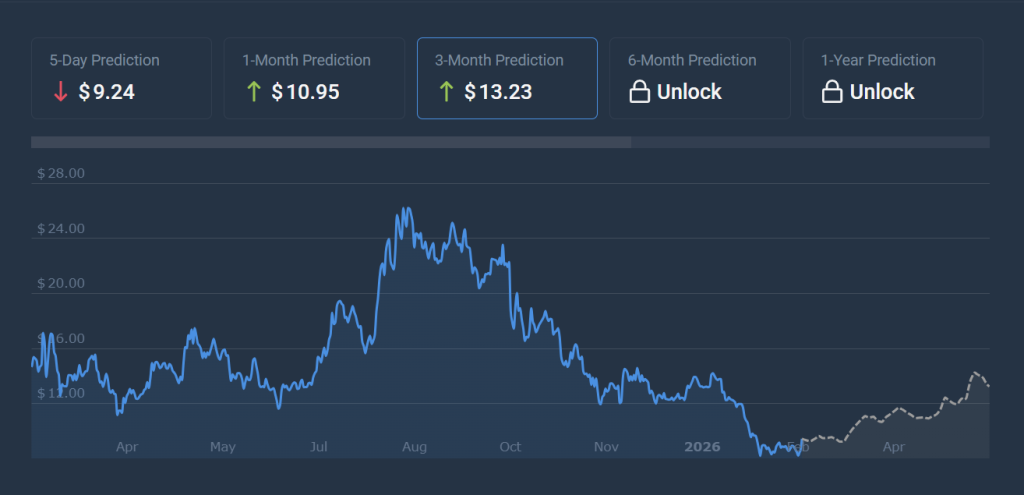
CoinCodex projections suggest LINK may trade around $9.65 by the end of March 2026. While that represents moderate upside from present levels, it falls far short of the $25 mark. Such forecasts assume stabilization rather than explosive growth.
Bitcoin’s Role Remains Critical
Chainlink’s price performance is closely tied to Bitcoin’s broader trajectory. With BTC still struggling to reclaim strong upside momentum, altcoins face difficulty sustaining breakouts. Historically, LINK rallies tend to follow decisive Bitcoin strength rather than lead it.
Until BTC establishes a durable uptrend, LINK may continue consolidating within a tight range. A meaningful breakout would likely require renewed inflows into the crypto sector as a whole.
Macro Conditions Still Weigh on Crypto
Macroeconomic uncertainty, geopolitical tensions, and tighter liquidity conditions have pressured risk assets for months. Investors have rotated capital toward traditional safe havens such as gold and silver, limiting speculative flows into digital assets.
Potential catalysts could include Federal Reserve rate cuts or seasonal liquidity boosts such as tax refund inflows. However, these remain conditional rather than guaranteed drivers of upside.
Outlook: Consolidation Before Expansion
At present, Chainlink appears more likely to consolidate than to surge toward $25 in the near term. While short-term rallies are possible, sustained momentum would require broader structural improvement in crypto markets.
For March 2026 specifically, current projections favor modest recovery rather than a return to previous highs. LINK’s path forward remains heavily dependent on Bitcoin and macro sentiment.