- A viral claim suggests Bitcoin will hit $100K within 48 hours, but the deadline is already halfway through.
- The predictor behind the call has a mixed track record with past Bitcoin forecasts.
- Market fundamentals, not social media hype, will ultimately decide BTC’s next move.
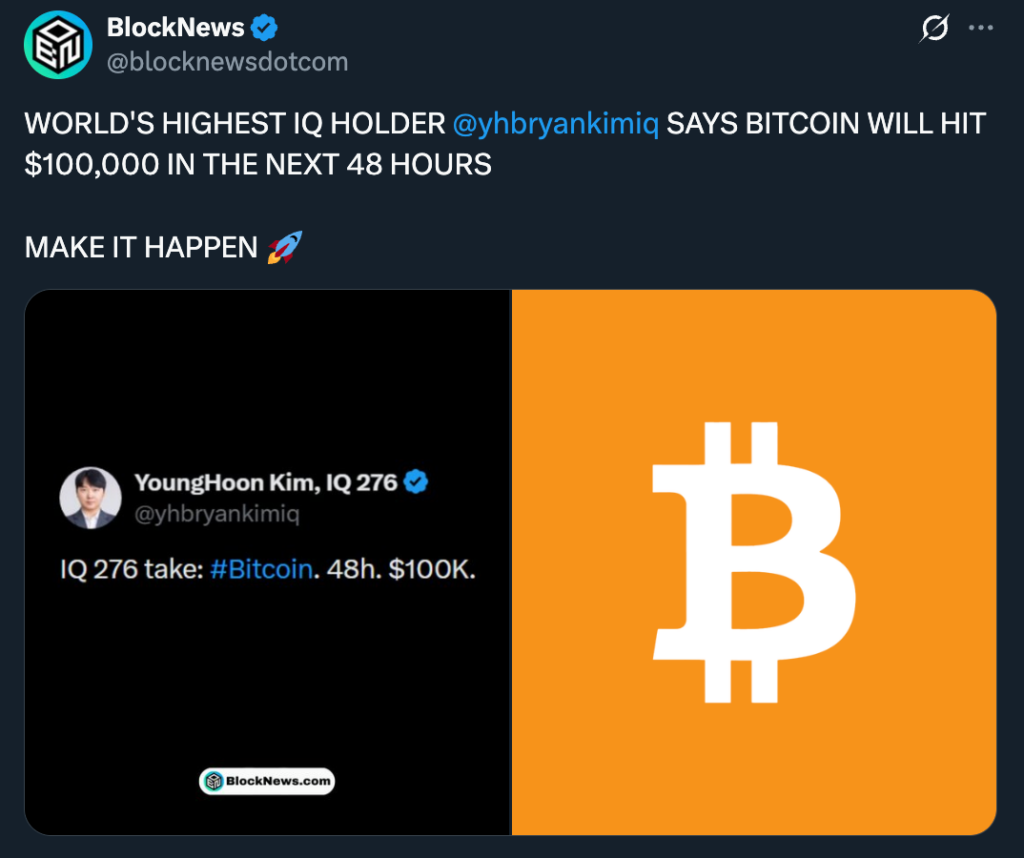
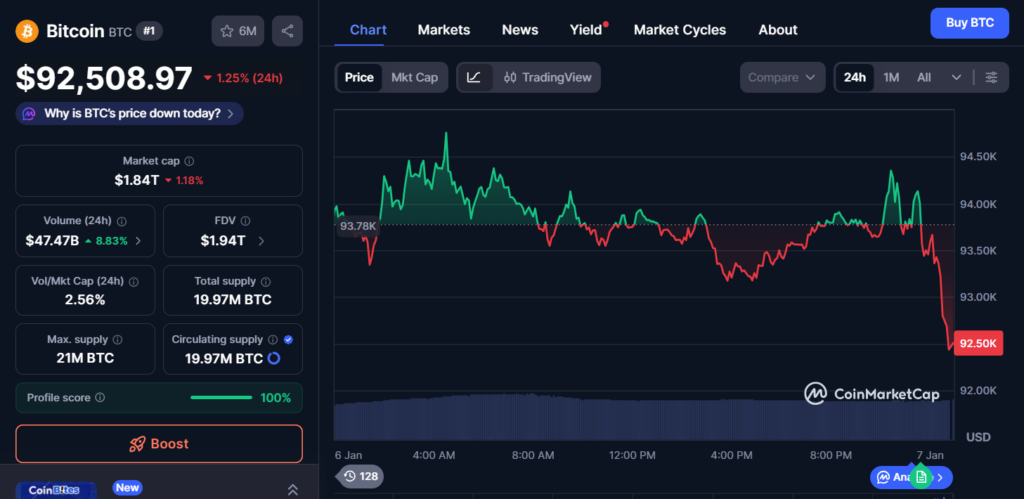
A bold Bitcoin prediction is making the rounds again, this time from YoungHoon Kim, a self-described “world’s highest IQ” holder who claims an IQ of 276. Kim stated on X that Bitcoin would surge to $100,000 within a 48-hour window, a claim that quickly gained traction online. We’re now halfway through that timeframe, and while Bitcoin has been hovering in the mid-$90,000 range, it hasn’t crossed the six-figure mark just yet. The gap between prediction and price action is already fueling debate.
A History of Big Calls That Haven’t Landed
This isn’t Kim’s first aggressive forecast. Over the past few months, he’s made repeated claims about Bitcoin doubling to $220,000 in short order or framed price dips as brief discounts before explosive rallies. So far, those calls either haven’t materialized or remain unresolved. As a result, many traders now greet his statements with skepticism rather than excitement, especially when timelines are as tight as 48 hours.
Social Media Buzz vs Market Mechanics
Predictions like this tend to spread fast, mostly because they’re dramatic and easy to latch onto. But they don’t alter the mechanics that actually move Bitcoin’s price. BTC still responds to a mix of macro conditions, ETF inflows, liquidity, and overall investor sentiment. A viral post might stir short-term chatter, but it doesn’t override fundamentals or force the market’s hand.
Still Time Left, but Caution Feels Warranted
Technically, there’s still time left for Bitcoin to touch $100,000 within Kim’s stated window. That said, halfway through the countdown, the market isn’t behaving like it’s about to go vertical. Given the track record behind similar predictions, it’s reasonable to treat this as noise rather than a signal. Traders watching closely are staying alert, but few are betting on bravado alone.