

- Bitcoin whales accumulated over 269,000 BTC in 30 days, the largest spike in 13 years.
- Grayscale and Bernstein see BTC peaking in 2026 under a new five-year cycle model.
- Macro uncertainty remains the biggest wildcard for Bitcoin’s near-term recovery.
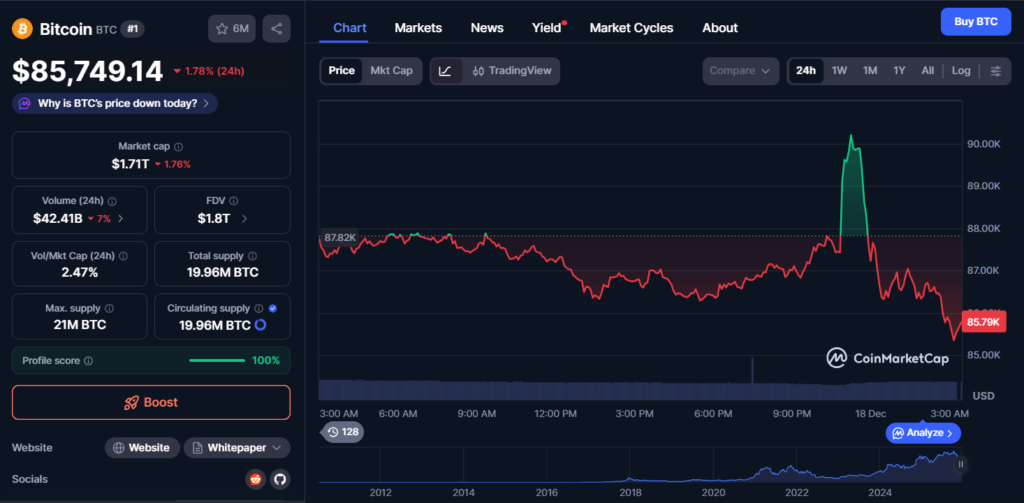
Bitcoin whales have gone on one of their most aggressive buying sprees in over a decade. According to Glassnode data, large wallets accumulated roughly 269,822 BTC over the past 30 days, worth more than $23 billion at current prices. It marks the biggest 30-day whale accumulation seen in the last 13 years, arriving just as Bitcoin has been grinding through a multi-month price correction.

Whales Appear to Be Buying the Dip
Historically, whale behavior has played a major role in shaping Bitcoin’s longer-term price direction. The recent surge in accumulation suggests that large holders see current price levels as attractive rather than risky. Instead of exiting during weakness, these wallets appear to be positioning for a potential reversal, quietly absorbing supply while sentiment remains cautious across the market.
Long-Term Forecasts Point to 2026
Several major institutions believe Bitcoin’s next major move may still be ahead. Grayscale has argued that BTC has broken away from its traditional four-year cycle and is now following a five-year rhythm instead. Under that framework, Bitcoin’s next peak would arrive in 2026 rather than sooner. Factors such as lower interest rates and more favorable U.S. crypto regulation could further support that outlook.
Bernstein shares a similarly bullish view, projecting Bitcoin could surpass $150,000 in 2026 and reach $200,000 by 2027 if the five-year cycle thesis holds. The firm sees current conditions as part of a longer consolidation phase rather than the end of the broader trend.
Not Everyone Is Convinced
Despite the optimism from Grayscale and Bernstein, not all institutions agree. Barclays has issued a more cautious outlook, warning that the crypto market could face continued pressure in 2026. The bank points to declining spot trading volumes and weakening demand as potential headwinds that could cap upside, even if whale accumulation remains strong.
Macro Conditions Still Matter
In the near term, Bitcoin’s direction may hinge less on whale activity and more on macroeconomic forces. Slower growth, elevated employment figures, and a general risk-off mood have pushed capital toward safer assets like gold and silver. That dynamic could persist until inflation shows clearer signs of cooling. If inflation trends lower, risk appetite could return, potentially aligning with the whale accumulation already underway.