
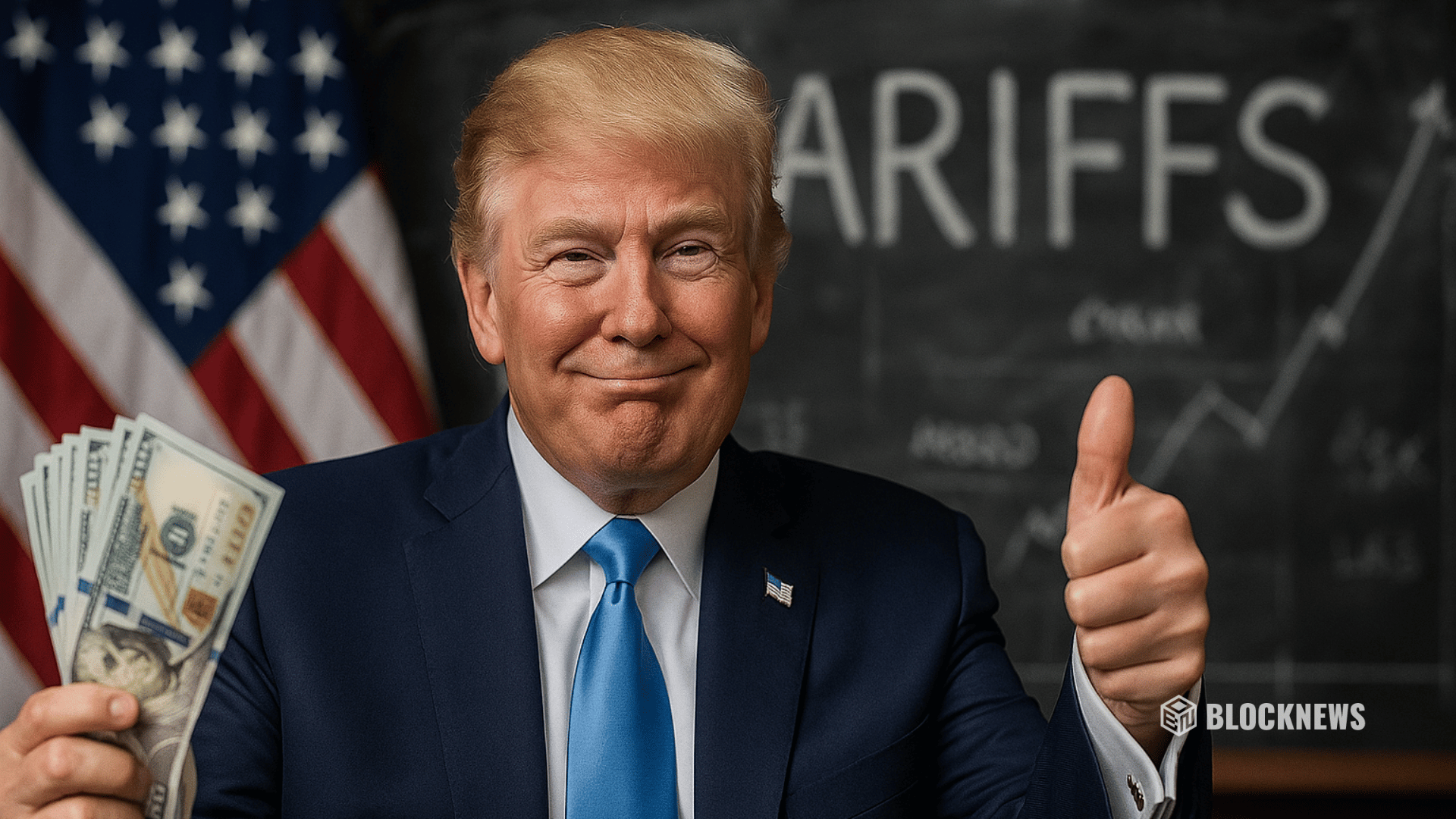
- Trump has proposed $2,000 “tariff dividend” checks funded by tariff revenue, but the available funds and legal constraints make the math and execution extremely difficult.
- Treasury officials have not endorsed a concrete plan, and the Supreme Court could force the government to refund a large chunk of tariff revenue to businesses.
- Congress would almost certainly need to approve any such program, and concerns over inflation and deficits make broad support unlikely in the current environment.
President Donald Trump, under pressure from America’s growing affordability problems, has returned to one of his more unusual policy ideas: sending Americans rebate checks funded by tariff revenue. In a Truth Social post on Sunday, he wrote that “a dividend of at least $2000 a person (not including high income people!) will be paid to everyone.” It’s a bold promise with several significant complications, both mathematical and political.
This isn’t the first time he has floated the concept. Back in August, Trump said the United States was “taking in so much money” from tariffs that the administration might “make a dividend to the people of America.” The idea is framed as a kind of targeted stimulus, but instead of using general tax revenue or new borrowing, the checks would supposedly be financed by the tariffs his administration has imposed on foreign goods.
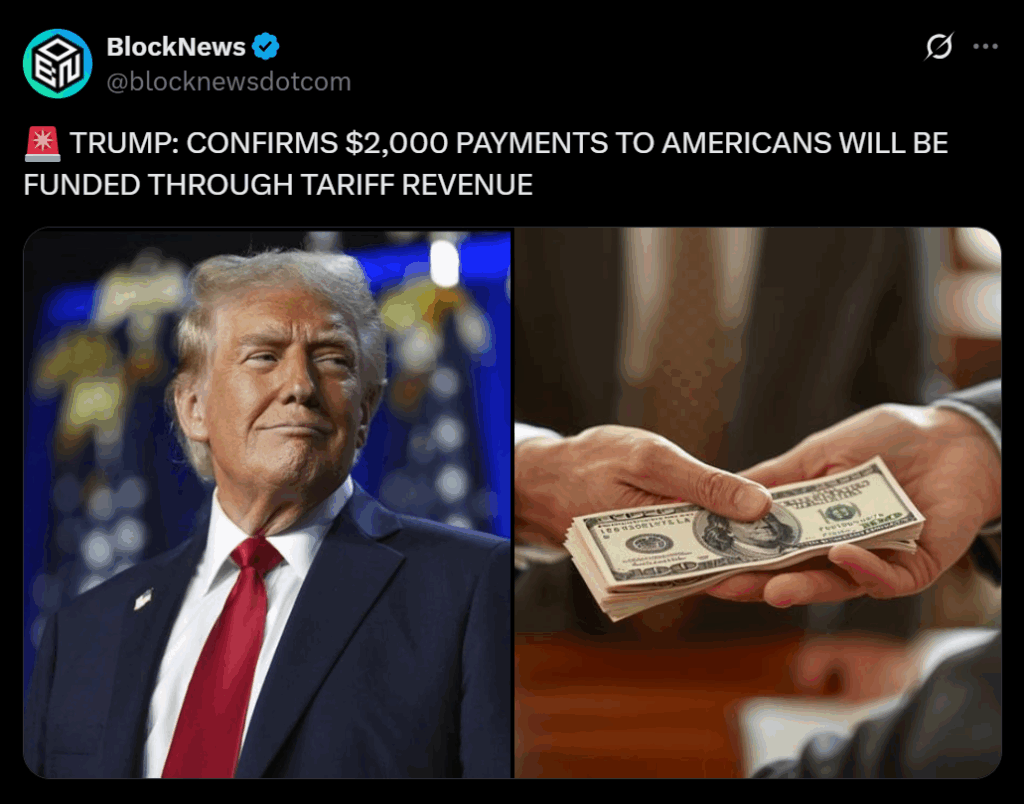
Those tariffs are legally paid by American importers, but many of the added costs have been passed on to consumers in the form of higher prices. In that sense, Americans are indirectly paying for the tariffs already, and the proposal amounts to recycling that revenue back to households. On the surface it sounds similar to the pandemic-era stimulus checks, but the funding mechanics are very different.
What the Treasury Says
Trump’s top economic advisers are far less definitive than the president’s social media posts. Treasury Secretary Scott Bessent was pointedly noncommittal in an interview with ABC’s “This Week,” saying that no formal proposal has been drawn up to send out tariff rebate checks.
He also hinted that the much-repeated “$2,000” figure could show up in different forms, such as offsetting lost revenue from not taxing tips, overtime, or even some Social Security income, rather than as a clean, one-time payment to every eligible adult. In other words, even inside the administration, the policy is closer to an idea on the whiteboard than a finished plan.
A White House official later added that the administration is “committed to putting this money to good use for the American people,” but stopped short of saying who would qualify or how exactly the program would work.
Is There Even Enough Money for This?
The U.S. Treasury says the Trump administration has collected more than $220 billion in tariff revenue so far, combining both Trump-era tariffs and those that predated his time in office. That sounds like a large pool, but the math on $2,000 checks is brutal.
The IRS reports that over 163 million Americans filed tax returns in 2024. If each of them received $2,000, that would cost around $326 billion, already exceeding the total tariff revenue collected to date. Trump has said high-income Americans would be excluded, but it’s unclear where the cutoff would be and whether that alone can close the gap.
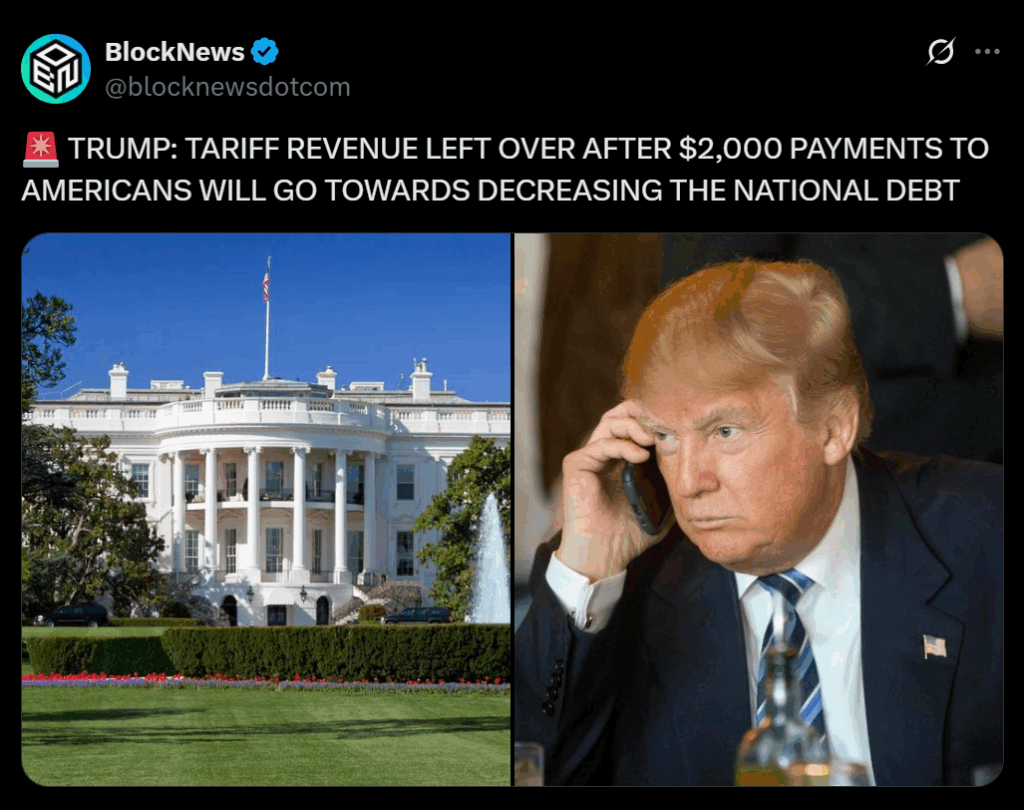
Tax Foundation economist Erica York estimated that using a $100,000 income threshold would still leave roughly 150 million adults eligible. At $2,000 apiece, that comes to about $300 billion. That’s still well above the $220 billion in tariff revenue, and that’s before you consider Trump’s claim that any “money left over” from the $2,000 payments could be used to “substantially pay down national debt,” which is now approaching $40 trillion.
In a Monday post, Trump repeated that any remaining tariff income after sending out payments to low- and middle-income citizens would be used to reduce the debt, but at current numbers, there simply isn’t much “left over” in the first place.
What About the Supreme Court?
Another complication is the Supreme Court’s review of Trump’s tariff powers. Around $100 billion of the tariff revenue was collected under emergency authorities that the Court now appears skeptical of. If the justices rule that the administration overstepped, the government might be forced to refund a large portion of that money to businesses.
That would immediately shrink the pool available for any household rebates. And if checks have already gone out before a ruling arrives, Washington could find itself trying to repay importers with funds that have already been distributed to voters. That would be a legal and fiscal mess, potentially forcing new borrowing or cuts elsewhere.
Can Trump Do This Unilaterally?
Almost certainly not.
The power of the purse lies with Congress, not the White House. Previous rounds of stimulus checks — both under Trump and under Joe Biden — required explicit congressional authorization. Redirecting tariff revenue into a massive rebate program would almost certainly need new legislation.
Even if Trump is serious about the idea, he would need enough support in both chambers to pass it. Given divided views within his own party, that is far from guaranteed.
Would Congress Support It?
Historically, large cash payments to households have been reserved for periods of recession or acute crisis, like the 2008 financial crash or the 2020 pandemic shock. The current U.S. economy, while strained by high living costs, is not in a technical recession or emergency.
Economists warn that sending out $2000 checks now could reignite inflation just as the Federal Reserve is trying to keep prices under control. A large injection of spending power risks giving the economy a short-term “sugar rush” at precisely the wrong time. If demand surges and prices follow, the Fed might feel compelled to raise interest rates again, pushing up the cost of mortgages, car loans, and credit card debt — exactly where consumers already feel squeezed.
That’s the kind of outcome that could alienate fiscal conservatives and deficit hawks, many of whom have already expressed concern about long-term debt and inflation. Even if stimulus-style checks are politically popular with many voters, they could be a tough sell in a Congress that is wary of fueling another inflation wave.
When Would Checks Actually Arrive?
Even in the unlikely event that Trump’s tariff rebate plan is approved more or less as advertised, Americans shouldn’t expect money to hit their accounts quickly.
During the pandemic, people who had direct deposit information on file with the IRS saw stimulus payments arrive within about a week of the law passing. But that was with an urgent nationwide crisis and a government apparatus in full emergency mode. For those waiting on paper checks, the process stretched out over roughly 20 weeks.
Layer on top the extra complexity here — eligibility cutoffs, legal scrutiny of tariff funds, congressional negotiations, and possible court rulings — and any realistic timeline stretches even further. For now, Trump’s promise looks much more like a political message aimed at frustrated voters than a detailed, actionable policy.