
- Axiom employee allegedly used internal tools to track private wallets
- Sensitive user data was reportedly shared in private trading groups
- Axiom says it has launched an internal investigation
Blockchain investigator ZachXBT has alleged that an Axiom employee misused internal tools to monitor private user wallets and gain a trading edge. In a series of posts, he named Broox Bauer, a senior business development employee based in New York, as a central figure in the alleged scheme.
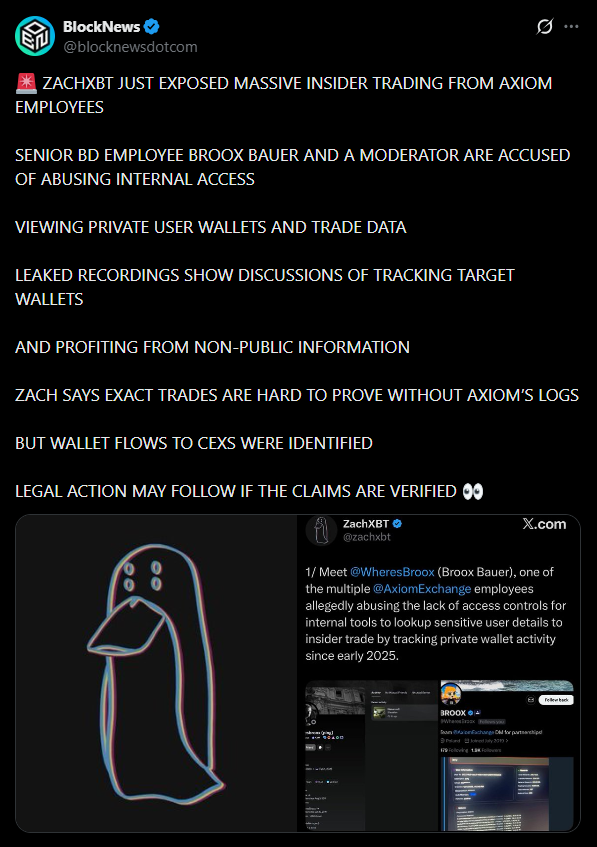
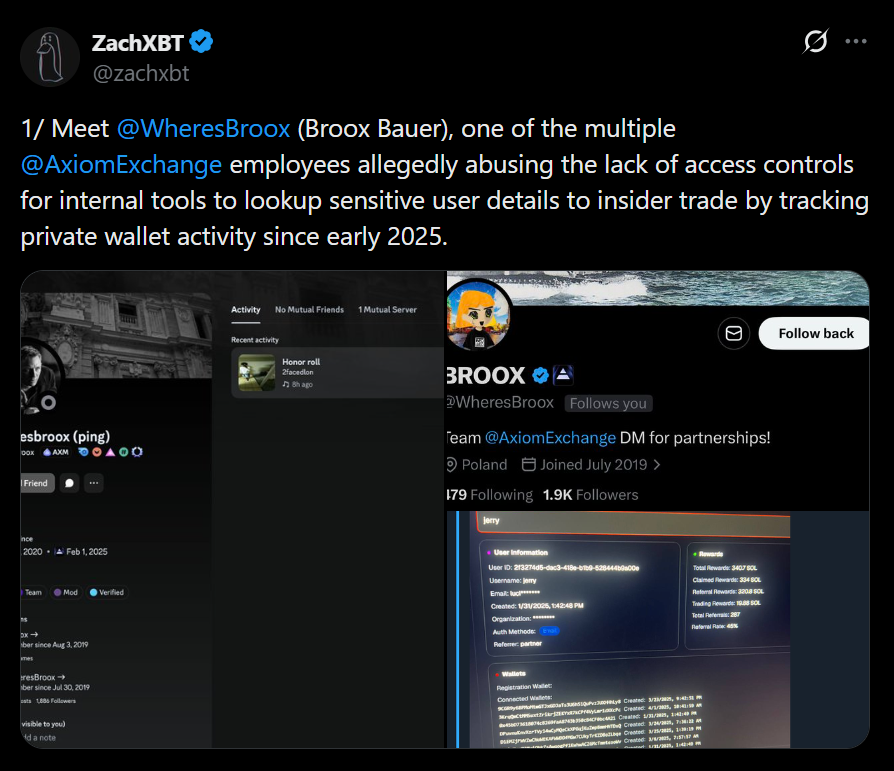
According to the findings, internal lookup tools allowed access to wallet addresses, referral codes, and user IDs. The investigation claims this information was used to map wallets linked to high-value traders and influencers, enabling monitoring of early token accumulation and potential front-running strategies.
Recorded Calls and Shared Screenshots
ZachXBT’s report references recorded calls in which Broox allegedly described the ability to retrieve wallet data, track activity timelines, and identify trading patterns. In one quoted conversation, Broox purportedly explained how internal dashboards could reveal multiple wallet connections tied to a single user.
The investigation also alleges that screenshots of internal dashboards were shared in private groups during 2025. These images reportedly included wallet addresses connected to traders identified as “Jerry” and “Monix.” Additional discussions allegedly focused on monitoring traders involved with the meme coin AURA.
Claims of Coordinated Monitoring
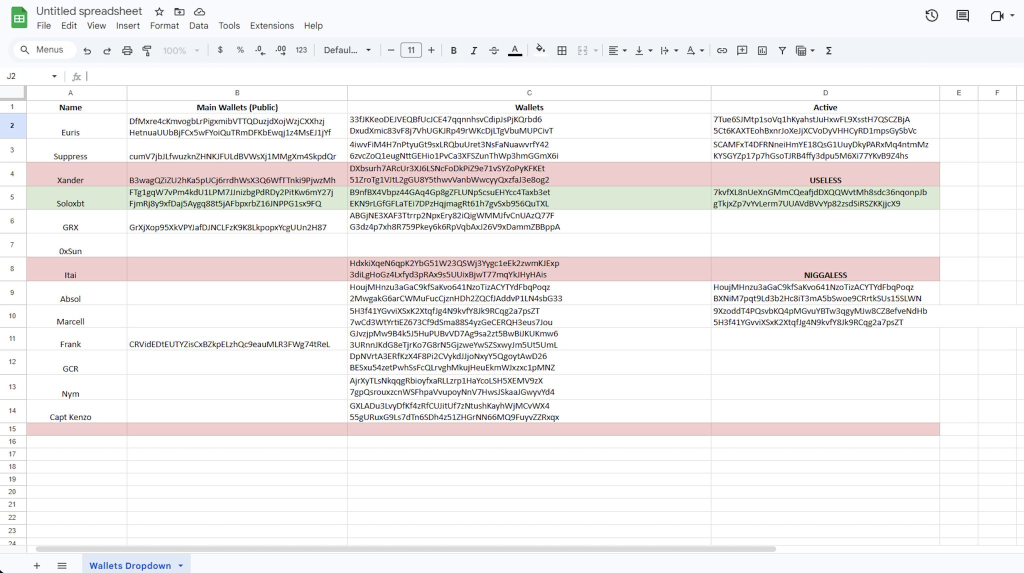
According to the report, members of the private group compiled a Google Sheet cataloging wallet addresses associated with targeted influencers. Several individuals later confirmed ownership of the listed addresses.
ZachXBT noted that while wallet mapping is visible on-chain, proving insider trading would likely require access to internal exchange logs due to the high transaction volume common in meme coin markets.
Axiom’s Response
Axiom, founded in 2024 and operating prominently on the Solana blockchain, stated it was “shocked and disappointed” by the allegations. The company confirmed it has launched an internal investigation and removed access to the tools in question.
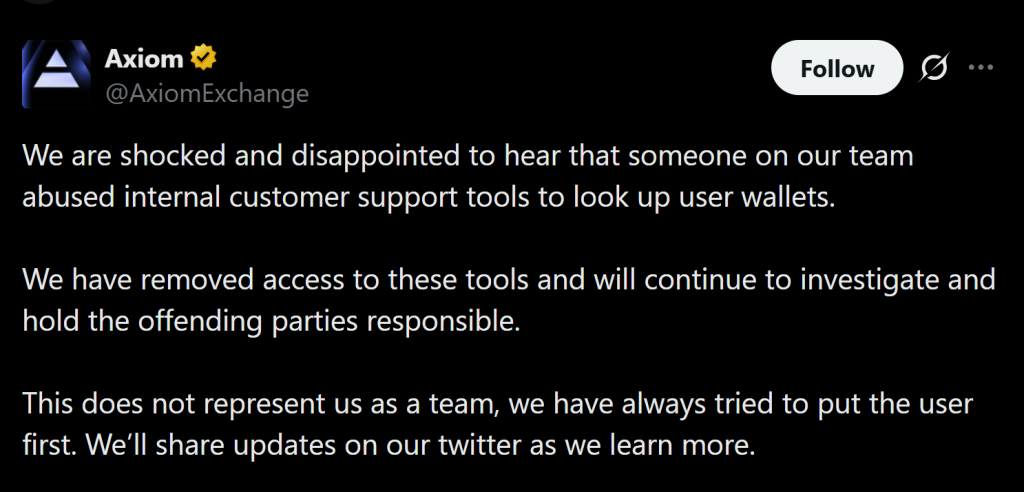
The platform has grown rapidly, becoming one of the more profitable DeFi applications by late 2025 amid increased meme coin trading activity.
Broader Implications for DeFi Platforms
If substantiated, the allegations raise concerns about internal data access controls within crypto platforms. User trust in DeFi and centralized interfaces depends not only on blockchain transparency but also on responsible management of private user data.
The outcome of the investigation may shape discussions around governance, compliance standards, and operational safeguards across crypto exchanges and DeFi services.