- Lark Davis believes Chainlink’s infrastructure role gives it a stronger long-term edge than XRP
- He criticizes XRP’s closed ecosystem but acknowledges Ripple’s vision could still drive future gains
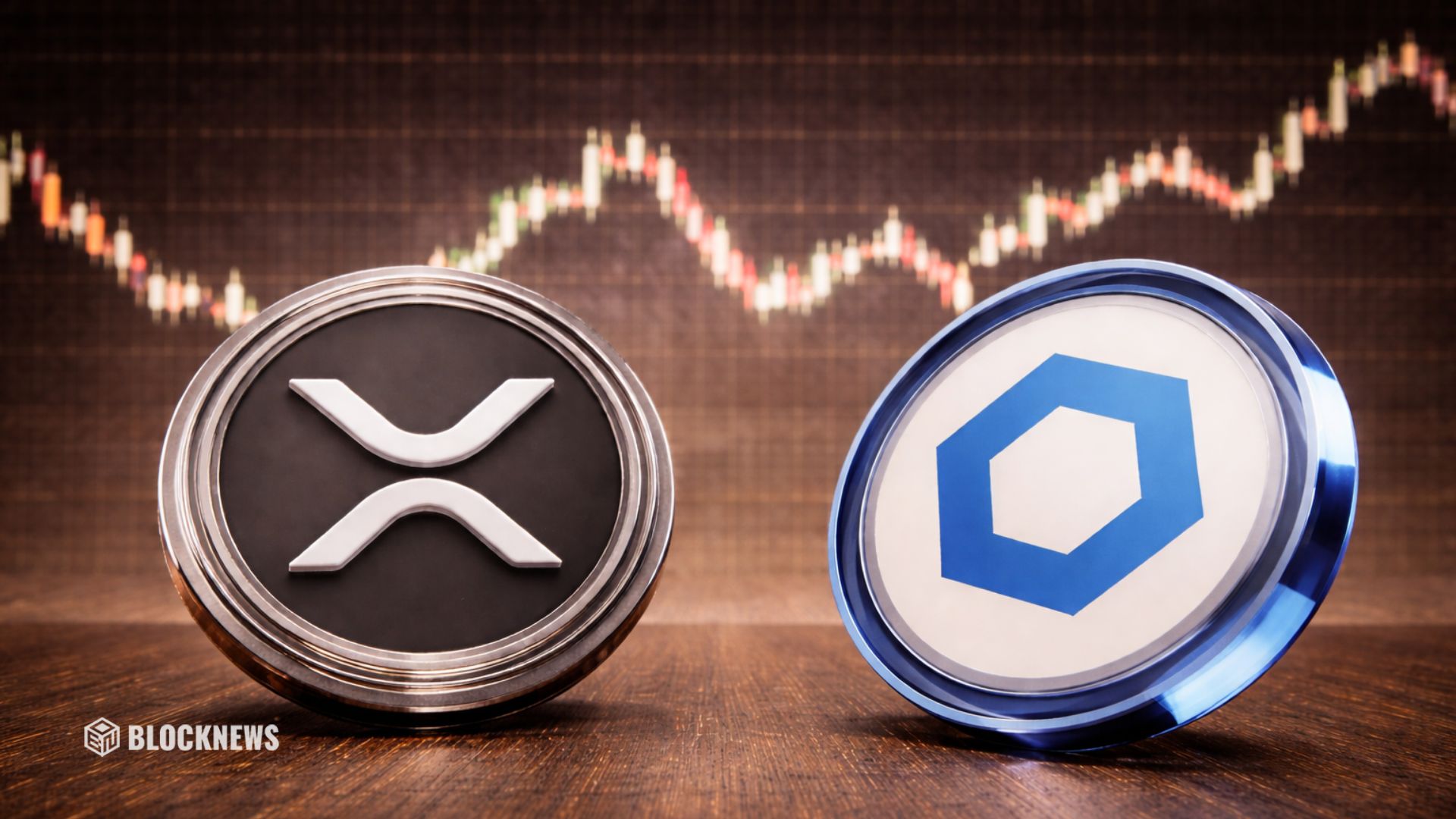
- The debate highlights two different models: Chainlink connects data, while XRP focuses on moving value
Bitcoin commentator Lark Davis has stepped into the ongoing XRP versus Chainlink debate, and he didn’t exactly sit on the fence.
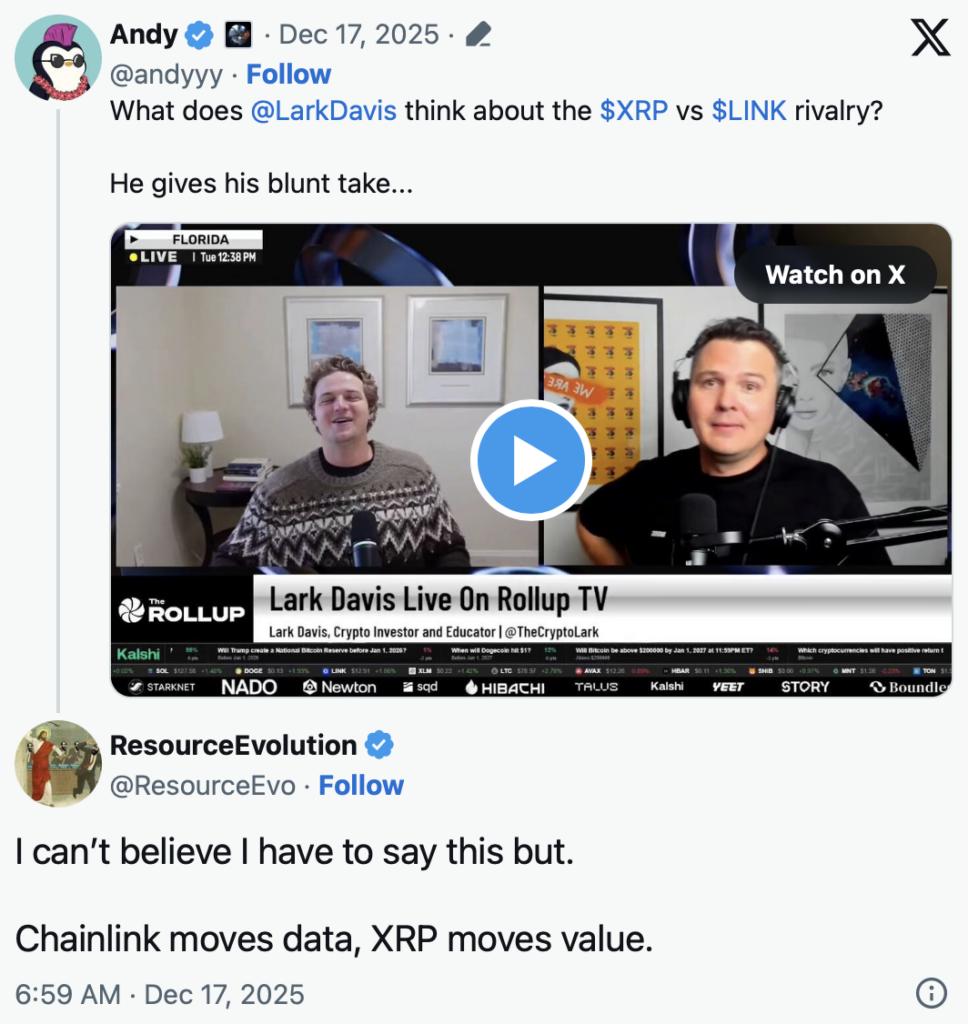
During a recent appearance on the Rollup TV crypto show, host Andy asked Davis to share his take on both assets. His answer was blunt. Davis said Chainlink is an “infinitely better” crypto than XRP and believes LINK is far more likely to outperform over the next ten years. That said, he did acknowledge the loyalty and sheer staying power of the XRP community, which he described as one of the most passionate in the space.
Why Davis Is Firmly in the Chainlink Camp
Davis explained that his confidence in Chainlink comes down to utility, not hype. He pointed to Chainlink’s Cross-Chain Interoperability Protocol, or CCIP, calling it one of the most important pieces of infrastructure in crypto right now. In simple terms, CCIP allows blockchains, and even traditional systems, to talk to each other in a secure way.
To Davis, that makes Chainlink broadly useful across the entire industry rather than tied to a single ecosystem. It’s infrastructure first, narratives second.
He also mentioned Chainlink’s growing list of partnerships and its recent move toward token buybacks. Those changes, in his view, finally give investors a clearer reason to hold LINK long term, beyond just betting on future adoption or technical potential.
Davis Pushes Back on the XRP Narrative
When the conversation shifted to XRP, Davis was more critical. He described XRP as a relatively closed system, with most of its activity staying inside its own network. He questioned XRP’s daily usage and on-chain engagement, arguing that after more than a decade, the network still hasn’t built what he would consider a truly strong, organic user base.
Still, his take wasn’t entirely dismissive. Davis said he understands why many people believe in XRP, especially those who trust Ripple’s long-term vision. He acknowledged that if Ripple executives Brad Garlinghouse and Chris Larsen manage to deliver on their ambitions, XRP could still see meaningful upside down the road.
Leadership and Incentives Matter
Davis also drew a sharp contrast between the leadership styles behind the two projects. He praised Chainlink founder Sergey Nazarov, saying his focus on decentralization and neutral infrastructure fits well with the original ethos of crypto.
By comparison, Davis criticized Ripple’s leadership, arguing that the company has extracted significant value from XRP sales over the years. For him, that history raises concerns about incentives and long-term alignment with token holders, even if the project itself continues to push for adoption.
Two Assets, Two Very Different Paths
In the end, Davis framed the debate as less about price and more about philosophy. XRP, in his view, is a closed-loop system betting heavily on institutional payments and large financial players. Chainlink, on the other hand, positions itself as neutral plumbing, quietly connecting blockchains, protocols, and real-world data across the entire crypto landscape.
That’s why Davis believes Chainlink is not just better positioned, but “infinitely better” as a long-term asset, even though he clarified that he doesn’t currently hold LINK himself.
As expected, his comments stirred plenty of reaction online, especially from the XRP Army. Others took a more balanced stance, arguing that both assets can succeed precisely because they solve different problems. In that framing, XRP moves value, while Chainlink moves data. Different tools, different jobs, and maybe room for both to win.