- SEC lawsuit settlement gave XRP clearer regulatory status in the US
- Spot XRP ETFs launched in 2025 could attract institutional capital
- Analysts believe macro conditions, not fundamentals, caused the recent dip
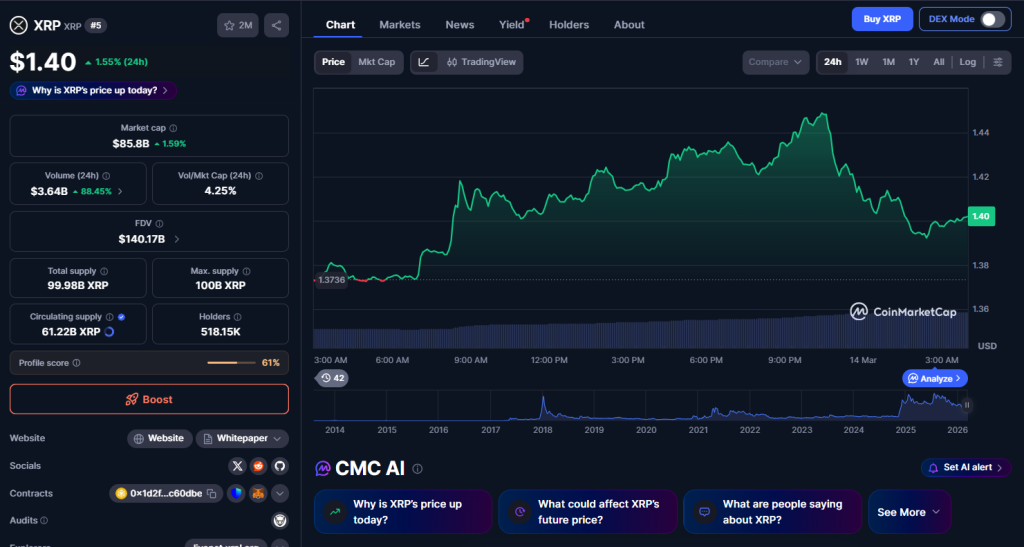
XRP has experienced notable price pressure in recent months, reflecting broader weakness across the crypto market. Even so, the asset’s long-term trajectory looks very different from where it stood just a few years ago. Much of the uncertainty that once surrounded XRP revolved around its legal battle with the U.S. Securities and Exchange Commission, a dispute that heavily limited the token’s ability to gain momentum in earlier market cycles.
That legal cloud has now largely lifted. The settlement of the SEC vs. Ripple lawsuit brought a level of regulatory clarity that XRP had been missing for years. The court concluded that retail purchases of XRP do not qualify as securities transactions, while institutional sales fall under securities regulations. That distinction restored confidence among investors and helped XRP regain traction across the market.
Regulatory Clarity Helped XRP Reach New Highs
After the legal situation improved, XRP experienced a major resurgence. In July 2025, the asset climbed to a new all-time high of $3.65, surpassing its previous record after more than seven years. The rally highlighted how much regulatory uncertainty had previously suppressed demand for the token.
The breakout also reinforced XRP’s position within the broader crypto ecosystem. With legal clarity improving, many investors began reassessing the asset’s long-term potential, particularly within cross-border payment infrastructure where Ripple’s technology is widely discussed.
Macroeconomic Pressure Has Slowed Momentum
Despite that strong momentum earlier in the cycle, XRP has since faced a noticeable correction. However, many analysts argue that the decline reflects broader market conditions rather than issues specific to the asset itself.
The crypto market experienced heightened volatility in late 2025 as macroeconomic uncertainty increased across global markets. Rising geopolitical tensions and concerns about economic stability pushed many investors toward safer positions, triggering selling pressure across digital assets.
The ongoing conflict involving the United States and Iran has added another layer of uncertainty, contributing to cautious sentiment throughout the market.
Institutional Products Could Boost XRP Demand
Another factor shaping XRP’s long-term outlook is the growing presence of institutional investment products tied to the asset. Several spot XRP ETFs launched in 2025, giving investors a regulated way to gain exposure to the token without directly purchasing it on crypto exchanges.
Major financial institutions have already begun participating in these products. Goldman Sachs, for example, is reported to hold exposure through XRP-related ETFs, highlighting growing institutional interest in the asset class.
If broader market conditions stabilize and capital begins flowing into crypto again, these ETFs could play an important role in driving demand for XRP.
XRP’s Long-Term Outlook Remains Strong
For now, XRP’s price movement reflects the same macro pressures affecting much of the crypto market. Yet the asset’s long-term fundamentals have arguably strengthened since the resolution of its regulatory battle.
Clearer legal status, growing institutional products, and continued development around Ripple’s technology all contribute to a more stable foundation for future growth.
If geopolitical tensions ease and global markets regain momentum, XRP could benefit alongside the broader crypto sector. For long-term investors, the current period may represent a phase of consolidation rather than the end of XRP’s growth potential.