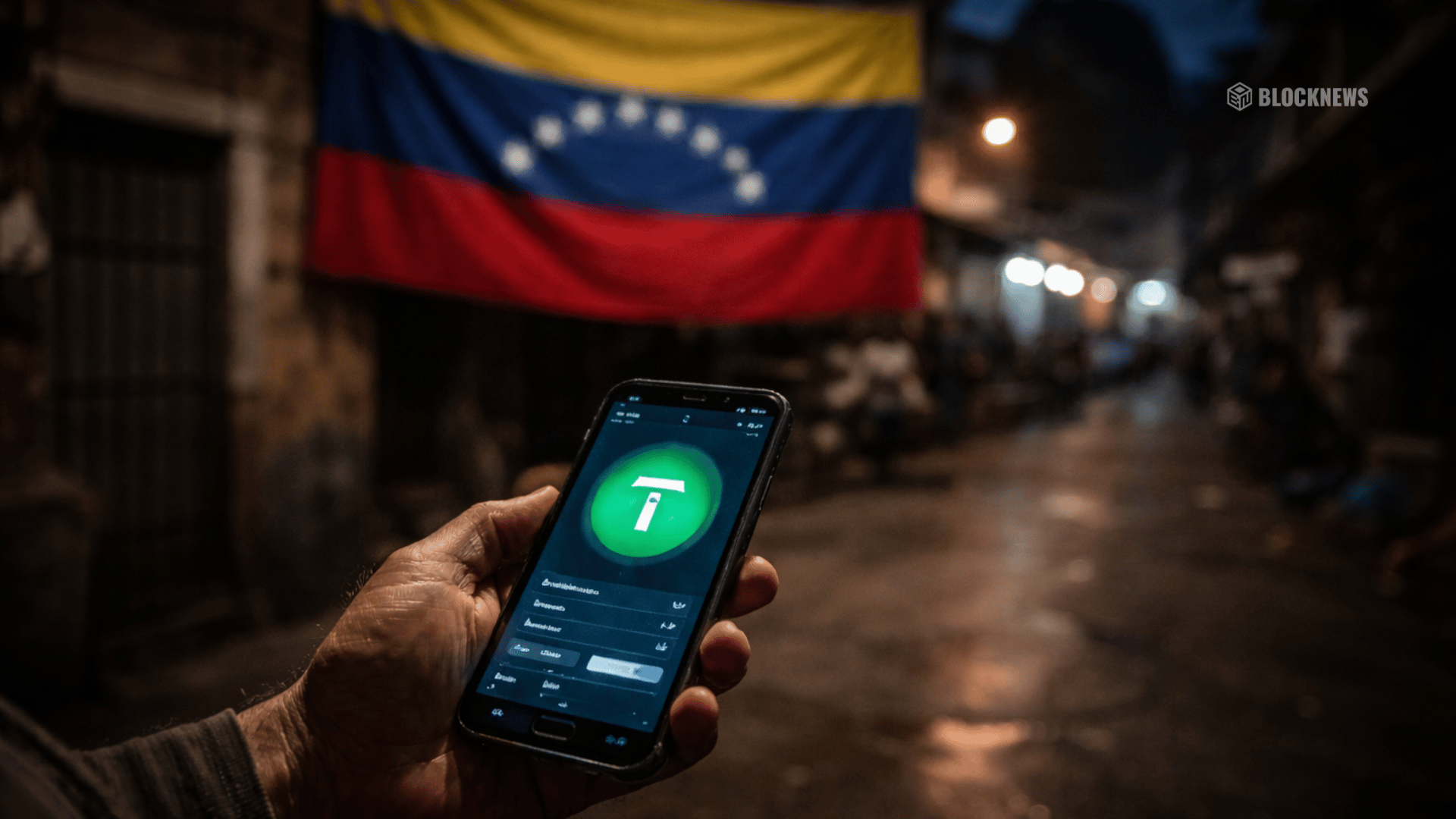
- Venezuelans rushed into USDT during instability because local money failed at the worst moment.
- Stablecoin premiums reflect crisis demand, not system failure.
- Stablecoins function as emergency financial infrastructure, not speculation tools.
When the latest US military action hit Venezuela, locals didn’t wait to see how things would unfold. They moved straight into USDT. That response wasn’t impulsive or speculative, it was instinctive. Years of monetary collapse have trained people to react fast when the bolívar fails, and this time was no different. When banks freeze and trust disappears, stablecoins become muscle memory.
Stablecoins Are Chosen for Survival, Not Ideology
Critics often frame stablecoin adoption as a philosophical choice, but that misses the point entirely. People aren’t choosing USDT because they like crypto culture or care about decentralization debates. They choose it because watching savings melt in real time is worse. The pattern repeats everywhere capital controls tighten or dollars become scarce. Stablecoins don’t replace systems out of rebellion, they fill gaps when systems stop working.
The $1.40 USDT Premium Wasn’t a Bug
During the peak of the crisis, USDT briefly traded as high as $1.40 on peer-to-peer markets. That wasn’t speculation, and it wasn’t a failure of the peg. It was urgency colliding with thin local liquidity. When everyone tries to escape a collapsing currency at the same time, premiums emerge. That price spike reflected desperation and demand, not broken mechanics.
Capital Flight Is the Feature
There’s a familiar argument that stablecoins accelerate capital flight and weaken local currencies. In Venezuela’s case, that argument arrives too late. The bolívar had already lost credibility. Stablecoins didn’t cause the damage, they provided an exit. For citizens trapped in failing systems, the ability to move value isn’t a threat — it’s pressure, and pressure is often the only feedback loop authoritarian economies respond to.
What Venezuela Really Shows
This isn’t about trading, speculation, or headlines. Venezuela is showing what stablecoins are actually for. Emergency dollars when institutions fail. USDT is imperfect, messy, and sometimes expensive during crises. But even at a premium, it beats watching your money quietly disappear.