
- Senator Cynthia Lummis says banks can now offer Bitcoin services
- The move signals deeper integration of crypto into traditional finance
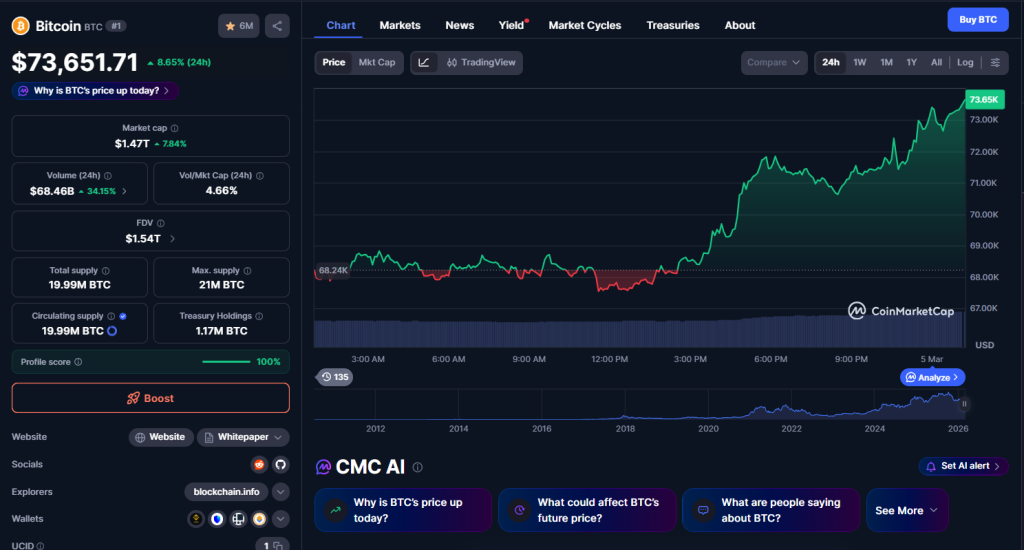
- Bitcoin surged above $72,000 while Ethereum climbed past $2,100
U.S. Senator Cynthia Lummis announced that banks are now able to offer digital asset services, including Bitcoin, alongside traditional fiat banking products. Speaking on CNBC, Lummis said the change represents a significant step toward modernizing the financial system for the digital age.
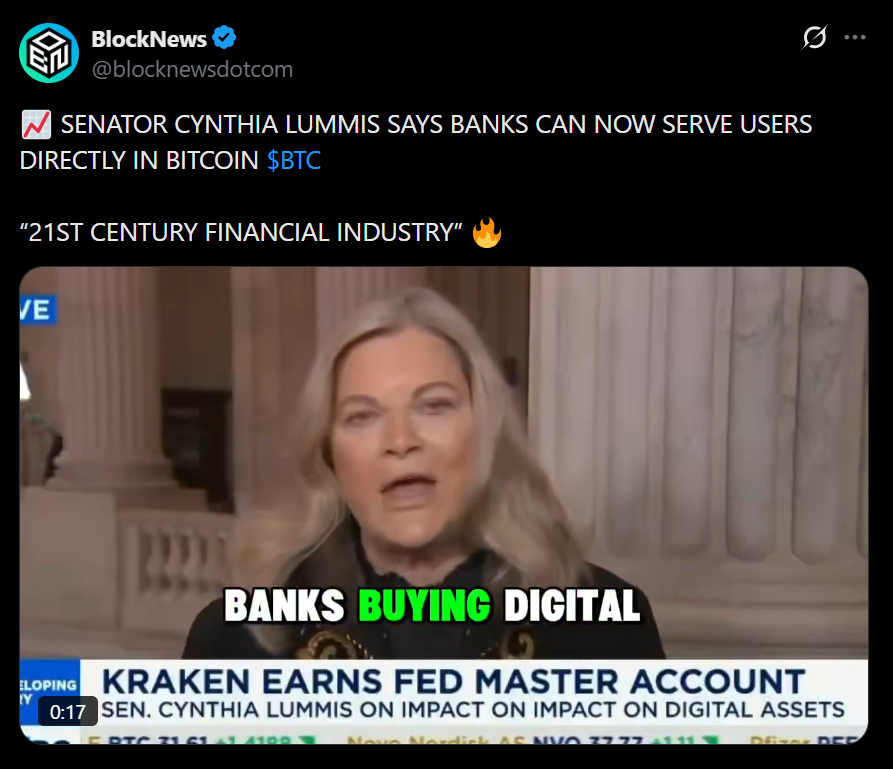
According to the senator, the development allows financial institutions to expand beyond conventional banking and begin integrating blockchain-based assets into their services. Banks could eventually support custody, trading access, and other digital asset-related financial products.
Bitcoin and Ethereum React Quickly
The market responded almost immediately to the announcement. Bitcoin surged above the $72,000 level, gaining roughly 6.95% within a 24-hour period. The move pushed BTC back into a key technical range that traders have been watching closely.
Ethereum also participated in the rally. The second-largest cryptocurrency climbed above $2,100, posting about a 7% gain during the same period. The synchronized movement across major assets suggests broader optimism around institutional adoption.
Traditional Finance Meets Digital Assets
Allowing banks to provide crypto services marks another milestone in the gradual integration of digital assets into mainstream finance. For years, banks faced regulatory uncertainty when exploring custody or trading infrastructure for cryptocurrencies.
If banks begin offering Bitcoin services directly, it could dramatically expand access for retail and institutional clients who prefer working through familiar financial institutions. The move may also strengthen the legitimacy of digital assets in global financial markets.
A Step Toward Financial Modernization
Lummis framed the policy shift as part of a broader modernization effort. As blockchain technology and digital assets gain traction globally, policymakers are increasingly exploring how traditional financial institutions can safely incorporate them.
While the long-term impact will depend on how quickly banks adopt these capabilities, the announcement highlights a clear trend. Crypto is steadily moving from the edges of finance toward integration with the core banking system.