

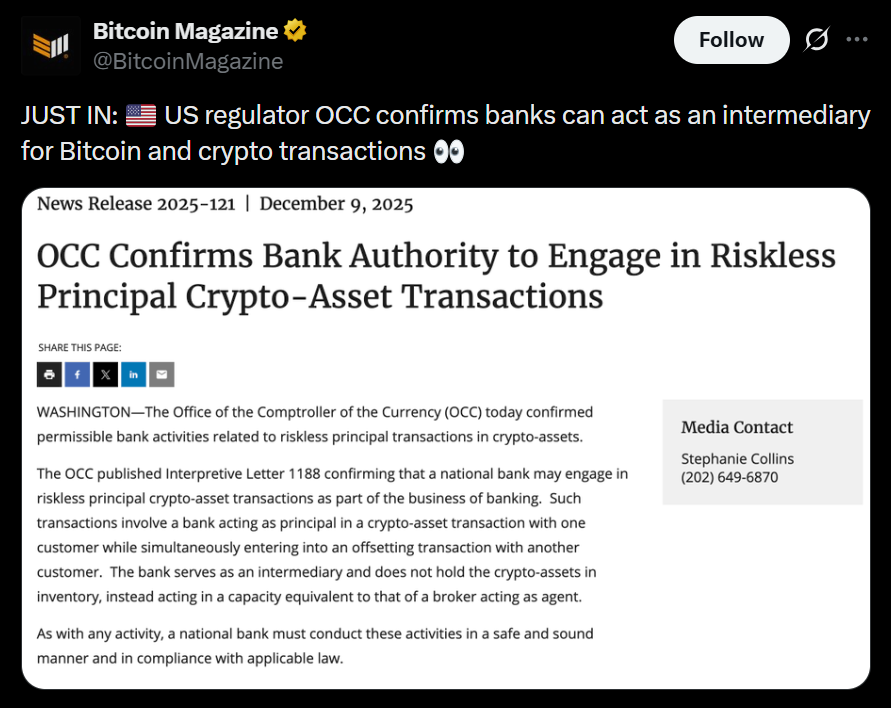
- U.S. banks are now allowed to broker crypto transactions through riskless-principal trades.
- The move is part of Trump’s accelerated effort to integrate crypto into traditional finance.
- Critics warn the new policy heightens interconnected risks between banks and volatile crypto markets.
A major shift just landed in the U.S. banking sector. The Office of the Comptroller of the Currency has confirmed that banks can now act as intermediaries for crypto transactions through what’s known as riskless-principal trades. In simple terms, a bank can buy crypto from one party and immediately sell it to another without holding the asset on its books. This keeps their exposure nearly zero while giving them a formal role inside crypto markets that, until now, was mostly off-limits.

A Key Piece of Trump’s Pro-Crypto Overhaul
The move fits squarely into President Donald Trump’s broader push to align traditional finance with digital assets. Over the past year, the administration has erased multiple barriers set during the previous presidency, encouraging banks to participate more freely in crypto. Regulators have rolled back prior restrictions and removed the requirement for banks to seek advance approval before offering certain crypto services. While the changes are celebrated by industry players, critics warn that increased interconnection between banks and volatile digital assets may introduce new systemic risks.
Traditional Finance and Crypto Draw Closer Together
Allowing banks to operate as crypto brokers signals a notable convergence between old-world finance and on-chain markets. The OCC says banks will not be scrutinized for these specific activities as long as they execute them within the riskless framework, meaning no lingering exposure unless rare exceptions apply. Supporters argue this creates a safer, more regulated entry point for U.S. customers. Skeptics counter that blending regulated banking with lightly regulated markets may heighten fragility if the crypto ecosystem faces shocks.
What Comes Next for U.S. Banking and Crypto
The latest decision follows months of incremental openings from U.S. regulators. Earlier this year, the OCC approved select crypto activities for banks, setting the stage for broader adoption. Now, with intermediated trading on the table, banks can expand their digital-asset offerings with fewer hurdles. The shift may accelerate the integration of tokenized assets, retail-facing crypto products, and institutional services. Whether this becomes a positive long-term transformation or a new risk vector will depend on how both industries adapt in the months ahead.