- Trump plans to use the Trade Act of 1974 to impose a new 10% global tariff
- The Supreme Court ruled 6-3 that IEEPA does not authorize sweeping tariffs
- Trade uncertainty could ripple into Bitcoin and broader crypto liquidity
Donald Trump has pledged to move forward with a new 10% “global tariff” using alternative legal authority, just hours after the Supreme Court struck down his sweeping duties as illegal. In a press conference following the 6-3 ruling, Trump said the administration would pursue “great alternatives” to replace the measures the court rejected.
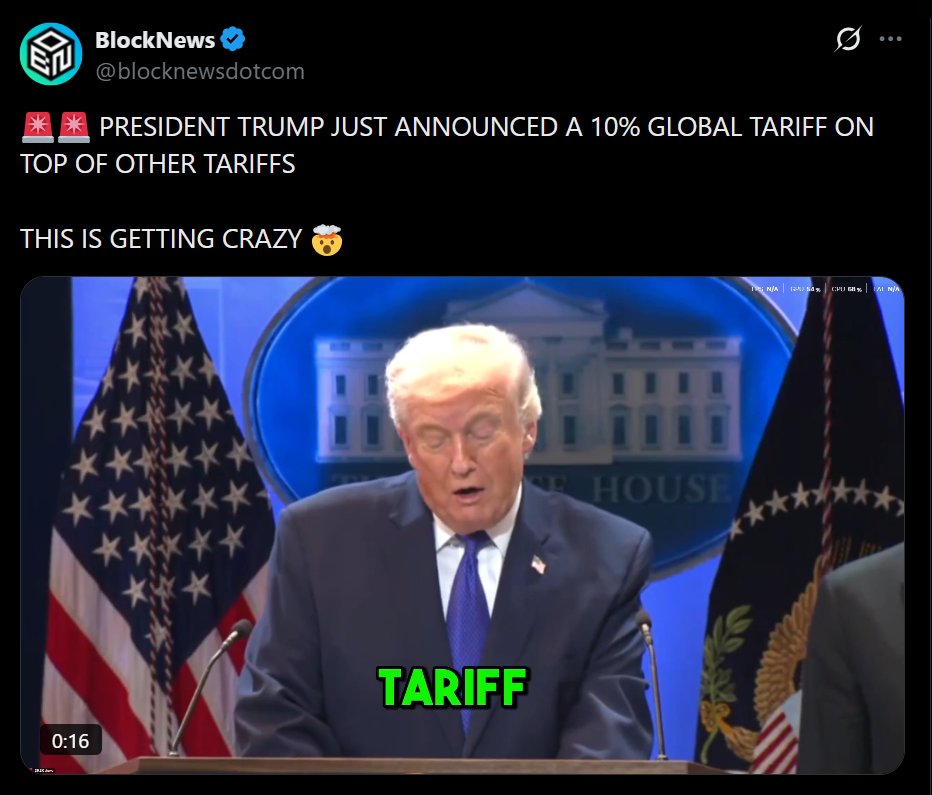
He pointed specifically to the Trade Act of 1974, which allows the president to impose import restrictions for up to 150 days. The proposed levy would sit on top of “normal tariffs already being charged,” though it remains unclear exactly which duties would be affected.
What the Supreme Court Actually Decided
Earlier Friday, the Court ruled that Trump exceeded his authority under the International Emergency Economic Powers Act (IEEPA) when imposing tariffs on dozens of countries. Chief Justice John Roberts, writing for the majority, stated clearly that while IEEPA allows the president to regulate importation during emergencies, it does not grant tariff-setting power.
The decision marked Trump’s first significant defeat at the Court during his current term. Justices Clarence Thomas, Samuel Alito, and Brett Kavanaugh dissented, with Kavanaugh noting that the ruling did not address whether billions in collected tariff revenue would need to be refunded.
Markets Took It in Stride — For Now
Despite the legal drama, investor reaction was muted. The US dollar index slipped slightly, while the S&P 500 and Nasdaq both edged higher. Portfolio managers suggested the outcome had been widely anticipated and that markets assume the administration has backup plans ready.
Still, uncertainty lingers. The original tariff regime, unveiled on “liberation day” last April, pushed effective US tariff rates above 10% — the highest since World War II — and rattled global supply chains. A fresh 10% global levy could reintroduce volatility, especially if trading partners respond with retaliation.
Why Crypto Investors Should Pay Attention
Trade policy may feel distant from crypto, but it influences liquidity, risk appetite, and capital flows. Tariff escalation tends to pressure equities and strengthen defensive positioning, which often bleeds into Bitcoin and altcoins.
Crypto markets have already been navigating macro headwinds tied to rates, inflation, and geopolitical tension. A renewed tariff push adds another layer of uncertainty. If global growth expectations weaken, speculative capital may retreat further from risk assets — including digital assets.
The Bigger Picture
The Supreme Court ruling reasserts congressional authority over tariffs, but it does not end the trade fight. Trump’s vow to use alternative laws suggests this policy battle is far from settled.
For markets, the question is less about legality and more about trajectory. If new tariffs materialize, volatility could return. If negotiations cool tensions instead, risk assets may find breathing room.
Either way, macro policy remains tightly linked to crypto sentiment. And when trade uncertainty rises, liquidity rarely stays untouched.