
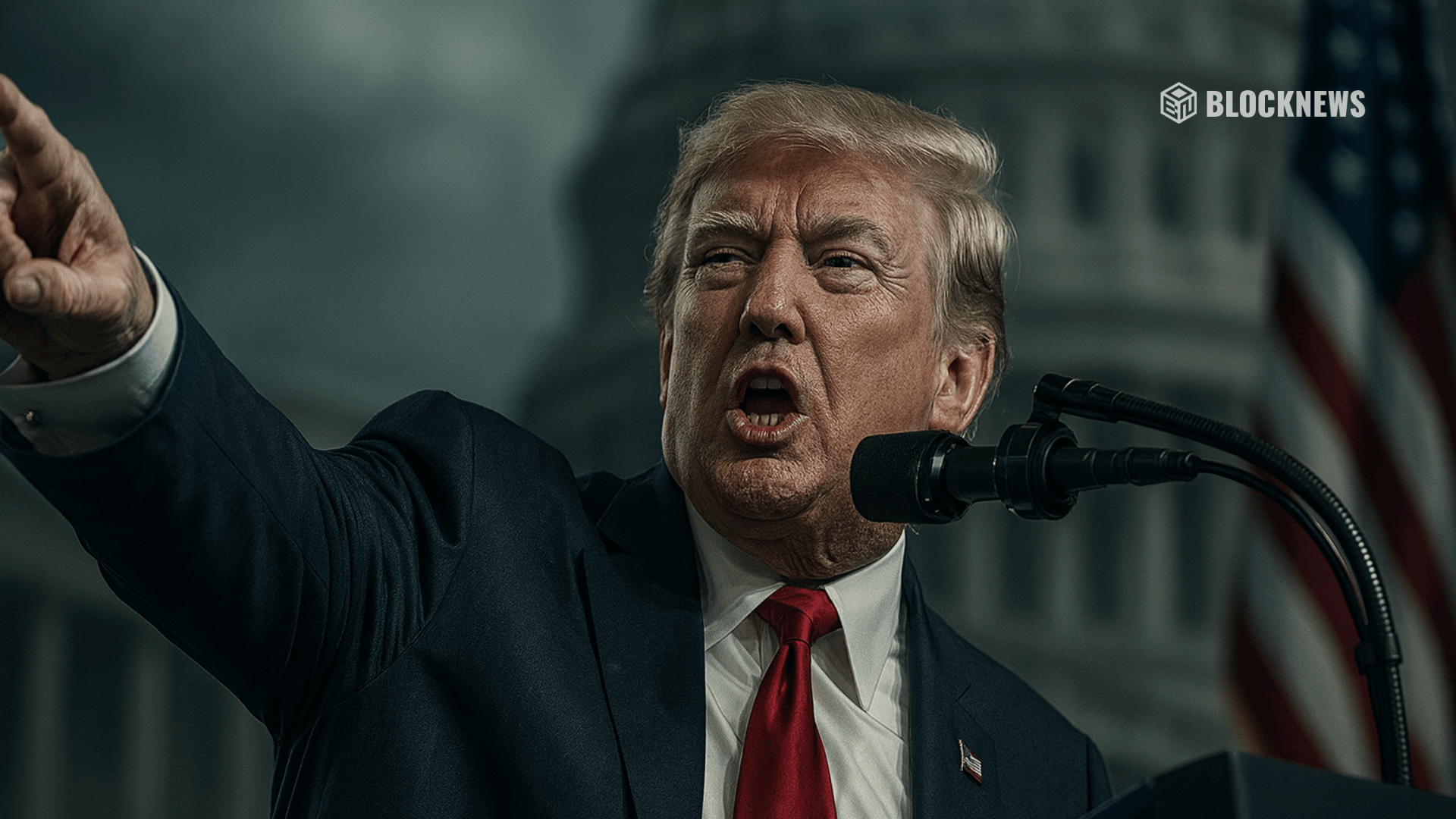
- Trump claims tariffs drove more than $18 trillion in new U.S. investment.
- Economists and official data show figures far below those claims.
- Even White House disclosures list total investment closer to $9.6 trillion.
President Donald Trump says his tariff policies have triggered an unprecedented wave of investment into the U.S. economy, as companies choose to build domestically rather than pay import duties. Speaking at a White House Christmas reception on Sunday, Trump claimed the U.S. has taken in more than $18 trillion in new investment, calling it something no country has ever achieved before, not even close.

Trump argued that tariffs are directly reshaping corporate behavior. Instead of paying import taxes, companies are building factories inside the United States, a shift he described as simple economics in action. He pointed to firms from Japan, Germany, and Canada, singling out Toyota and claiming the automaker plans to spend $10 billion expanding U.S. manufacturing.
Economists Question the Math Behind the Claims
The scale of Trump’s figures has drawn immediate pushback from economists. Peter Schiff noted that with U.S. GDP currently around $30.6 trillion, an $18 trillion investment surge would imply an economic expansion of nearly 50%, something that would almost certainly be reflected in explosive growth data and a surging dollar. Neither has occurred.
Official data paints a more restrained picture. According to the U.S. Bureau of Economic Analysis, foreign direct investment totaled $43 billion in Q1 2025 and $101.8 billion in Q2. Meanwhile, corporate investment levels remain close to $5 trillion annually, broadly in line with prior years, based on Federal data cited by CBS News.
Conflicting Signals Inside the Administration
Treasury Secretary Scott Bessent has defended Trump’s narrative, arguing the investment wave is real and pointing to major trade-linked commitments. He highlighted $550 billion in projected investment from Japan, $350 billion from South Korea, and Apple’s long-term $500 billion plan to expand U.S. manufacturing.
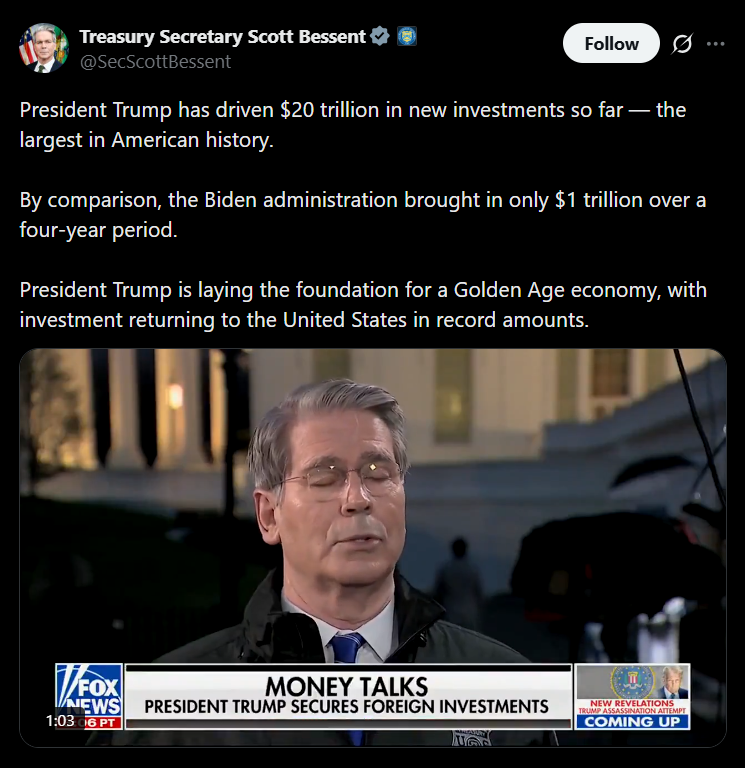
However, the White House’s own Major Investment Announcements page lists total domestic and foreign investment at roughly $9.6 trillion, about half of Trump’s stated figure. Several line items on the page also appear overstated, including Japan’s investment total and Micron’s $200 billion plan, which is spread across more than two decades.
The Bigger Picture
Trump has framed tariffs as the foundation of a new “golden age” for the U.S. economy, insisting that without them, companies would continue building abroad. While there is evidence of reshoring and long-term commitments tied to trade policy, the gap between political rhetoric and verifiable data remains wide. For now, the debate is less about whether tariffs changed incentives, and more about how much they actually moved the needle.