

- TRON has integrated with Coinbase-backed Base via LayerZero.
- TRX can now be bridged and traded on Base-native DEXs like Aerodrome.
- The move strengthens cross-chain interoperability and reduces ecosystem friction.
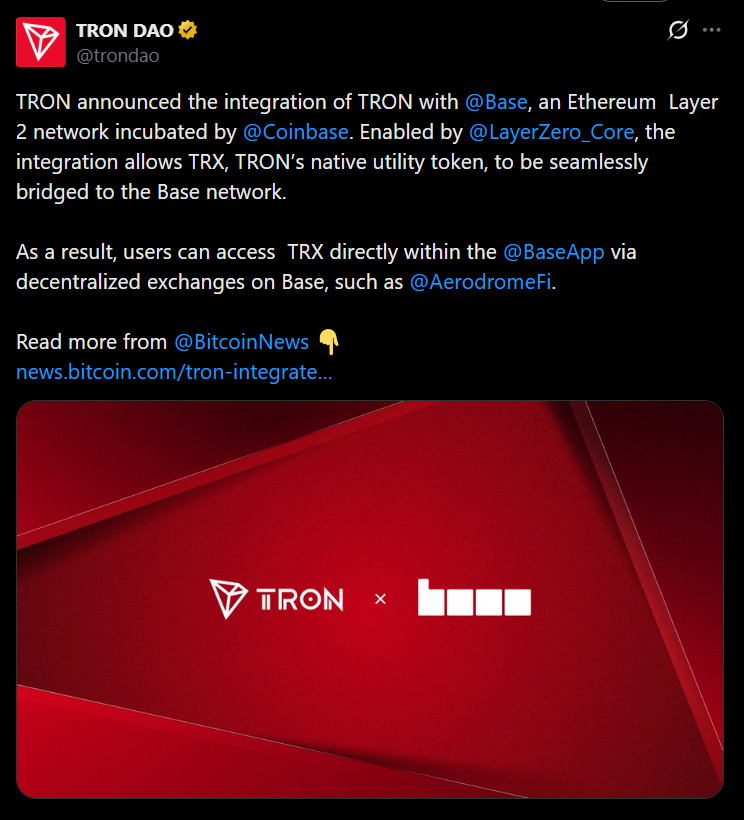
TRON DAO has officially integrated with Base, the Ethereum Layer 2 network incubated by Coinbase, marking another step toward broader cross-chain interoperability. The move allows users to bridge TRX onto Base through LayerZero, opening the door for TRON’s native token to interact directly with Base’s growing on-chain ecosystem. For users, it means fewer barriers and more flexibility when moving across networks.
TRX Now Tradable on Base-Native DEXs
With the integration live, TRX can now be accessed and traded on Base-native decentralized exchanges such as Aerodrome. This significantly expands TRX’s reach beyond its home network, giving it exposure to Base’s low-cost, high-speed trading environment. By tapping into Base’s liquidity and user base, TRON gains new avenues for usage that weren’t easily accessible before.
Interoperability Takes Center Stage
TRON founder Justin Sun described the integration as a meaningful step toward making blockchain networks work more seamlessly together. The collaboration strengthens interoperability by connecting TRON’s established user base and liquidity with Base’s Layer 2 infrastructure. Rather than siloed ecosystems, the focus is shifting toward shared rails that allow assets and users to move freely.
Bridging Web2 and Web3 More Smoothly
By reducing friction between chains, the TRON–Base integration also supports a smoother transition between Web2 and Web3 financial systems. Lower fees, faster settlement, and simpler cross-chain flows are key ingredients for real-world adoption. This setup aims to scale alongside developer demand and practical use cases, not just speculative activity.

A Shared Vision for Scalable Infrastructure
At its core, the integration reflects a shared vision of building interoperable blockchain infrastructure that can handle growing usage. As more networks prioritize connectivity over isolation, collaborations like this may become less of an exception and more of the standard.