
- Tron introduces Proposal 106 to improve smart contract security and transparency
- Network TVL rises significantly, signaling growing user confidence
- TRX faces resistance near $0.31 but whale activity suggests continued strength
Tron has been holding up surprisingly well, even as the broader crypto market hasn’t exactly been friendly lately. While many assets struggled to keep momentum, Tron’s network activity and key metrics stayed relatively stable, maybe even quietly improving. That kind of resilience doesn’t always stand out at first, but it tends to matter over time.
At the same time, there’s been a new development on the technical side, something that could reshape how the network handles smart contracts. It’s not flashy, but it’s the kind of change that can have longer-term impact, especially when it comes to security.
New Proposal Aims to Tighten Smart Contract Rules
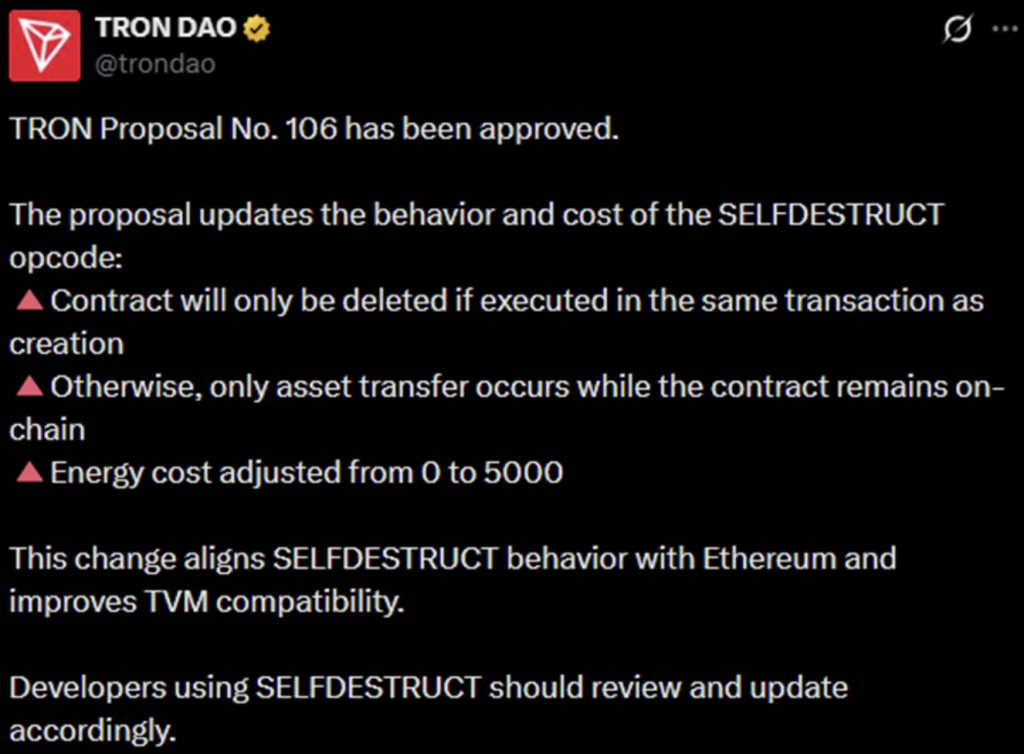
The Tron community recently passed Proposal 106, which focuses on modifying how the SELFDESTRUCT function works within smart contracts. In simpler terms, it changes how and when contracts can be removed from the network, which might sound minor, but actually isn’t.
Under this update, contracts created and executed within the same transaction can be deleted, but otherwise, their data sticks around unless explicitly removed. That shift is important because it prevents bad actors from deploying and instantly destroying contracts to hide activity. It’s basically adding a layer of transparency, even if it’s a bit technical.
There’s also a change in energy costs tied to these operations, moving from zero to 5000 units. That might increase demand for TRX over time, though how much impact it actually has… well, that’s something the market will figure out.
Network Activity Shows Strong Growth
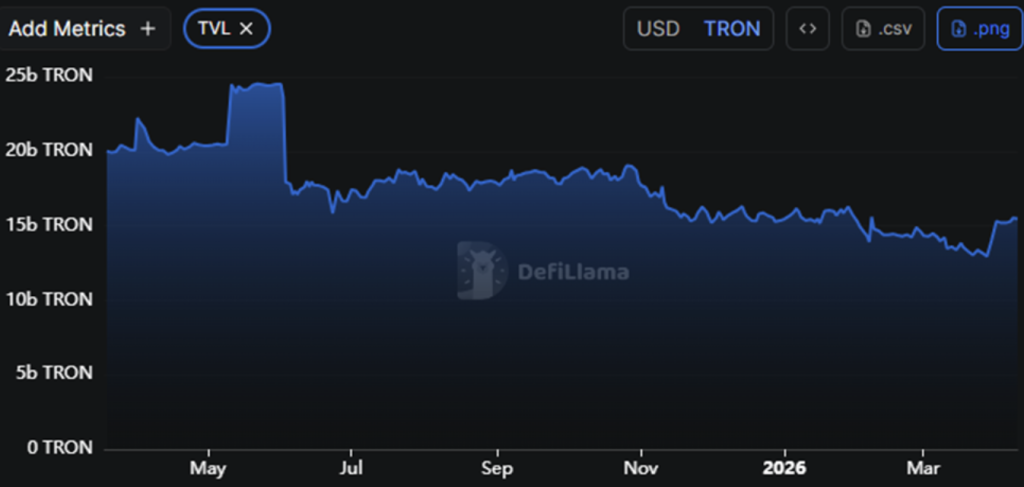
Beyond the upgrade, Tron’s network usage has been trending upward, which is probably just as important. Total value locked (TVL) climbed from around $3.85 billion in March to nearly $5 billion recently, a pretty solid jump, especially considering the overall market conditions haven’t been great.
What’s interesting is that the growth isn’t just tied to price increases. Even when measured in TRX, the TVL has gone up, suggesting more actual activity on the network, not just valuation changes. That usually points to growing confidence among users, or at least a willingness to engage with the ecosystem again.
TRX Price Meets Resistance After Strong Run
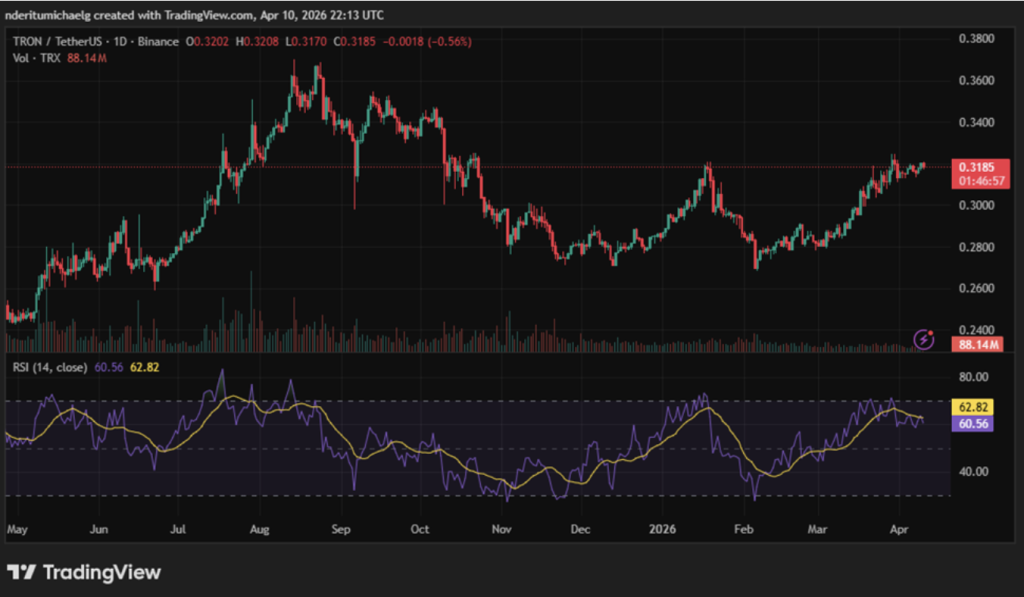
On the price side, TRX has been on a steady climb since early February, reaching around $0.31. That’s a decent recovery, about 18% up from its earlier lows, with most of the gains coming during March. But now, things seem to be slowing down a bit.
The $0.31 level is acting as resistance, and so far, it’s holding. That doesn’t necessarily mean a reversal is coming, but it does suggest that some traders might start taking profits if momentum stalls. Markets rarely move in straight lines, and pauses like this are… pretty normal.
Whale Activity Keeps Bullish Bias Alive
Despite the resistance, there are still signs of underlying strength. Large holders, or whales, appear to be leaning bullish, with notable inflows across exchanges. Binance alone saw over $6 million worth of net inflows into TRX recently, which isn’t insignificant.
That kind of activity often supports price, even if it doesn’t immediately trigger a breakout. Tron has also shown resilience compared to other major coins, especially during periods of geopolitical uncertainty. Whether that strength is enough to push past current resistance is still unclear, but for now, it’s holding its ground, and sometimes, that’s the first step.