

BlockNews
FOLLOW ON X
  • BITCOIN
  • CRYPTO
    • ETHEREUM
    • RIPPLE XRP
    • SOLANA
    • CARDANO
    • BINANCE BNB
    • DOGECOIN
    • TRON
    • SUI
    • CHAINLINK
    • LITECOIN
  • FINANCE
  • POLITICS
  • MEMECOINS
  • NFT
  • OPINION
No Result
View All Result
BlockNews
  • BITCOIN
  • CRYPTO
    • ETHEREUM
    • RIPPLE XRP
    • SOLANA
    • CARDANO
    • BINANCE BNB
    • DOGECOIN
    • TRON
    • SUI
    • CHAINLINK
    • LITECOIN
  • FINANCE
  • POLITICS
  • MEMECOINS
  • NFT
  • OPINION
No Result
View All Result
BlockNews
Home CRYPTO

The CLARITY Act Isn’t About Crypto Oversight. It’s About Who Gets to Pay on Digital Dollars

Michael Juanico by Michael Juanico
February 16, 2026
in CRYPTO, DEFI, FINANCE, OPINION
Share on XShare in TelegramShare on Reddit
  • The CLARITY Act’s real conflict is stablecoin rewards, not SEC vs CFTC jurisdiction
  • Banks view yield-bearing stablecoins as deposit competition in disguise
  • The decision could determine who controls on-chain dollar liquidity in the US

The CLARITY Act is being marketed as a market structure fix. Define which agency regulates what, reduce overlap, stop the lawsuit-driven chaos. That’s the clean version, and it’s what gets repeated in headlines.
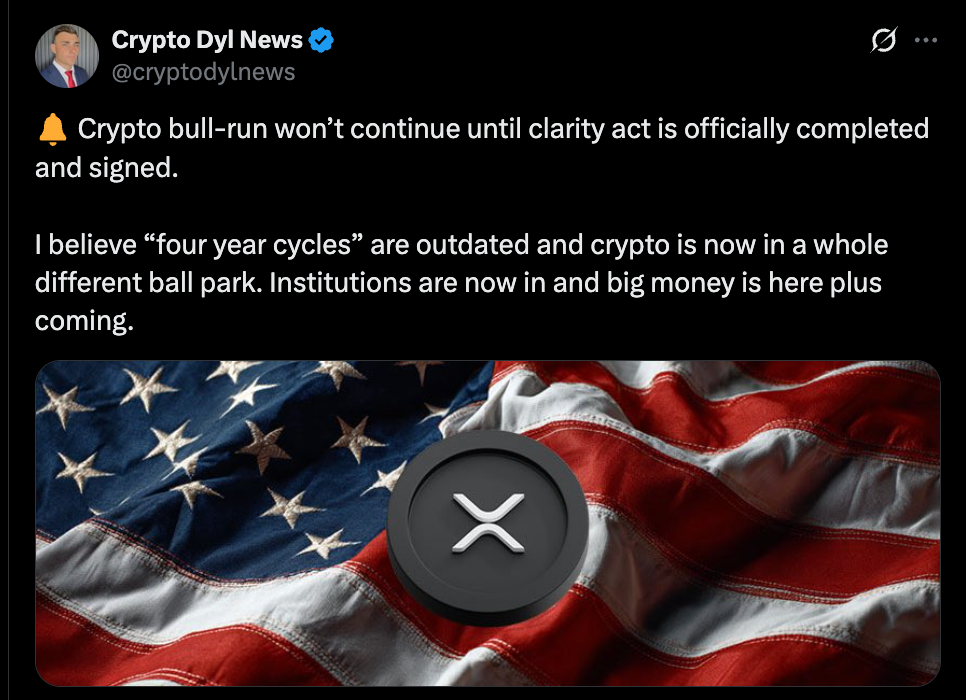
But the bill stopped being about jurisdiction the second stablecoin rewards became the sticking point. Once lawmakers started debating whether digital dollars can pay users to hold them, the conversation shifted from oversight to competition. The act may still be written in regulatory language, but the stakes are pure market power.

Stablecoin Yield Is the Actual Pressure Point

Crypto firms frame stablecoin rewards as basic utility. If a token is meant to be used on-chain, it needs to behave like capital, not dead money. Yield keeps stablecoins circulating inside DeFi, tokenized money markets, and settlement systems, instead of leaking back into banks the moment rates rise.

Banks see the same thing completely differently. To them, yield-bearing stablecoins are deposit substitutes wearing a tech costume. If users can hold a dollar token that earns rewards without traditional bank balance sheet rules, then deposits become less sticky, funding costs rise, and the banking system loses one of its biggest structural advantages. That’s why resistance is so intense. It’s not ideological. It’s survival math.

The Offshore Paradox Nobody Wants to Say Out Loud

The most awkward part of the debate is what happens if the US clamps down too hard. Demand for yield doesn’t disappear just because Washington bans it domestically. It reroutes.

Offshore stablecoins already operate outside many US restrictions. If compliant US issuers get boxed in, the likely result is not “less stablecoin yield.” It’s more power flowing to issuers and platforms that regulators have even less influence over. That’s the paradox sitting under the entire fight: strict rules can end up strengthening the very incumbents policymakers claim they want to contain.

This Is a Fight Over Liquidity, Not Crypto

At the deepest level, this isn’t even a crypto debate. It’s a debate over who gets to compete for dollar balances in a digital environment. Yield is the lever because it determines who can pay for loyalty.

If banks win, stablecoins become cleaner but less competitive, more like payment rails than financial products. If crypto wins, stablecoins start behaving like programmable deposit accounts, and the banking system has to compete on terms it didn’t design.

Conclusion

The CLARITY Act is being pitched as a regulatory cleanup bill, but markets are treating it like something else entirely: a decision about who controls dollar liquidity on-chain. The stablecoin yield fight isn’t a side issue. It’s the core. Because whoever gets to pay on digital dollars doesn’t just shape adoption. They shape the future structure of money itself.


Disclaimer: BlockNews provides independent reporting on crypto, blockchain, and digital finance. All content is for informational purposes only and does not constitute financial advice. Readers should do their own research before making investment decisions. Some articles may use AI tools to assist in drafting, but every piece is reviewed and edited by our editorial team of experienced crypto writers and analysts before publication.
Tags: banksClarity ActcryptoDeFiRegulationStablecoins
TweetShareShare
Michael Juanico

Michael Juanico

Michael is a BSBA Management graduate from Mindanao State University and has been a professional content writer since 2019. He began exploring cryptocurrency in 2021 and has since made blockchain and digital assets his primary focus. For nearly four years, Michael has contributed research and editorial content at Aiur Labs and BlockNews, producing clear and accessible coverage of market trends, trading strategies, and project developments. He is transparent about his personal holdings in Bitcoin, TRON, and select meme tokens, combining writing expertise with hands-on market experience to deliver trustworthy insights to readers.

DON'T MISS THESE! HOT OFF THE PRESS

XRPL’s Institutional Push Looks Strong on Paper, But Real Usage Still Has to Show Up
CRYPTO

XRPL’s Institutional Push Looks Strong on Paper, But Real Usage Still Has to Show Up

February 16, 2026
Dogecoin Slips After $0.11 Bounce – Here Is If This Crypto Bottom Is Real
CRYPTO

Dogecoin Slips After $0.11 Bounce – Here Is If This Crypto Bottom Is Real

February 16, 2026
Shiba Inu Burn Rate Hits 0% on Valentine’s Weekend – Here Is Why SHIB Looks Stuck
CRYPTO

Shiba Inu Burn Rate Hits 0% on Valentine’s Weekend – Here Is Why SHIB Looks Stuck

February 16, 2026
Harvard Buys $87M in Ethereum ETF While Cutting Bitcoin – Here Is What It Signals
BITCOIN

Harvard Buys $87M in Ethereum ETF While Cutting Bitcoin – Here Is What It Signals

February 16, 2026
BONK Breaks Descending Channel as Volume Surges 157% – Here Is the Next Level
CRYPTO

BONK Breaks Descending Channel as Volume Surges 157% – Here Is the Next Level

February 16, 2026
SHIB Price Bounces While Bitcoin Dominance Falls – Here Is the Accumulation Signal
CRYPTO

SHIB Price Bounces While Bitcoin Dominance Falls – Here Is the Accumulation Signal

February 16, 2026
Load More

Related News

The CLARITY Act Isn’t About Crypto Oversight. It’s About Who Gets to Pay on Digital Dollars

The CLARITY Act Isn’t About Crypto Oversight. It’s About Who Gets to Pay on Digital Dollars

February 16, 2026
XRPL’s Institutional Push Looks Strong on Paper, But Real Usage Still Has to Show Up

XRPL’s Institutional Push Looks Strong on Paper, But Real Usage Still Has to Show Up

February 16, 2026
Dogecoin Slips After $0.11 Bounce – Here Is If This Crypto Bottom Is Real

Dogecoin Slips After $0.11 Bounce – Here Is If This Crypto Bottom Is Real

February 16, 2026
Shiba Inu Burn Rate Hits 0% on Valentine’s Weekend – Here Is Why SHIB Looks Stuck

Shiba Inu Burn Rate Hits 0% on Valentine’s Weekend – Here Is Why SHIB Looks Stuck

February 16, 2026
Harvard Buys $87M in Ethereum ETF While Cutting Bitcoin – Here Is What It Signals

Harvard Buys $87M in Ethereum ETF While Cutting Bitcoin – Here Is What It Signals

February 16, 2026
Twitter Telegram Threads

BLOCKNEWS.COM

BlockNews is your premier source for real-time cryptocurrency, blockchain, political and financial market news.

Stay ahead of the herd with BlockNews

RESOURCES

  • About Us
  • Contact Us
  • Editorial Policies
  • Terms and Conditions
  • Privacy Policy
  • Sitemap

DISCLOSURES AND POLICIES

BlockNews provides independent reporting on crypto, blockchain, and digital finance. Content is for informational purposes only and does not constitute financial advice. Sponsored material is always disclosed. By using this site, you agree to our Terms and Conditions and Privacy Policy.

© 2025 BlockNews

No Result
View All Result
  • HOME
  • BITCOIN
  • CRYPTO
    • ETHEREUM
    • RIPPLE XRP
    • SOLANA
    • CARDANO
    • BINANCE BNB
    • DOGECOIN
    • TRON
    • LITECOIN
    • CHAINLINK
    • SUI
  • MEMECOINS
  • POLITICS
  • FINANCE
  • NFT
  • DEFI
  • GUIDES

© 2025 BlockNews