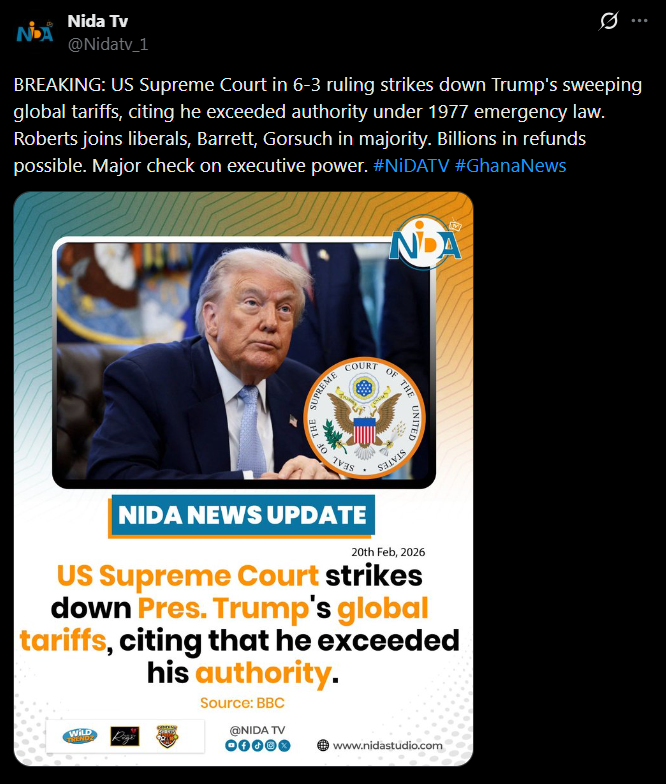
- The Supreme Court ruled 6–3 that Trump exceeded executive authority on tariffs
- Justices said IEEPA does not grant presidents the power to impose duties
- Several country-specific and reciprocal tariffs have now been overturned
The U.S. Supreme Court handed Donald Trump a significant legal setback, ruling 6–3 that his administration exceeded its authority in imposing sweeping tariffs. The decision upheld earlier lower court rulings and clarified that the International Emergency Economic Powers Act (IEEPA) does not give a president the power to set tariffs on imported goods.
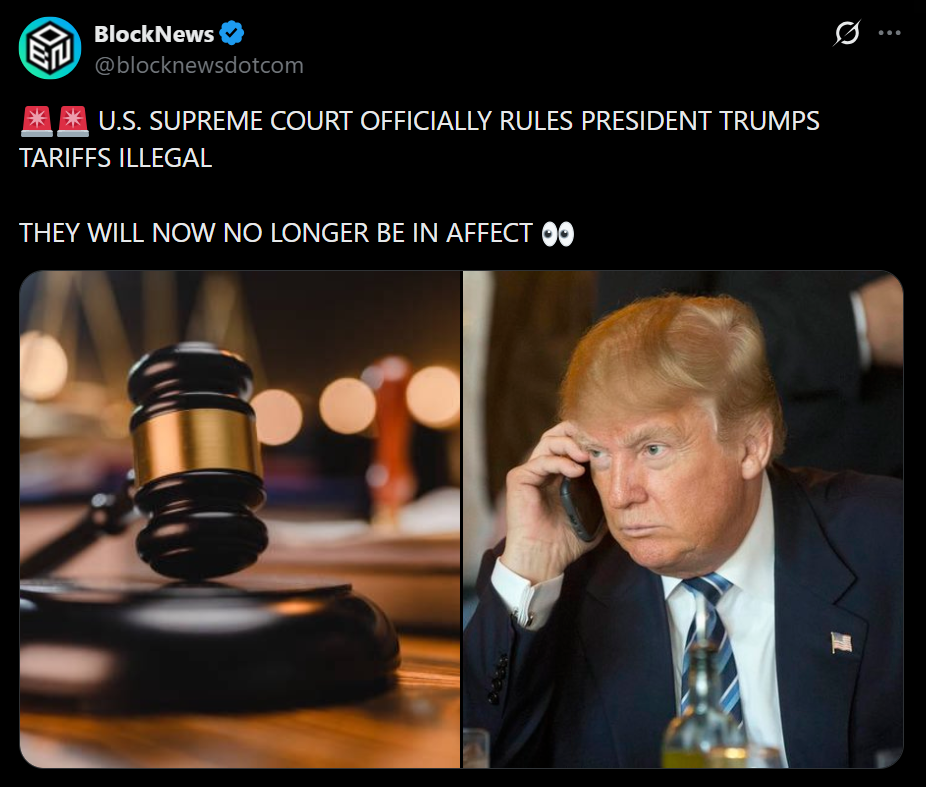
Trump had declared a national emergency in April 2025, citing the trade deficit, and moved to implement a baseline 10% duty on all imports, along with higher “reciprocal” rates on specific trading partners. The administration argued that emergency powers justified the move. The Court disagreed.
What the Court Actually Said
At the heart of the ruling was statutory interpretation. IEEPA, passed in 1977, allows a president to regulate imports during a national emergency. However, the majority concluded that “regulation” does not include the authority to impose tariffs, which have historically been reserved for Congress under the Constitution’s commerce clause.
The justices determined that Congress never delegated tariff-setting authority through IEEPA. In other words, the executive branch cannot use emergency economic powers as a backdoor to bypass legislative approval for duties. That line, the Court said, still belongs to Congress.
Which Tariffs Are Affected
The ruling leaves some previously imposed tariffs intact, but it overturns Trump’s country-specific “reciprocal” tariffs and the 25% duties on select imports from Canada, China, and Mexico that were justified as a response to fentanyl concerns.
This doesn’t erase all trade restrictions overnight, but it dismantles a major portion of the tariff framework built under emergency authority. Any future effort to impose similar duties will now likely require explicit congressional backing.
Political and Economic Fallout
Trump characterized the ruling as politically motivated and warned that foreign governments could respond with trade retaliation. The decision may intensify debate over executive authority and trade policy, particularly during election cycles where economic nationalism often becomes central.
From a market perspective, the ruling introduces clarity. Investors now have a firmer understanding of the limits of presidential trade powers under emergency law. That reduces one layer of policy uncertainty, even if broader trade tensions remain.
A Structural Shift in Trade Governance
Beyond the immediate tariff implications, the decision reinforces constitutional boundaries between Congress and the presidency. Trade policy, especially tariff-setting, has been a gray zone in recent years. The Court’s ruling draws a sharper line.
Going forward, sweeping tariffs justified under emergency declarations may face higher legal scrutiny. The balance of power over trade policy has shifted back toward Congress, at least for now.