
- Standard Chartered projects stablecoins growing from $304B to $2T by 2028
- Issuers are already major buyers of short-term U.S. Treasuries
- Stablecoin expansion does not rely on Bitcoin or Ethereum rallies
For years, stablecoins were treated as a side story in crypto. Regulators framed them as shadow banking risks. Traditional banks viewed them as competitive threats. Policymakers debated restrictions before recognizing utility. That tone is shifting.
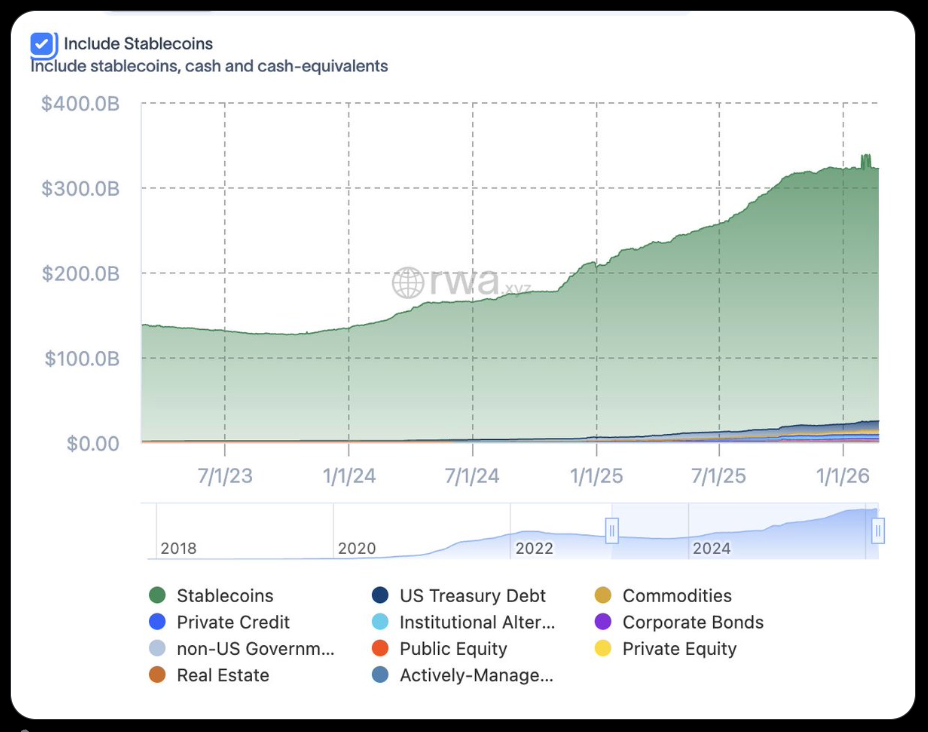
Standard Chartered’s projection that stablecoins could grow from roughly $304 billion today to $2 trillion by 2028 reflects something structural, not speculative. This is less about token prices and more about balance sheets. Stablecoins are increasingly becoming embedded in the financial system.
Treasury Demand Is the Core Story
Stablecoin issuers do not simply hold idle cash. Firms like Tether and Circle allocate reserves into short-term U.S. Treasuries to generate yield while maintaining dollar backing. At current scale, that already means hundreds of billions flowing into T-bills.
If the market expands toward $2 trillion, that implies close to $1 trillion in short-duration Treasury demand. That type of demand is not driven by market sentiment. It is structural liquidity anchored to token issuance. When stablecoin supply rises, reserve allocation rises alongside it.
Economic Utility Changes the Political Tone
Once stablecoin issuers become significant buyers of government debt, the political conversation evolves. Entities that absorb Treasury supply play a role in broader financial stability. That economic relevance tends to shift policy from hostility to oversight.
Regulatory frameworks may tighten, but outright resistance becomes harder to justify when the industry supports government financing channels. Influence emerges not from rhetoric but from integration.
Growth Without a Bitcoin Rally
One of the more notable aspects of Standard Chartered’s view is what it does not depend on. Stablecoin expansion does not require Bitcoin or Ethereum to surge. Growth is tied to global demand for dollar-denominated liquidity, cross-border payments, and trade settlement.
Stablecoins function as digital dollars. Their adoption expands when users need efficient access to U.S. currency rails, not only when crypto markets are bullish.
A Quiet Infrastructure Shift
Stablecoins are transitioning from crypto trading tools into financial plumbing. As reserve holdings expand and integration deepens, their role becomes harder to separate from broader capital markets.
Standard Chartered’s forecast reflects this transition. Stablecoins are not just supporting crypto liquidity. They are becoming part of the global financial infrastructure.