- JDUNK embeds Shakespeare’s full works inside Otherside as an interactive NFT experience
- AI tools enabled scalable transformation of text into in-world readable content
- Signals shift from static NFTs toward functional, experience-driven digital assets
Someone just put Shakespeare inside the metaverse… and somehow, it works. Not as a gimmick, not as a flex, but as something people might actually spend time with.
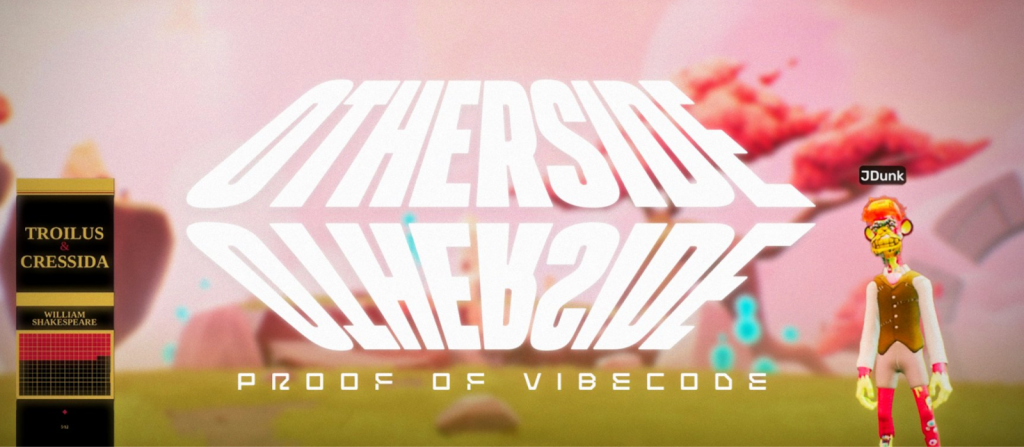
JDUNK took a plot of land in Otherside and turned it into a fully interactive version of The Complete Works of William Shakespeare. You don’t just “own” it. You walk up to it, open it, and read.
NFTs Are Starting to Feel Like Software
For a long time, NFTs mostly lived as display pieces. You bought them, maybe traded them, maybe used them as a profile picture. But they didn’t really do anything.
This flips that idea. Instead of a static asset, this is something functional. A piece of content embedded directly into an environment, behaving more like an app than a collectible.
And once NFTs start acting like software, expectations shift. People don’t just want to own things, they want to use them.
The Build Wasn’t Fancy, Just Clever
The concept sounds complex, but the execution is surprisingly practical. Otherside’s tools are limited, especially when it comes to formatting text.
So instead of forcing it, JDUNK worked around it. The text was converted into styled images using AI, then stored on Arweave and displayed in-world.
It’s not perfect. But it’s scalable, and more importantly, it works. That’s usually how these shifts start.
AI Quietly Did the Heavy Lifting
AI didn’t replace creativity here, it enabled it. Formatting Shakespeare manually inside a constrained system would’ve been painful.
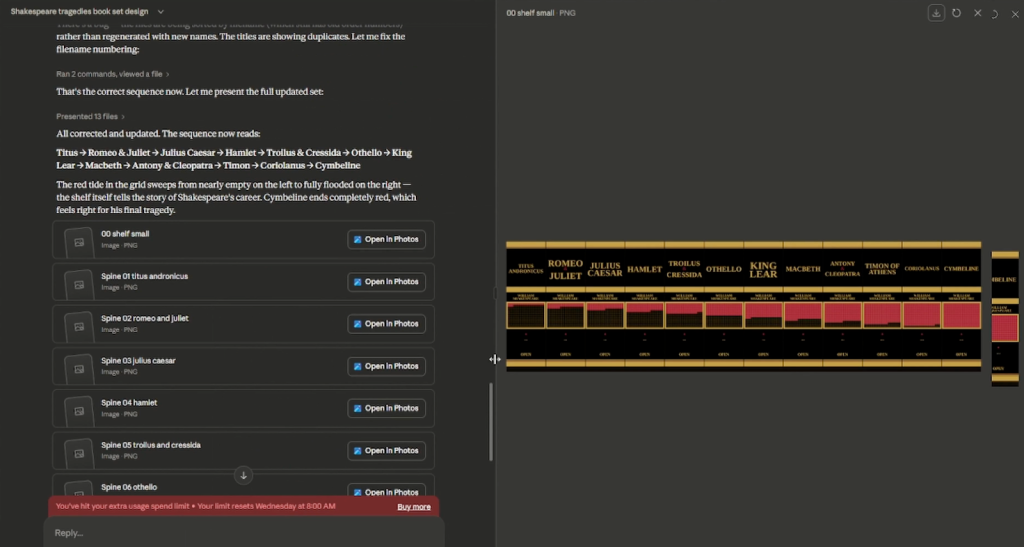
Instead, AI handled the repetitive parts, turning raw text into something visually consistent and usable. That freed up time to focus on the experience itself.
It’s a small detail, but it hints at a bigger trend. AI and NFTs aren’t competing narratives, they’re starting to stack.
Why This Feels Different From Past NFT Experiments
We’ve seen “utility” promised before. Games, staking, metaverse integrations, most of it either overcomplicated or underdelivered.
This is simpler. It doesn’t try to financialize reading or turn Shakespeare into a token economy. It just gives people something to interact with.
And that simplicity might be the point. Not everything needs to be monetized to be valuable.
A Glimpse of Where NFTs Might Be Headed
The interesting part isn’t Shakespeare itself. It’s the format.
If a book can exist as an interactive object, then so can anything else. Games, tools, educational content, entire experiences.
That opens up a different direction for NFTs. Less about scarcity, more about functionality.
A Quiet Shift, Not a Loud Comeback
This won’t bring back the NFT hype cycle overnight. It’s not meant to.
But it does show something important. The space is still evolving, just in a quieter, more practical way.
And if NFTs are going to matter long term, it probably looks more like this… and less like another 10,000-piece drop.