- Solana executive raises doubts about long-term viability of crypto gaming
- Meta’s metaverse retreat fuels skepticism around virtual worlds
- Industry focus shifts toward real use cases beyond gaming hype
The conversation around blockchain gaming is starting to shift, and not quietly either. When a senior figure from the Solana ecosystem begins questioning whether the sector ever had real staying power, it signals something deeper than just a passing opinion. Just a few years ago, gaming was positioned as crypto’s clearest path to mainstream adoption, now that narrative feels… less certain.
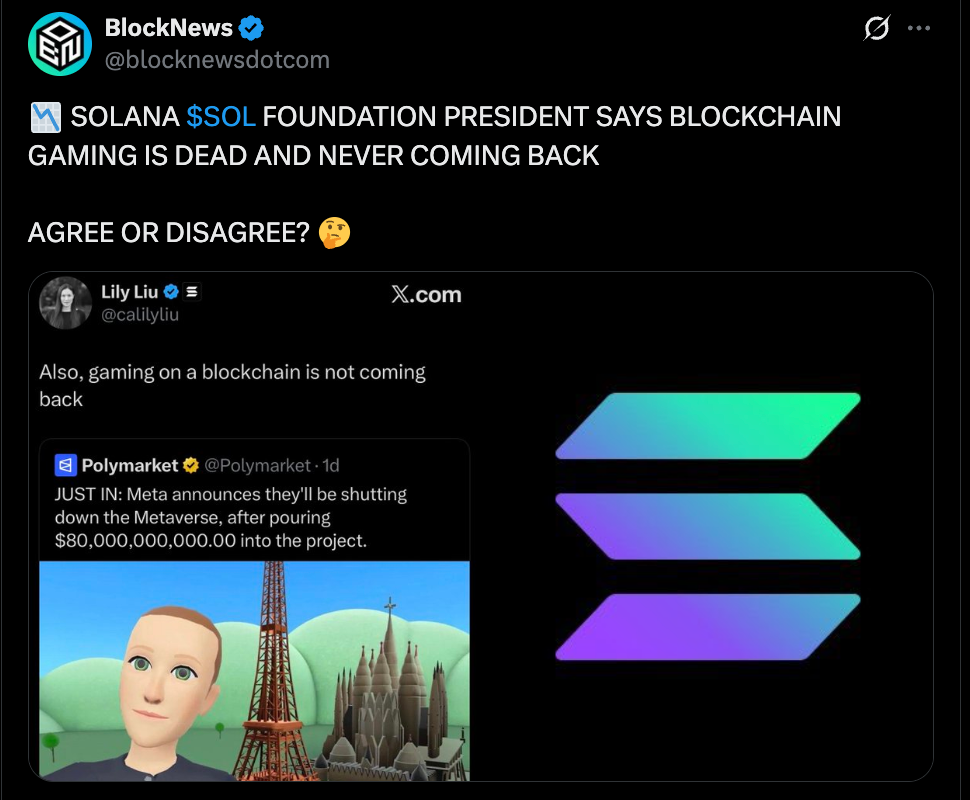
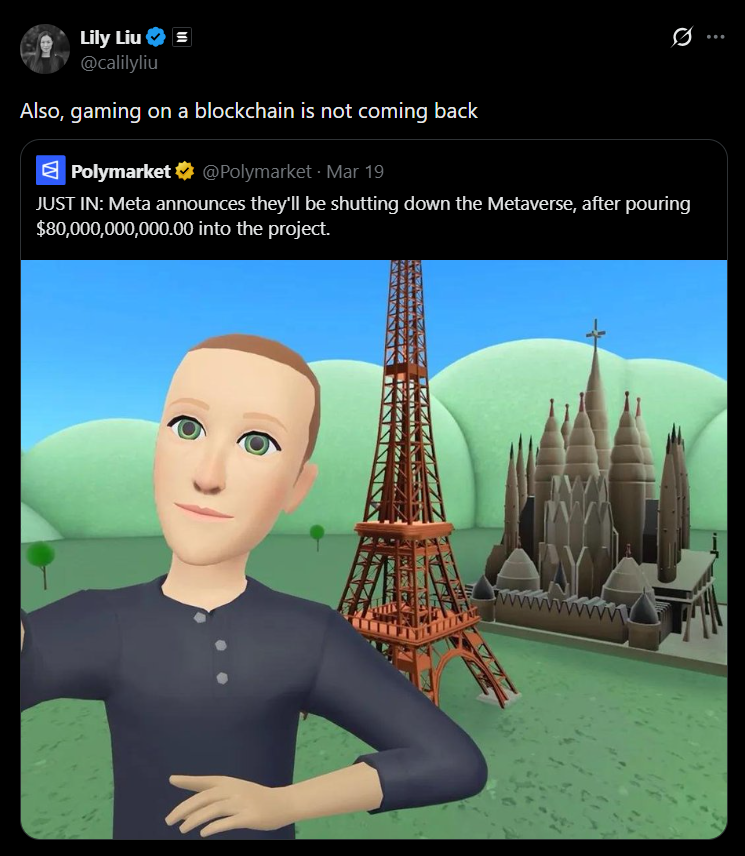
Lily Liu’s comments reflect a broader change in sentiment across the industry. It’s not that blockchain gaming has disappeared, but the confidence around it has clearly softened. The question isn’t just about growth anymore, it’s about whether the original thesis was ever fully grounded to begin with.
Meta’s Retreat Changes the Context
Meta’s decision to pull back from its metaverse ambitions adds another layer to this shift. For a while, both Web2 and Web3 seemed aligned, building toward persistent digital worlds where users could live, play, and transact. That shared direction gave the concept more credibility, even if adoption was still early.
Now, with one of the largest players stepping away after years of investment, it forces a harder question. Was there real demand for these experiences, or was much of it driven by speculation and early hype cycles? The answer isn’t entirely clear, but confidence has definitely taken a hit.
Blockchain Gaming May Have Missed the Core Problem
There’s also a deeper issue that keeps resurfacing. What does blockchain actually improve in gaming? Ownership and tradable assets were often highlighted as key advantages, along with interoperability between platforms. In theory, those ideas make sense.
In practice, though, many projects struggled to balance gameplay with token incentives. Too often, the focus leaned toward earning rather than playing. And once rewards dropped or token prices cooled, user engagement followed. That pattern has repeated enough times to raise concerns about the model itself.
Sentiment Is Shifting Toward Practical Use Cases
This doesn’t necessarily mean blockchain gaming is “dead,” but it does suggest the industry is becoming more selective about where it sees real value. The focus is gradually shifting toward use cases that feel more durable, areas like payments, infrastructure, and financial systems.
Gaming may still have a role, but it’s no longer being treated as the default path to mass adoption. Instead, it’s being reevaluated alongside other sectors, which, honestly, might be a healthier approach long term.
Crypto Is Reassessing Its Direction
What’s happening now feels less like a collapse and more like a reset. The industry is starting to question earlier assumptions and refine where blockchain technology actually fits. That process can look like doubt on the surface, but it’s often how stronger narratives are built.
Whether blockchain gaming returns in a different form or remains a niche experiment is still an open question. But one thing is clear, crypto is moving into a phase where hype matters less, and real utility matters more. And that shift could define what comes next.