- SHIB has re-entered a historical demand zone linked to past rallies
- Burn rates surged after millions of tokens were permanently removed
- Weak ecosystem activity could limit upside despite bullish technicals
Shiba Inu has slipped back into its annual demand zone, a price range that has historically drawn heavy trader attention and, in past cycles, preceded sharp rallies. This zone has now become the focal point for analysts as SHIB trades at levels previously linked to aggressive upside moves. At the same time, a sudden spike in the burn rate has added fuel to the discussion, with roughly 28 million tokens destroyed in a single transaction, pushing burn metrics sharply higher.
A Demand Zone With a Track Record
Since 2022, SHIB has entered this yearly demand area four separate times, and each visit was followed by notable price appreciation. The most striking example came in 2024, when SHIB climbed from roughly $0.000008 to above $0.000032, a move of nearly 300 percent. For traders who rely on historical structure, this zone carries psychological weight because it has repeatedly marked areas where sellers exhausted and buyers stepped in aggressively.
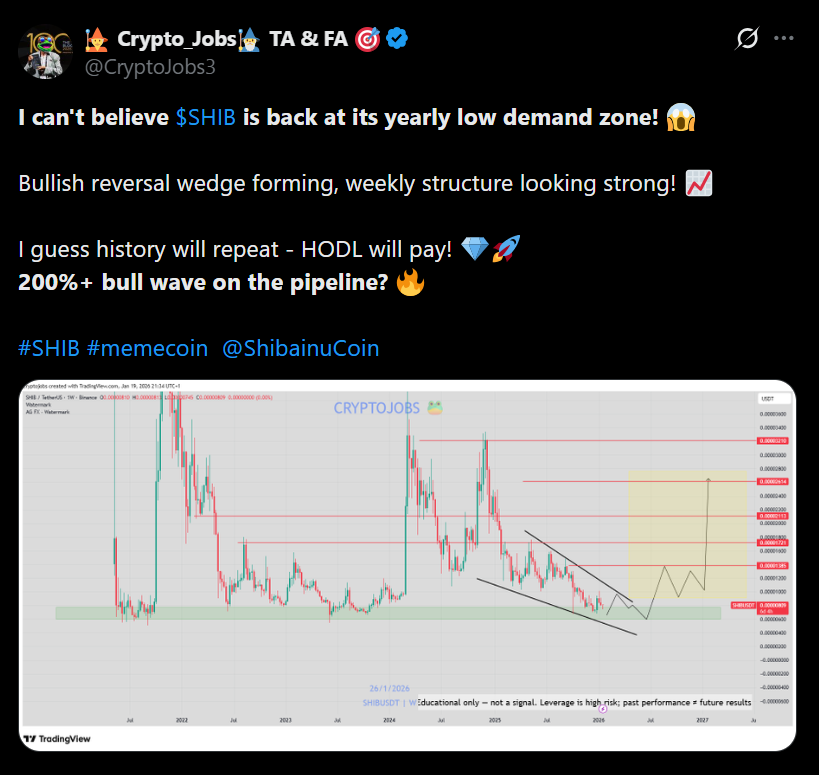
From a technical perspective, analysts are now watching two key resistance levels that could define the next phase. A break above the first resistance would signal momentum returning, while clearing the higher barrier would reopen the path toward prior cycle highs. Until then, the demand zone itself remains the main line holding the bullish thesis together.
Burns Rise as Supply Tightens
The recent surge in the SHIB burn rate has become a major talking point. One transaction alone removed more than 28 million tokens from circulation, pushing the daily burn rate up by more than 1,100 percent. While burns do not guarantee higher prices, they do reduce circulating supply, which can amplify price moves if demand returns.
Alongside burns, whale behavior and exchange flows have shown increased activity. Rising inflows to exchanges suggest traders are positioning for volatility rather than long-term dormancy, which often precedes larger price swings in either direction.

Conflicting Signals From the Ecosystem
Despite the technical optimism around the demand zone and supply reduction, not all indicators are supportive. Shibarium usage has continued to decline, with total value locked sharply lower from its late-2025 peak. This drop raises questions about whether ecosystem engagement can support a sustained rally rather than a short-lived bounce.
This creates a familiar tension in SHIB’s outlook. On one side are historical patterns and aggressive burns. On the other is weakening on-chain activity, which may limit follow-through if speculative interest fades too quickly.
A Critical Test for SHIB
As SHIB holds within its yearly demand range, the next few weeks will be decisive. If buyers defend this zone and push price through resistance, traders will point to history as justification for renewed upside targets. If the level fails, the narrative around demand zones and burn-driven supply shocks will lose credibility for this cycle.
For now, SHIB sits at a crossroads where past performance, tokenomics, and current market conditions collide, making this one of the more closely watched setups in the memecoin space.