- Tangem’s revenue growth shows wallets are now used, not just stored
- Users are shifting from passive cold storage to active financial tools
- The real competition is over daily crypto usage, not just security
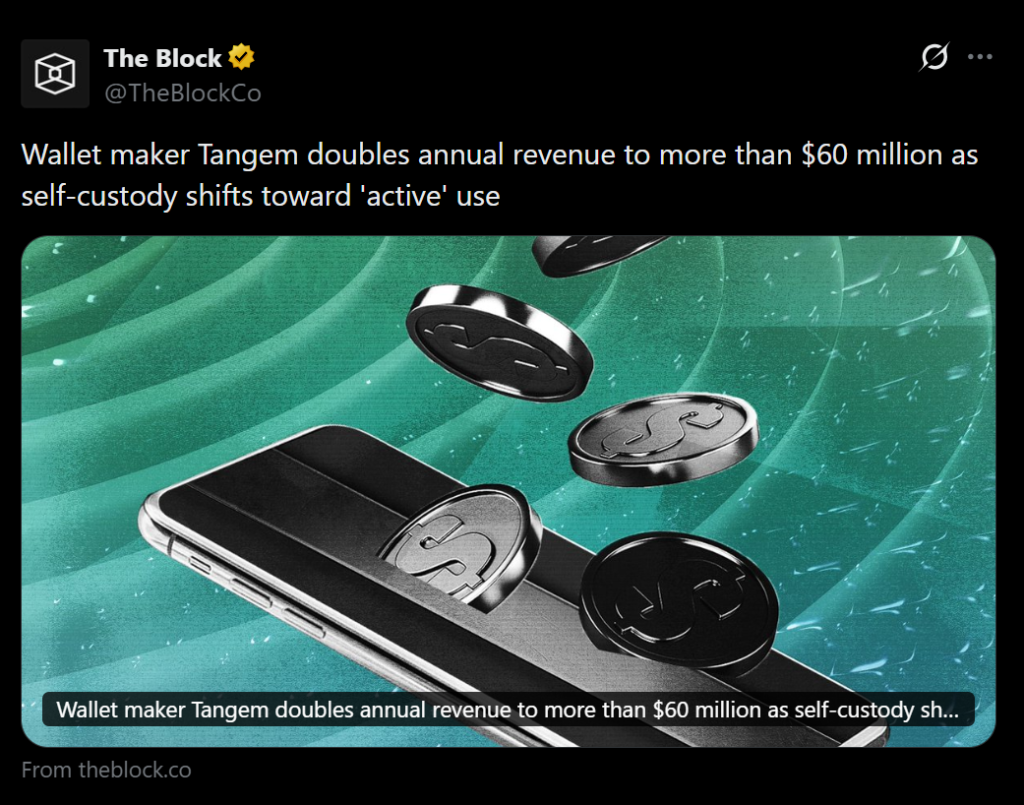
Self-custody in crypto is going through a quiet but important shift. For a long time, hardware wallets were seen as insurance, something you bought after a scare, moved your funds into, and rarely touched again. Tangem’s recent growth suggests that model is fading. A 102% jump in revenue to over $61 million, alongside a sharp increase in active users, points to something different… people are actually using their wallets.
That distinction matters more than it seems. When usage increases, the wallet stops being a storage device and starts becoming an interface. And once that happens, the role of self-custody changes entirely.
The End of Passive Cold Storage
The traditional idea of “cold storage” is starting to feel outdated. Users don’t want to lock assets away anymore, especially in a market where opportunities move quickly.
Tangem’s approach reflects that shift. By combining NFC-based hardware with mobile-first access, users can interact with DeFi protocols, manage assets, and even make payments without friction. No cables, no complicated setups, just tap and go.
When you can earn yield, move funds, and spend stablecoins directly from a hardware wallet, the line between cold and hot storage begins to blur.
Wallets Are Becoming Financial Interfaces
What’s really changing here is behavior. Users aren’t just holding crypto, they’re actively using it across different layers of the ecosystem.
That means wallets are no longer endpoints. They are becoming the central hub where storage, trading, earning, and spending all happen in one place.
And once a wallet becomes that hub, it starts to control something more valuable than assets… it controls user flow.
The Real Competition Is for User Activity
This shift introduces a new kind of competition in crypto. It’s no longer just about who offers the safest storage, it’s about who owns the user’s daily financial activity.

If a wallet becomes the default place where users check balances, earn yield, and make payments, it effectively becomes the front door to crypto finance. That position is incredibly powerful.
Tangem is positioning itself right at that intersection, between custody and real-world usage.
A Redefinition of Self-Custody
Self-custody isn’t disappearing, but it is being redefined. Security is still important, but it’s no longer enough on its own.
Users want control without sacrificing usability. They want to move seamlessly between holding, earning, and spending without leaving their wallet environment.
The wallets that succeed won’t just protect assets. They’ll be the ones users never feel the need to close.