- SEC approved tokenized securities trading directly on Nasdaq
- Tokenized stocks will trade alongside traditional shares with full rights
- This marks a major step toward integrating blockchain into regulated markets
The SEC has officially approved a Nasdaq rule change allowing securities to be traded in tokenized form, and it’s a bigger deal than it might first appear. This isn’t about creating a parallel crypto market… it’s about merging blockchain infrastructure directly into traditional finance.
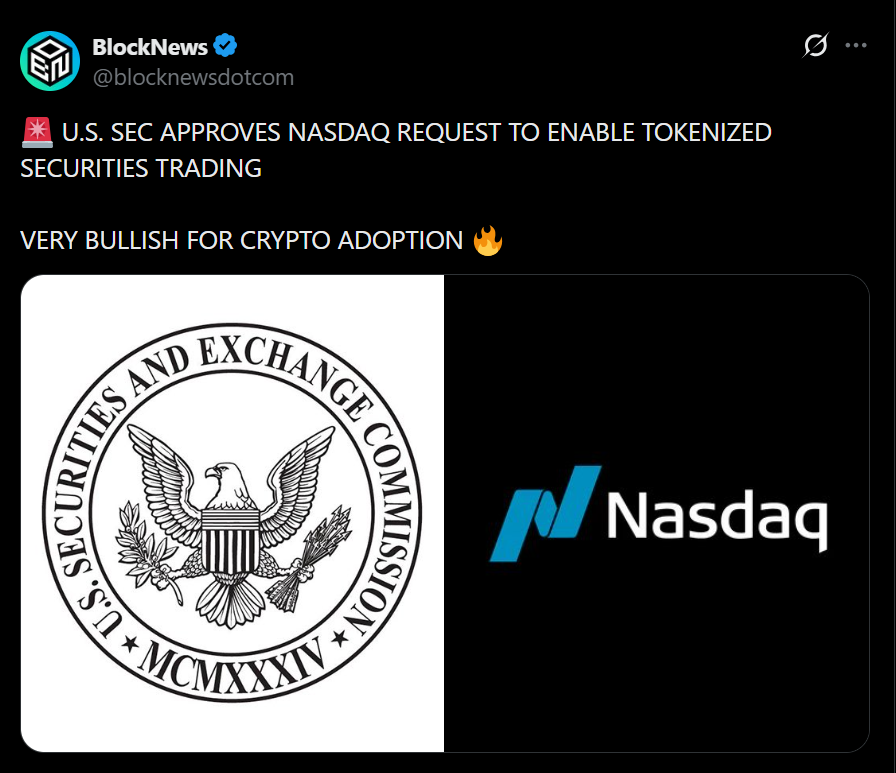
Under the new framework, eligible assets like Russell 1000 stocks and major ETFs can be represented as tokenized securities. These tokens won’t exist in isolation either. They’ll trade on the same order books as traditional shares, with identical pricing, execution priority, and market data.
Tokenized Stocks Will Function Like Real Shares
One of the key aspects of this approval is that tokenized securities must remain fully interchangeable with their traditional counterparts. Same ticker, same CUSIP, same rights.
That means investors holding tokenized versions still get voting rights, dividends, and claims on assets, just like standard shareholders. In other words, this isn’t a synthetic product or derivative. It’s the same asset, just represented differently.
This level of parity is what allows tokenization to fit inside existing regulatory frameworks rather than outside them.
Infrastructure Stays the Same, Settlement Evolves
Interestingly, Nasdaq isn’t changing its core trading system. Orders, routing, and execution all remain exactly as they are today.
What changes is what happens after the trade. The Depository Trust Company (DTC) will handle tokenization and settlement through a pilot program, allowing trades to settle in tokenized form if conditions are met.
If not, trades default back to traditional settlement. That flexibility helps bridge the gap between old and new systems without forcing a full transition.
Tokenization Is Entering Regulated Markets
This approval reflects a broader trend that’s been building quietly. Tokenization is moving from experimental crypto use cases into fully regulated financial environments.
Instead of replacing traditional systems, blockchain is being layered into them. The goal isn’t disruption in the aggressive sense… it’s integration.
That approach makes adoption more likely, especially among institutions that require regulatory clarity.
What This Means for Crypto
For the crypto industry, this is a validation moment. Tokenization has long been pitched as a major use case, and now it’s being implemented at the highest levels of traditional finance.
It also signals where the next phase of growth might come from. Not just new tokens or protocols, but real-world assets moving onto blockchain rails.
A Hybrid Financial System Is Emerging
What’s taking shape is a hybrid system where traditional assets and blockchain infrastructure coexist. Investors may not even notice the difference at first, but under the surface, the mechanics are changing.
And over time, those changes could redefine how markets operate, not by replacing them… but by upgrading them.